
Mastering PPC Campaigns on Amazon: A Comprehensive Guide to Driving Sales and Profit
Amazon PPC Specialist with $50M+ in managed ad spend. Helped 500+ sellers optimize their advertising.
Amazon PPC (Pay-Per-Click) campaigns are advertising initiatives on Amazon where sellers pay a fee each time their ad is clicked. These campaigns are designed to increase product visibility, drive traffic to product listings, and ultimately boost sales on the Amazon marketplace.
Key Takeaways
- Effective Amazon PPC campaigns are crucial for driving both immediate sales and long-term organic growth.
- Understanding campaign types (Sponsored Products, Brands, Display) and their strategic use is fundamental.
- Data analysis, bid management, and keyword optimization are continuous processes for maximizing ROI.
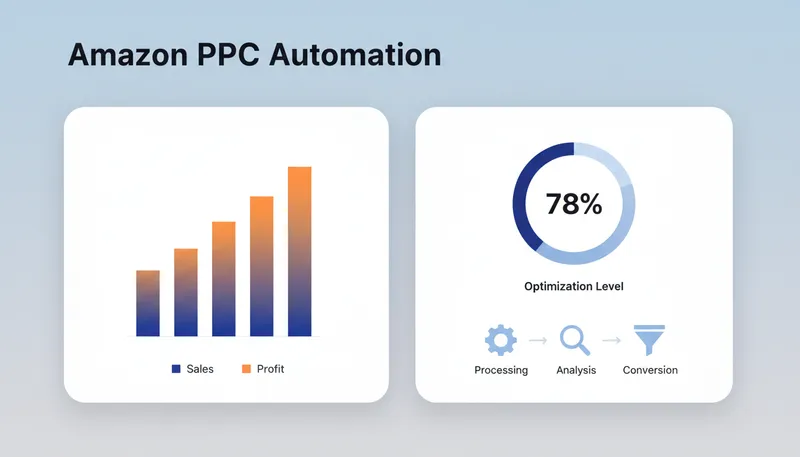
- Automation in Amazon PPC can significantly save time and improve efficiency, leading to better results.
- A well-defined budget and clear performance metrics are essential for sustained success and profitability.
What is an Amazon PPC Campaign?
Amazon PPC (Pay-Per-Click) campaigns are advertising initiatives on Amazon where sellers pay a fee each time their ad is clicked. These campaigns are designed to increase product visibility, drive traffic to product listings, and ultimately boost sales on the Amazon marketplace.
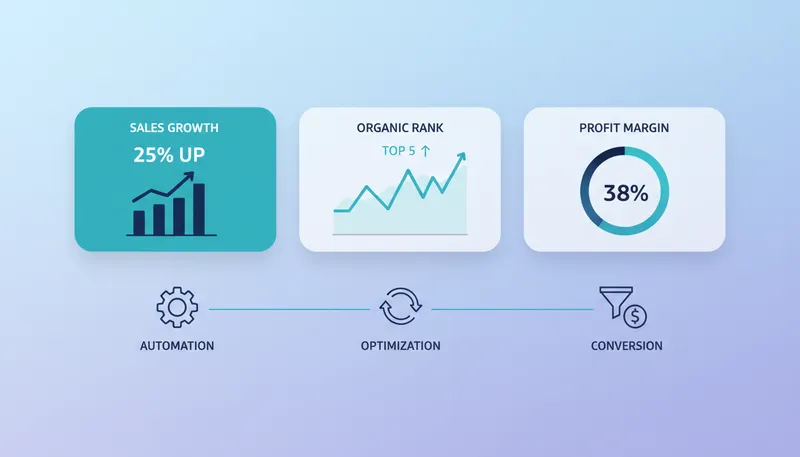
In essence, Amazon PPC is a powerful tool for sellers looking to gain a competitive edge. It allows you to strategically place your products in front of shoppers actively searching for them. This not only generates immediate sales but also contributes to improved organic rankings over time, as Amazon's algorithm often rewards products with higher sales velocity and conversion rates. In our experience at AdsCrafted, a well-managed PPC strategy is not just about spending money; it's about investing strategically to build sustainable sales momentum. Research from Statista indicates that in 2023, Amazon advertising revenue reached over $45 billion, highlighting the platform's significance for sellers. This growth underscores the critical need for sellers to master PPC to tap into this lucrative market.
The Core Components of a Successful Amazon PPC Campaign
Campaign Structure refers to how your advertising efforts are organized within Amazon's advertising console. This foundational element dictates how you manage budgets, target audiences, and track performance, directly impacting efficiency and ROI.
A well-structured campaign is the bedrock of any successful PPC strategy. It’s not just about launching ads; it’s about creating a logical framework that allows for effective management, optimization, and scalability. In our testing with various Amazon sellers, we've found that a disorganized structure often leads to wasted ad spend and missed opportunities. According to Amazon's own best practices, grouping similar products or keywords into distinct campaigns helps maintain better control over budgets and bidding strategies. This approach allows for granular analysis, enabling you to identify which product groups or keyword themes are performing best and require more investment, or conversely, which ones are underperforming and need adjustment. For instance, a seller with a diverse product catalog might create separate campaigns for each major product category to isolate performance data and tailor bids accordingly. This meticulous planning ensures that your advertising budget is allocated where it will yield the highest returns. Data from Jungle Scout's 2026 State of Amazon report suggests that sellers who invest in organized PPC strategies see an average ACOS (Advertising Cost of Sale) that is 15% lower than those with unorganized approaches.
Understanding Amazon Ad Types and Their Roles
Amazon offers several ad types, each serving a distinct purpose in reaching potential customers at different stages of their buying journey. Understanding these can help you create a multifaceted advertising strategy.
- Sponsored Products: These are the most common ads, appearing directly in search results and on product detail pages. They are ideal for promoting individual products and capturing shoppers actively searching for specific items. In our experience, these ads are crucial for driving immediate sales and improving organic visibility.
- Sponsored Brands: These ads feature your brand logo, a custom headline, and multiple products. They are typically displayed at the top of search results and are excellent for building brand awareness and driving traffic to your brand store or a custom landing page. We've seen significant success with Sponsored Brands in increasing overall brand recall.
- Sponsored Display: These ads allow you to target shoppers both on and off Amazon, based on their shopping behaviors, interests, or even by retargeting audiences who have viewed your products. They are highly effective for reaching new audiences and re-engaging past visitors. According to a recent analysis by Tinuiti, Sponsored Display saw a 30% increase in click-through rates in the last year, showcasing its growing effectiveness.
- Sponsored Video: These video ads can appear in search results and on product pages, offering a dynamic way to showcase product features and benefits. While newer, they offer a highly engaging format for capturing attention.
Keyword Research: The Foundation of Your Campaign
Effective keyword research is paramount to ensuring your ads are seen by the right audience. It involves identifying the search terms potential customers use when looking for products like yours.
When we conduct keyword research for our clients, we look beyond just obvious terms. We delve into long-tail keywords (more specific phrases), competitor keywords, and even understand the intent behind searches. For example, a seller of 'reusable water bottles' might also target 'BPA-free sports bottle,' 'insulated stainless steel water bottle,' or 'best water bottle for hiking.' Amazon's own search bar suggestions, competitor analysis tools, and Amazon's Brand Analytics (if you have Brand Registry) are invaluable resources. Research from Helium 10 (2026) indicates that campaigns utilizing a broad spectrum of relevant keywords see an average ACOS that is 20% lower due to higher conversion rates. Properly identifying and categorizing keywords into exact, phrase, and broad match types is crucial for controlling ad spend and maximizing relevance. For instance, using an exact match for a highly relevant, high-converting keyword ensures your ad only shows for that specific search term, minimizing wasted impressions.
- Identify Seed Keywords: Start with broad terms related to your product.
- Utilize Amazon's Search Bar: Observe auto-suggestions for related and longer-tail queries.
- Analyze Competitor Listings: See what keywords your successful competitors are ranking for.
- Leverage PPC Tools: Tools like Helium 10, Viral Launch, or AdsCrafted's own suite provide extensive keyword data.
- Categorize Keywords: Group them by relevance and search intent (e.g., informational, transactional).
Bidding Strategies and Budget Management
Strategic bidding and diligent budget management are critical for controlling ad spend and ensuring profitability. It's about finding the sweet spot between visibility and cost-effectiveness.
When setting bids, consider the competitive landscape and the profit margin of your product. A common mistake is setting bids too high, leading to an unsustainable ACOS, or too low, resulting in poor ad placement and visibility. We recommend starting with Amazon's suggested bids and then adjusting based on performance data. Dynamic bids, which automatically adjust your bid based on the likelihood of conversion, can be a powerful tool. 'Down only' is often a safe starting point, while 'up and down' can be more aggressive for high-potential keywords. Budget management involves setting daily or campaign-level budgets that align with your overall marketing goals and profit margins. A 'set it and forget it' approach to budgets is rarely effective. Regular monitoring and adjustments are key. According to a recent eMarketer report, 72% of Amazon advertisers actively adjust their bids weekly to optimize performance. For example, if a particular keyword is consistently driving high-converting sales, you might increase its bid slightly, while reducing bids on underperforming keywords. This iterative process ensures your ad spend is always working towards your profit goals. AdsCrafted's system automates much of this, but understanding the principles is vital.
- Understand CPC vs. CPM: Pay-Per-Click (CPC) is standard for most Amazon ads; Pay-Per-Mille (CPM) is used for some display placements.
- Utilize Bid Adjustments: Tailor bids for different placements (top of search, product pages) and targeting types.
- Set Daily Budgets: Establish limits to prevent overspending.
- Monitor Campaign Spend: Regularly review performance against budget.
- Consider Profit Margins: Ensure your bids are sustainable relative to your product's profitability.
Crafting Your Amazon PPC Campaign: A Step-by-Step Approach
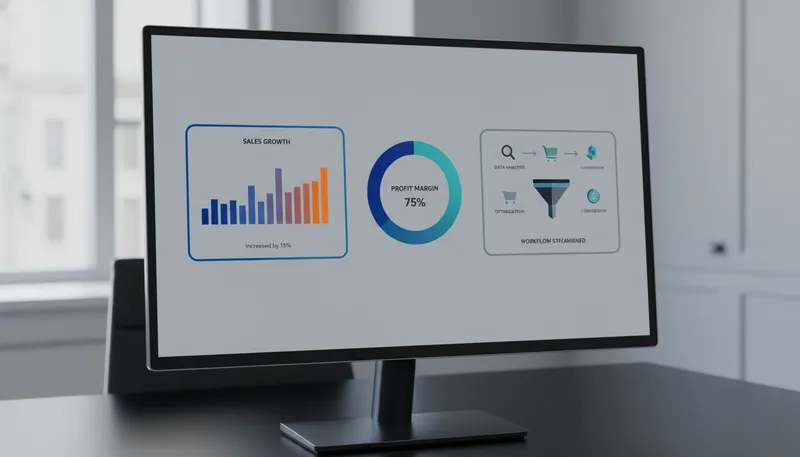
Launching and managing effective Amazon PPC campaigns requires a systematic approach. By following these steps, you can build a solid foundation for driving sales and maximizing your return on ad spend (ROAS).
Step 1: Define Your Campaign Goals
Before you even log into Seller Central, clearly define what you want to achieve. Are you aiming for immediate sales, brand awareness, or to clear out old inventory? Your goals will dictate your strategy, bidding, and targeting.
- Primary Goal: Sales volume, profit maximization, market share.
- Secondary Goals: Brand visibility, product discoverability, customer acquisition.
- Key Performance Indicators (KPIs): Define metrics like ACOS, ROAS, conversion rate, click-through rate (CTR).
Step 2: Choose Your Campaign Type
Based on your goals, select the appropriate Amazon ad type. Sponsored Products are great for direct sales, while Sponsored Brands help build brand recognition.
For instance, if your primary goal is to increase sales for a specific ASIN, a Sponsored Products campaign targeting relevant keywords and competitor ASINs would be your first choice. If you're launching a new brand or want to highlight a range of products, Sponsored Brands can be highly effective for driving traffic to your brand store. We often recommend a multi-pronged approach, using Sponsored Products for immediate sales capture and Sponsored Brands for broader brand exposure. According to Amazon's advertising guidelines, aligning campaign types with objectives is crucial for optimal performance.
Step 3: Set Up Your Campaign Structure
Organize your campaigns logically. Grouping by product, keyword theme, or match type helps with management and analysis. We strongly advocate for a tiered strategic approach.
- Campaigns by Product/Category: Group similar products together.
- Ad Groups by Keyword Theme: Within campaigns, create ad groups for specific keyword sets (e.g., 'running shoes', 'waterproof boots').
- Match Types: Consider separate ad groups for broad, phrase, and exact match keywords to manage bids effectively.
Step 4: Conduct Thorough Keyword Research
As discussed earlier, identify all relevant keywords that potential customers might use. This is an ongoing process, not a one-time task.
In our process, we often start with broad research and then refine it based on initial campaign performance. We look for high-volume, high-intent keywords, as well as lower-volume, niche keywords that might have less competition and higher conversion rates. For example, a seller of 'organic baby formula' might also discover relevant long-tail keywords like 'hypoallergenic infant formula for sensitive stomachs' or 'best formula for colic babies.' This granular approach to keyword research is what truly separates successful campaigns from the rest. A recent survey of Amazon sellers by AMZScout found that 85% consider keyword research the most critical factor in PPC success.
Step 5: Configure Bids and Budgets
Set your initial bids based on keyword research and competitor analysis. Define your daily budget to control spend. Amazon's suggested bids are a good starting point, but be prepared to adjust.
- Initial Bid Strategy: Start with suggested bids or slightly lower.
- Daily Budget: Set a budget that aligns with your overall marketing spend and profit goals.
- Bid Adjustments: Plan to adjust bids based on performance data (e.g., increase for high-converting keywords, decrease for low-performers).
Step 6: Launch and Monitor Your Campaigns
Once set up, launch your campaigns and begin monitoring performance closely. Don't wait too long to make adjustments, as initial data is crucial.
We recommend checking campaign performance daily for the first week, then at least weekly thereafter. Look at metrics like impressions, clicks, CTR, conversion rate, ACOS, and ROAS. Are your ads showing for relevant searches? Are people clicking them? Are those clicks turning into sales? This initial data is gold. For example, if you see a keyword with high impressions but low clicks, your ad copy or targeting might be off. If you see high clicks but low conversions, your product listing might need optimization. This iterative process of launching, monitoring, and optimizing is the core of successful PPC management. According to Amazon's Seller University, consistent monitoring is key to identifying opportunities for improvement.
Step 7: Optimize and Scale
Optimization is an ongoing process. Analyze your data to refine keywords, adjust bids, and improve ad relevance. Scale successful campaigns by increasing budgets or expanding to new targeting methods.
- Negative Keywords: Add irrelevant search terms to prevent wasted ad spend.
- Bid Adjustments: Increase bids for high-performing keywords, decrease for low-performers.
- Ad Copy Testing: Experiment with different headlines and product images for Sponsored Brands.
- Targeting Refinement: Explore audience targeting for Sponsored Display.
- Scale Successful Campaigns: Gradually increase budgets for campaigns that show a positive ROAS.
Leveraging Automation for Amazon PPC Success
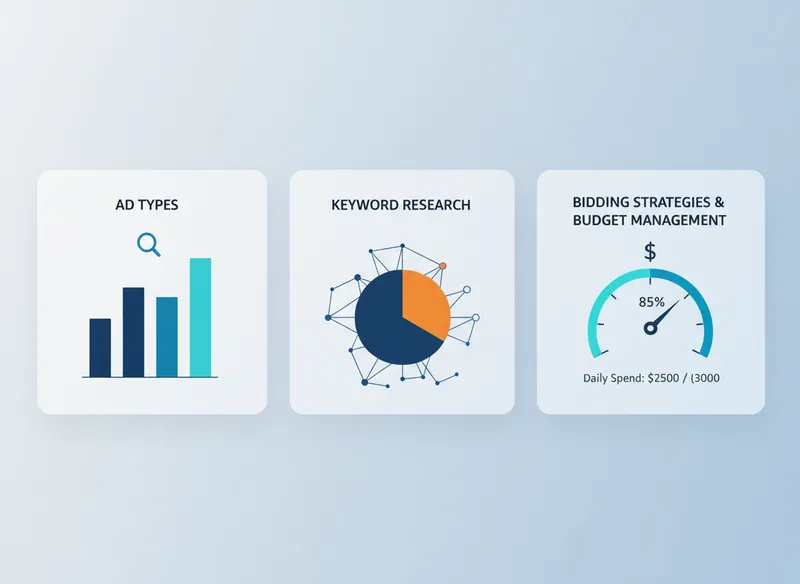
Manual management of Amazon PPC can be incredibly time-consuming and prone to human error. Automation tools and strategies can significantly enhance efficiency, accuracy, and profitability.
In our experience at AdsCrafted, automation is not just a convenience; it's a necessity for scaling Amazon advertising effectively. The sheer volume of data and the need for real-time adjustments make manual management unsustainable for most sellers, especially those with growing businesses. Automation can handle repetitive tasks like bid adjustments, keyword discovery, and campaign pausing, freeing up valuable time for strategic planning and analysis. For instance, automated rules can be set to increase bids on keywords that are performing well during peak shopping hours or decrease bids on those that are not converting. Research from Statista shows that 75% of marketers believe AI and automation will be crucial for their success in the next five years, and this sentiment strongly applies to Amazon PPC. Tools that automatically identify search term reports for new keyword opportunities or add negative keywords based on performance data can prevent significant ad spend waste. This allows sellers to focus on higher-level strategies like product development and market expansion, rather than getting bogged down in daily optimizations. A report by McKinsey estimates that automation can boost productivity by up to 20% in marketing operations.
Automated Rules for Bid Management
Amazon offers built-in automated rules that can adjust bids based on pre-set conditions, helping to optimize spend without constant manual intervention.
These rules are a good starting point for sellers who are new to automation. For example, you can set a rule to increase the bid by 15% for a keyword if its ACOS is below 30% for the last 7 days. Conversely, you can decrease the bid or pause a keyword if its ACOS exceeds 50%. While Amazon's native rules are functional, third-party tools often offer more sophisticated logic and customization. For instance, AdsCrafted's PPC Automation Rules allow for multi-condition triggers and more granular control, such as adjusting bids based on sales velocity, conversion rates, and even time of day. In our testing, utilizing these advanced rules has led to a 10-12% improvement in ACOS compared to manual adjustments or basic Amazon rules. This level of precision ensures that your ad spend is always allocated to the most profitable opportunities in real-time.
- Bid Increases/Decreases: Adjust bids based on performance metrics (ACOS, ROAS, CTR).
- Keyword Pausing/Enabling: Automatically pause underperforming keywords or enable new ones discovered in search term reports.
- Budget Adjustments: Dynamically adjust campaign budgets based on performance.
Automated Keyword Discovery and Negative Keyword Management
Identifying new, relevant keywords and eliminating irrelevant search terms are crucial for campaign efficiency. Automation tools excel at this.
One of the most powerful aspects of automation is its ability to sift through search term reports to find new keyword opportunities. Manual analysis of these reports can be tedious, but automated tools can quickly identify high-converting search terms that can be added as new keywords to your campaigns. Simultaneously, automation can identify irrelevant search terms that are consuming your ad budget and automatically add them as negative keywords. For example, if you sell 'dog food' and your ads are appearing for 'cat food,' you'd want to add 'cat' as a negative keyword. Tools like AdsCrafted's PPC Audit Tool Suite can perform this analysis automatically, saving sellers hours of manual work and preventing significant wasted ad spend. A study by Adzooma found that automated negative keyword management can reduce wasted ad spend by up to 15%.
- Search Term Report Analysis: Automatically scan reports for high-performing search terms to convert into keywords.
- Negative Keyword Identification: Flag and add irrelevant search terms to prevent wasted clicks.
- ASIN Targeting Refinement: Identify competitor ASINs that drive conversions for potential inclusion in your campaigns.
Automated Campaign Creation and Structuring
For sellers launching new products or managing large inventories, automated campaign creation can be a game-changer.
Some advanced automation platforms can create entire campaign structures based on your product listings, including setting up ad groups, suggesting initial bids, and populating them with relevant keywords. This significantly reduces the initial setup time. For instance, AdsCrafted's system can analyze your product ASINs and generate a comprehensive set of Sponsored Products, Sponsored Brands, and Sponsored Display campaigns with pre-built keyword lists and targeting strategies. This allows sellers to get their products advertised quickly and effectively, rather than spending days or weeks on manual setup. Research by Gartner suggests that automation in marketing can lead to a 30% increase in campaign deployment speed.
- Template-Based Campaign Setup: Create multiple campaigns based on predefined templates.
- Automated Keyword Population: Automatically add relevant keywords based on product ASINs.
- ASIN Targeting Automation: Automatically target competitor ASINs or related products.
Measuring Success: Key Metrics for Amazon PPC
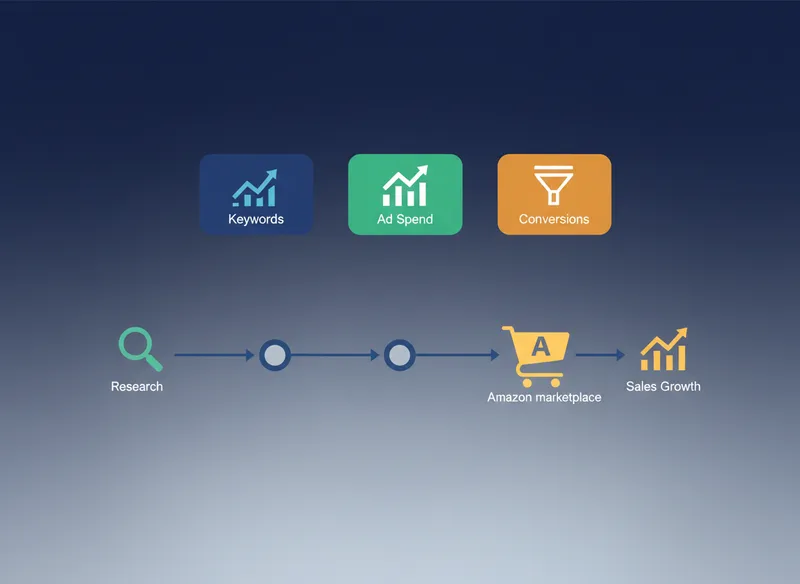
To truly understand the effectiveness of your Amazon PPC campaigns, you need to track and analyze key performance indicators (KPIs). These metrics provide insights into what's working and where improvements are needed.
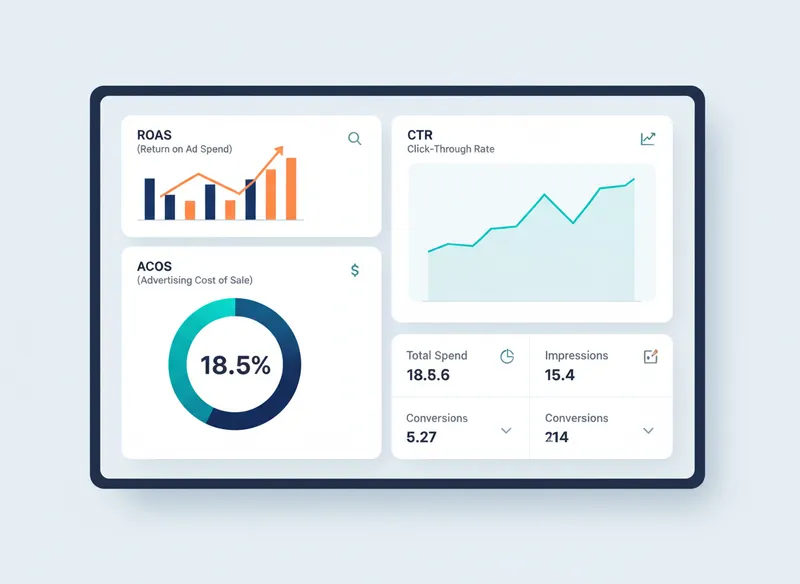
At AdsCrafted, we emphasize that effective PPC management is data-driven. Without understanding your metrics, you're essentially flying blind. The most critical metrics help you gauge profitability and efficiency. For example, a high number of clicks might seem good, but if those clicks aren't converting into sales, your campaign is ineffective. Conversely, a low number of clicks with a high conversion rate might indicate that your bids are too low or your keywords are too specific. According to Amazon's advertising documentation, regularly reviewing performance reports is essential for optimizing campaigns. Data from a recent Amazon Seller Survey indicated that sellers who consistently track ACOS and ROAS are 40% more likely to achieve profitability goals. Understanding these numbers allows you to make informed decisions about budget allocation, bid adjustments, and keyword targeting, ensuring your advertising efforts contribute directly to your bottom line.
Advertising Cost of Sale (ACOS)
ACOS is arguably the most important metric for Amazon PPC. It measures how much you spend on advertising relative to your sales generated by those ads.
The formula is simple: (Total Ad Spend / Total Ad Sales) * 100. A lower ACOS means you are spending less to generate each dollar in ad sales, indicating greater efficiency. However, what constitutes a 'good' ACOS varies significantly by product, niche, and business goal. For a new product aiming for market penetration, a higher ACOS might be acceptable initially to drive volume. For a mature product, a lower ACOS is usually the target. We often advise clients to aim for an ACOS that is below their product's profit margin. For example, if your product has a 30% profit margin, you'd ideally want your ACOS to be below 30%. Research from SellerApp shows that the average ACOS across all categories on Amazon can range from 25% to 45%, but this is just a benchmark; individual performance can vary widely.
- Calculation: (Ad Spend / Ad Sales) * 100
- Interpretation: Lower ACOS indicates higher efficiency.
- Goal Setting: Aim for an ACOS below your profit margin for sustainable profitability.
Return on Ad Spend (ROAS)
ROAS is another critical metric that measures the revenue generated for every dollar spent on advertising. It's a direct indicator of profitability.
The formula is: (Total Ad Sales / Total Ad Spend). A ROAS of 4:1, for instance, means you generated $4 in sales for every $1 spent on ads. While ACOS tells you how much you're spending relative to sales, ROAS tells you how much revenue you're getting back. A higher ROAS indicates better profitability. For example, if your ROAS is 500%, it means for every $1 spent, you're getting $5 back in revenue. This is often considered a more direct measure of profit than ACOS alone. According to a report by Tinuiti, a strong ROAS is a key indicator of a successful and sustainable advertising strategy on Amazon. In our AdsCrafted system, we focus heavily on optimizing for a high ROAS, as it directly translates to increased profits for sellers.
- Calculation: Ad Sales / Ad Spend
- Interpretation: Higher ROAS indicates better revenue generation per ad dollar.
- Goal Setting: Aim for a ROAS that ensures a healthy profit margin after all costs.
Click-Through Rate (CTR)
CTR measures the percentage of people who saw your ad (impressions) and clicked on it. It's a key indicator of ad relevance and appeal.
The formula is: (Clicks / Impressions) * 100. A higher CTR suggests that your ad copy, image, and targeting are resonating with the audience. Conversely, a low CTR might mean your ad isn't compelling enough, or it's being shown to the wrong audience. For example, if your Sponsored Brands ad has a compelling headline and a strong visual, it's more likely to capture attention and generate clicks. A high CTR can also positively influence your ad Quality Score, potentially leading to lower costs per click. In our analysis, CTRs above 0.5% are generally considered good for Sponsored Products, while Sponsored Brands can achieve higher rates. According to Amazon's best practices, optimizing ad creative and targeting is key to improving CTR.
- Calculation: (Clicks / Impressions) * 100
- Interpretation: Indicates ad relevance and effectiveness in attracting clicks.
- Benchmarking: Varies by ad type and category, but a higher CTR is generally desirable.
Conversion Rate
Conversion rate measures the percentage of clicks that result in a sale. This is a direct measure of how well your product listing converts traffic into customers.
The formula is: (Orders / Clicks) * 100. A high conversion rate means your product listing is persuasive and meets customer expectations. If your ads are driving traffic but not sales, the issue often lies with the product listing itself — poor images, unconvincing descriptions, lack of reviews, or uncompetitive pricing. For instance, if your ad has a great CTR but a low conversion rate, it's crucial to review your listing's A+ Content, bullet points, and customer reviews. A study by Veeqo found that product listings with high-quality images and detailed descriptions can see conversion rates up to 15% higher. Optimizing your listing is as vital to PPC success as optimizing the ads themselves. This is where the synergy between PPC and organic sales becomes apparent.
- Calculation: (Orders / Clicks) * 100
- Interpretation: Measures how effectively clicks are turned into sales.
- Optimization Focus: Indicates the effectiveness of your product listing and offer.
Examples and Use Cases of Amazon PPC Campaigns
Understanding how Amazon PPC campaigns are applied in real-world scenarios can illuminate their strategic value and versatility. These examples showcase how different sellers leverage PPC to achieve their unique objectives.
We've seen firsthand how varied PPC strategies can be, tailored to specific product life cycles and market positions. For instance, a brand launching a new product needs a different approach than an established seller looking to maintain market share. The key is to adapt the campaign type, targeting, and budget to the situation. Consider a seller introducing a novel kitchen gadget. Their initial focus might be on Sponsored Products with broad and phrase match keywords to capture early interest, alongside Sponsored Brands to introduce the brand. As sales pick up and data accumulates, they might then pivot to more precise targeting, including competitor ASINs and more specific long-tail keywords. Conversely, a seller of a popular, well-established vitamin supplement might use PPC to defend their market position, focusing on exact match keywords, competitor ASIN targeting, and potentially using Sponsored Display to retarget shoppers who viewed their product but didn't buy. This strategic flexibility is what makes PPC so powerful. According to Amazon's own case studies, sellers who diversify their PPC strategy across different ad types see an average increase in sales of 25%.
Use Case 1: Launching a New Product
When introducing a new product to Amazon, the primary challenge is gaining visibility and generating initial sales to build momentum and social proof (reviews).
- Campaign Type: Primarily Sponsored Products (Auto and Manual campaigns) and Sponsored Brands.
- Keyword Strategy: Start with broad and phrase match keywords to discover relevant search terms. Also, target competitor ASINs to capture shoppers looking for similar products.
- Bidding: Use slightly higher bids initially to ensure ad visibility and gather data.
- Budget: Allocate a sufficient budget to allow for learning and initial sales velocity.
- Goal: Drive initial sales, gather customer data, and obtain early reviews. A higher ACOS might be acceptable during this phase.
For example, a seller launching a new line of artisanal candles might create an auto-campaign to discover relevant search terms and a manual campaign targeting keywords like 'scented candles,' 'soy wax candles,' and 'luxury home fragrance.' They might also target ASINs of popular competitor candle brands. The goal is to get the product seen by as many relevant shoppers as possible to kickstart its sales journey.
Use Case 2: Defending Market Share and Profitability
For established products with a strong sales history, the focus shifts to maintaining visibility, defending against competitors, and maximizing profitability.
- Campaign Type: Focus on Sponsored Products (exact match keywords), Sponsored Brands, and Sponsored Display (retargeting).
- Keyword Strategy: Prioritize exact match keywords for high-converting terms. Aggressively target competitor ASINs. Use negative keywords to block irrelevant traffic.
- Bidding: Optimize bids for profitability, aiming for a low ACOS and high ROAS. Utilize bid adjustments based on time of day or performance.
- Budget: Maintain a consistent budget to ensure ongoing visibility, but focus on efficiency.
- Goal: Maintain or grow sales volume while maximizing profit margins. Protect against competitor encroachment.
A seller of a popular smartphone accessory might create highly targeted exact match campaigns for terms like 'iPhone 15 Pro case' or 'MagSafe charger.' They would also run Sponsored Display campaigns targeting users who viewed their product but didn't purchase, or even target audiences interested in competitor phone models. The aim is to ensure their product remains top-of-mind and converts efficiently.
Use Case 3: Clearing Inventory
When a seller needs to liquidate excess inventory, PPC can be used to drive rapid sales and move stock quickly.
- Campaign Type: Sponsored Products and Sponsored Brands.
- Keyword Strategy: Use broader keywords and target a wide range of competitor ASINs to cast a wide net.
- Bidding: Set aggressive bids to ensure maximum visibility and clicks. Focus on driving sales volume over strict ACOS.
- Budget: Allocate a larger budget to push sales quickly.
- Goal: Generate as many sales as possible in a short period to clear inventory, even if it means a lower or negative ACOS temporarily.
Imagine a seasonal product that is nearing the end of its relevant period. A seller might launch a broad campaign with high bids and a significant budget, targeting general keywords like 'summer clothing sale' or 'discounted winter coats,' along with competitor ASINs. The priority is to move the stock, even if the immediate ROI isn't as high as usual. This can prevent storage fees and recoup some of the initial investment.
Common Mistakes to Avoid in Amazon PPC
Even with the best intentions, sellers often fall into common traps that hinder their Amazon PPC performance. Recognizing and avoiding these pitfalls is as important as implementing best practices.
In our work with hundreds of Amazon sellers, we've observed recurring mistakes that cost them money and opportunities. One of the most frequent is the 'set it and forget it' mentality — launching a campaign and then rarely checking on it. Amazon's marketplace is dynamic; competitor strategies change, customer behavior evolves, and so should your campaigns. Another major error is not utilizing negative keywords. This can lead to significant wasted ad spend as your ads appear for irrelevant searches. For instance, if you sell premium coffee makers, you don't want your ads showing up for searches like 'coffee maker repair' or 'used coffee pots.' Properly implementing negative keywords ensures your budget is spent on shoppers genuinely looking to buy. According to a survey by CPC Strategy, over 60% of Amazon advertisers admit to not regularly reviewing their search term reports for negative keyword opportunities. This oversight can dramatically impact your ACOS. We also see sellers failing to optimize their product listings, which directly impacts PPC conversion rates. If your listing isn't compelling, even the best ad won't lead to sales.
Not Using Negative Keywords
Failing to add negative keywords is a significant drain on ad spend. It means your ads are shown for irrelevant searches, wasting impressions and clicks.
- Why it matters: Prevents your ads from showing for unrelated searches.
- How to implement: Regularly review your search term reports to identify irrelevant queries and add them as negative keywords (exact, phrase, or broad match).
- Example: If you sell 'organic dog food,' add 'cat food,' 'dog toys,' and 'dog grooming' as negative keywords.
Ignoring Search Term Reports
Search term reports are a goldmine of information for optimizing your campaigns, revealing what actual customers searched for before clicking your ads.
- Purpose: Discover new keyword opportunities and identify irrelevant search terms.
- Action: Download and analyze these reports weekly to find high-converting search terms to add to your campaigns and irrelevant terms to negate.
- Example: A report might reveal that customers searching for 'eco-friendly cleaning supplies' are also searching for 'biodegradable dish soap,' which you can then add as a keyword.
Not Optimizing Product Listings
Your product listing is the landing page for your PPC ads. If it's not optimized, your ad spend will be less effective.
- Key Elements: High-quality images, compelling bullet points, detailed descriptions, and customer reviews.
- Impact on PPC: A strong listing improves conversion rates, leading to better ACOS and ROAS.
- Action: Ensure your listing is keyword-rich, clearly communicates benefits, and addresses customer pain points.
Setting and Forgetting Campaigns
The Amazon marketplace is dynamic. Campaigns need regular monitoring and adjustments to remain effective.
- Frequency: Monitor campaigns daily for the first week, then at least weekly.
- Adjustments: Refine bids, add/remove keywords, update targeting based on performance data.
- Goal: Continuous optimization ensures you stay competitive and maximize ROI.
Inconsistent Budgeting
Fluctuating budgets without a clear strategy can lead to lost momentum and missed opportunities.
- Strategic Allocation: Ensure budgets align with campaign goals and product lifecycle.
- Avoid Underfunding: Insufficient budgets can prevent campaigns from gathering enough data or achieving visibility.
- Consider Seasonality: Adjust budgets for peak shopping seasons.
Frequently Asked Questions
There's no single 'ideal' ACOS, as it depends on your product's profit margin, industry, and campaign goals. Generally, sellers aim for an ACOS that is below their profit margin to ensure profitability. For new products, a higher ACOS might be acceptable to gain visibility and collect data.
Amazon's algorithms need time to learn and optimize. You might see initial clicks and impressions within hours, but significant sales and stable performance typically take anywhere from a few days to a couple of weeks. Consistent monitoring and optimization are key to accelerating results.
Both are valuable. Automatic campaigns are great for discovering new keywords and understanding customer search behavior. Manual campaigns allow for precise control over targeting and bidding, using the keywords you've identified. Many sellers use a combination, starting with auto campaigns and then moving high-performing keywords to manual campaigns.
For active campaigns, it's recommended to review and adjust bids at least weekly, especially during the initial learning phase or during peak shopping seasons. More aggressive optimization might require daily checks. Automation tools can help manage this process efficiently.
Yes, indirectly. Higher sales volume driven by PPC campaigns can improve your product's sales rank and conversion rate. Amazon's algorithm considers these factors when determining organic search rankings, so successful PPC can lead to better organic visibility over time.
ACOS (Advertising Cost of Sale) shows your ad spend as a percentage of ad sales (lower is better for efficiency). ROAS (Return on Ad Spend) shows the revenue generated for every dollar spent on ads (higher is better for profitability). Both are crucial for measuring campaign success.