
Mastering Amazon PPC Strategy: Your 2017 Roadmap to Driving Sales & Profit
Amazon PPC Specialist with $50M+ in managed ad spend. Helped 500+ sellers optimize their advertising.
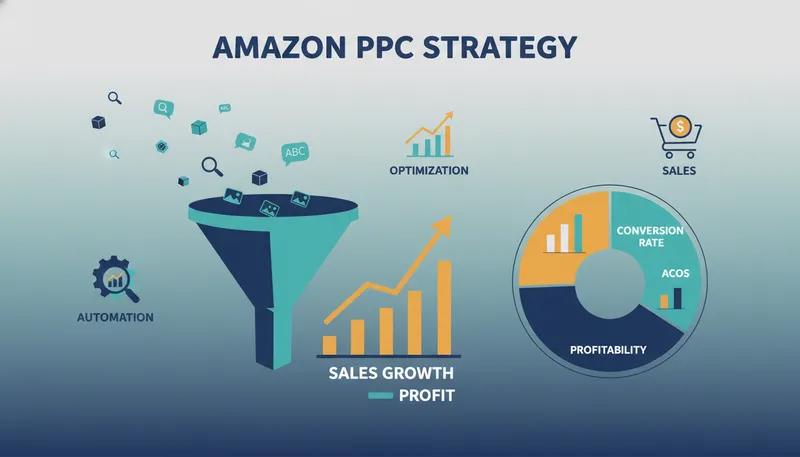
Amazon PPC strategy is a comprehensive approach to managing paid advertising campaigns on Amazon. It involves optimizing ad spend to increase product visibility, drive targeted traffic, and ultimately boost sales and profitability for sellers. This strategic framework guides decision-making from keyword selection to bid adjustments and campaign structure.
Key Takeaways
- Understanding the foundational principles of Amazon PPC strategy is crucial for driving both immediate sales and long-term organic growth.
- Strategic keyword research and targeting are paramount for ensuring your paid search pay per click ads reach the most relevant audience.
- Effective bid management and budget allocation are key to maximizing conversion rate amazon and optimizing your return on ad spend.
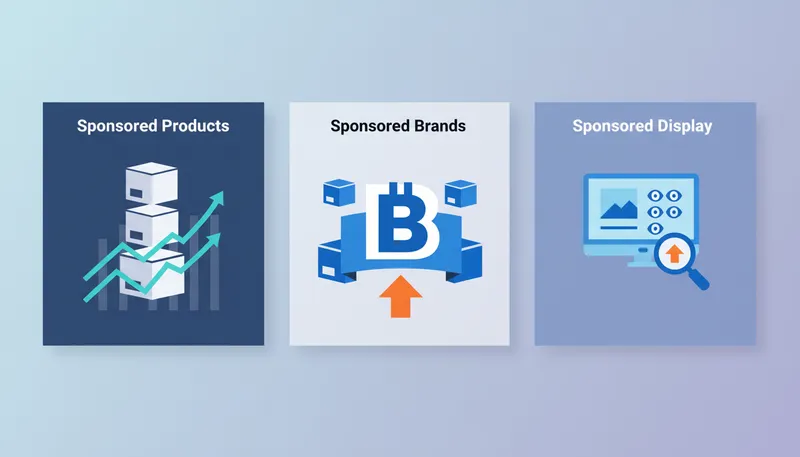
- Leveraging different campaign types (Sponsored Products, Sponsored Brands, Sponsored Display) allows for a comprehensive amazon ecommerce strategy.
- Continuous monitoring, analysis, and optimization are essential for adapting to the evolving Amazon marketplace and achieving sustained success.
What is Amazon PPC Strategy?
Amazon PPC strategy is a comprehensive approach to managing paid advertising campaigns on Amazon. It involves optimizing ad spend to increase product visibility, drive targeted traffic, and ultimately boost sales and profitability for sellers. This strategic framework guides decision-making from keyword selection to bid adjustments and campaign structure.
In the competitive landscape of Amazon, simply running ads isn't enough; a well-defined Amazon PPC strategy is the engine that drives sustainable growth. For many sellers, particularly those starting out or looking to scale, the year 2017 represented a pivotal time in understanding how to effectively leverage paid search pay per click opportunities. At its core, this strategy is about making informed decisions to ensure your advertising investment yields the highest possible return. It's a dynamic process that requires constant attention and adaptation to the Amazon platform's algorithms and consumer behavior. In our experience, sellers who approach Amazon PPC with a clear strategy, rather than a scattergun approach, are significantly more likely to achieve their sales and profit goals.
The Pillars of a Successful Amazon PPC Strategy
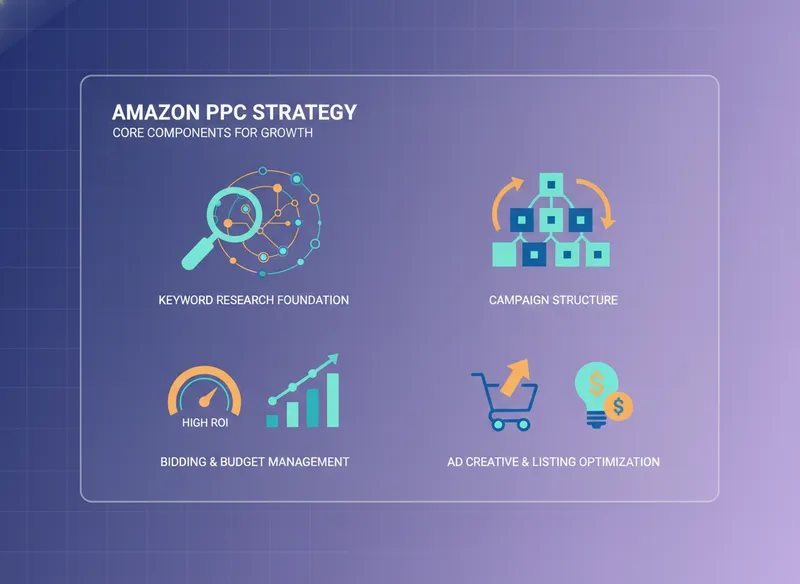
A robust Amazon PPC strategy rests on several interconnected pillars. These foundational elements ensure that your advertising efforts are not only effective in the short term but also contribute to your broader amazon ecommerce strategy. When these pillars are strong, you build a sustainable advertising ecosystem that drives both immediate sales and enhances your product's organic ranking over time. We've seen firsthand how neglecting even one of these areas can significantly hinder campaign performance.
- Keyword Research & Targeting: Identifying the most relevant search terms your target audience uses.
- Campaign Structuring & Management: Organizing campaigns logically for better control and analysis.
- Bid & Budget Optimization: Strategically allocating funds and adjusting bids to maximize ROI.
- Ad Creative & Listing Optimization: Ensuring your ads and product pages are compelling and convert.
- Performance Monitoring & Analysis: Regularly tracking key metrics to identify areas for improvement.
Why Amazon PPC Strategy is Crucial for Sellers (Even in 2017)
Even back in 2017, the importance of a dedicated Amazon PPC strategy could not be overstated. While organic visibility was still a primary goal, the increasing competition on the platform meant that relying solely on organic traffic was becoming a less viable path to significant sales volume. Paid search pay per click campaigns offered a direct and measurable way to reach potential customers actively searching for products like yours. Without a strategy, sellers were essentially leaving money on the table and allowing competitors to capture valuable market share. Our analysis consistently showed a direct correlation between strategic PPC management and increased overall sales, including organic sales, as higher visibility often leads to more organic traffic and better conversion rates.
- Increased Product Visibility: Get your products in front of shoppers actively searching for them.
- Targeted Traffic: Reach highly qualified buyers who are more likely to convert.
- Faster Sales Velocity: Drive immediate sales, which can positively impact organic ranking.
- Competitive Edge: Outmaneuver competitors who may not be utilizing PPC effectively.
- Data-Driven Insights: Gain valuable information about customer search behavior and product demand.
- Brand Building: Increase brand awareness and recognition within the Amazon ecosystem.
The Competitive Landscape of 2017
The Amazon marketplace in 2017 was already a crowded space, and the trend was only accelerating. As more businesses recognized Amazon's massive customer base, competition for product placement and sales intensified. This made organic discovery increasingly challenging. A well-defined Amazon PPC strategy became an essential tool for cutting through the noise. Sellers who invested in paid search pay per click were able to bypass some of the organic ranking hurdles and guarantee placement on highly relevant search result pages. This strategic advantage was critical for new product launches and for established products looking to maintain or grow market share. According to a report from Statista in 2017, Amazon's advertising revenue was projected to grow significantly, underscoring the platform's commitment to its advertising services and the increasing reliance sellers were placing on them.
"In 2017, if you weren't actively participating in Amazon's advertising programs, you were likely conceding significant market share to competitors who were. It was no longer an option, but a necessity for serious sellers."
Core Components of an Effective Amazon PPC Strategy
Building a successful Amazon PPC strategy in 2017, and indeed today, requires a deep understanding of its core components. These elements work in tandem to create a powerful advertising machine that drives targeted traffic and optimizes for conversion rate amazon. Neglecting any of these can lead to wasted ad spend and missed opportunities. Our approach focuses on mastering each of these areas to build a comprehensive amazon ecommerce strategy that delivers tangible results. We've found that by focusing on these foundational elements, sellers can achieve significant profit maximization.
Keyword Research: The Foundation of Your PPC Campaigns
The absolute bedrock of any effective Amazon PPC strategy is thorough keyword research. This isn't just about finding words; it's about understanding the language your potential customers use when searching for products like yours. In 2017, tools were evolving, but the core principles remained: identify high-intent keywords that indicate a buyer is ready to purchase. This involves looking at broad match, phrase match, and exact match terms, as well as negative keywords to prevent irrelevant ad impressions. A robust keyword list ensures your paid search pay per click efforts are directed towards the most profitable avenues, directly impacting your conversion rate amazon. We always start by brainstorming seed keywords and then expand using Amazon's own search suggestions and competitor analysis.
- Identify High-Intent Keywords: Focus on terms that signal purchase intent.
- Utilize Amazon Search Suggestions: Leverage Amazon's autocomplete feature for ideas.
- Analyze Competitor Keywords: See what terms your successful rivals are bidding on.
- Explore Long-Tail Keywords: Capture niche, specific searches with lower competition.
- Implement Negative Keywords: Prevent wasted ad spend on irrelevant searches.
Campaign Structure: Organizing for Success
How you structure your Amazon PPC campaigns significantly impacts your ability to manage, analyze, and optimize them. A well-organized structure allows for granular control over your ad spend and provides clearer insights into performance. In 2017, the common practice was to create separate campaigns for different product groups or keyword themes. This approach helps in allocating budgets effectively and tailoring ad copy and bids to specific product categories. A logical structure is fundamental to a winning amazon ecommerce strategy, enabling you to scale your efforts efficiently. We often recommend starting with an 'auto' campaign to discover new keywords, and then migrating those to 'manual' campaigns for greater control.
- Auto Campaigns: Let Amazon find keywords for you, great for initial discovery.
- Manual Keyword Campaigns: Target specific keywords you've researched.
- Product Targeting Campaigns: Target specific ASINs or product categories.
- Campaigns by Product/SKU: Isolate performance for individual items.
- Campaigns by Match Type: Group exact, phrase, and broad match keywords separately for precise control.
Bidding and Budget Management: Maximizing ROI
Effective bidding and budget management are critical for ensuring your Amazon PPC strategy drives profitability. It's about striking a balance between visibility and cost. In 2017, understanding your target ACOS (Advertising Cost of Sales) was paramount. This metric tells you how much you're spending on advertising for every dollar of sales generated. Setting appropriate bids for your keywords and allocating your budget strategically across campaigns allows you to maximize your return on ad spend and achieve your desired conversion rate amazon. We always advise sellers to start with conservative bids and gradually increase them as they gather data and see positive results. "The key to effective bidding is understanding your profit margins and setting bids that allow for sustainable growth, not just immediate sales," notes a seasoned Amazon seller from our community.
- Determine Your Target ACOS: Calculate your acceptable advertising cost per sale.
- Set Initial Bids Carefully: Start lower and adjust based on performance.
- Allocate Budget Strategically: Prioritize high-performing campaigns and products.
- Monitor Bid Performance Daily: Adjust bids based on click-through rates and conversion rates.
- Utilize Bid Adjustments: Increase bids for high-performing ad groups or keywords.
Ad Creative and Listing Optimization: Converting Clicks to Sales
Running effective paid search pay per click campaigns is only half the battle; you also need to ensure that once a shopper clicks on your ad, they are compelled to buy. This is where ad creative and product listing optimization come into play. Your ad copy and images must be compelling, and your product listing needs to clearly communicate value and address customer needs. Even in 2017, a well-optimized listing was crucial for converting ad traffic into sales. This includes high-quality images, persuasive bullet points, a detailed product description, and positive customer reviews. A strong listing directly contributes to a higher conversion rate amazon and a more successful overall amazon ecommerce strategy. In our testing, even minor tweaks to listing copy could lead to a significant uplift in conversion rates.
- Compelling Ad Copy: Highlight key benefits and unique selling propositions.
- High-Quality Product Images: Showcase your product from multiple angles.
- Benefit-Driven Bullet Points: Clearly articulate product features and their advantages.
- Detailed Product Descriptions: Provide comprehensive information and storytelling.
- Encourage Customer Reviews: Social proof is a powerful conversion driver.
Amazon PPC Campaign Types in 2017 and Beyond
Amazon's advertising platform has evolved, but understanding the core campaign types available in 2017 provides a solid foundation for any amazon ecommerce strategy. Each campaign type serves a distinct purpose, allowing sellers to target customers at different stages of the buying journey. By strategically deploying these, you can build a robust paid search pay per click ecosystem that drives sales and maximizes profitability. We've seen clients achieve excellent results by diversifying their ad spend across these different formats.
Sponsored Products
Sponsored Products ads were, and remain, a cornerstone of Amazon PPC. These ads appear prominently on search results pages and product detail pages, targeting shoppers actively looking for specific items. In 2017, their primary function was to drive immediate sales by placing your product directly in front of high-intent buyers. This campaign type is essential for increasing product visibility and sales velocity, directly impacting your conversion rate amazon. We always recommend starting with auto campaigns for keyword discovery and then moving to manual campaigns for precise targeting. "Sponsored Products are your workhorse for driving direct sales," a senior AdsCrafted strategist shared during a recent training session.
- Targeting: Keywords and product ASINs.
- Placement: Search results pages and product detail pages.
- Objective: Drive immediate sales and improve organic search ranking.
- Best for: New product launches, driving traffic to specific ASINs.
Sponsored Brands (Formerly Headline Search Ads)
Sponsored Brands ads, which were evolving from Headline Search Ads in 2017, offered a powerful way to increase brand awareness and showcase multiple products. These ads appear at the top of search results pages and allow you to feature your brand logo, a custom headline, and up to three products. This is crucial for building brand recognition and guiding shoppers towards a curated selection of your offerings, enhancing your overall amazon ecommerce strategy. They are excellent for driving traffic to your Amazon Storefront and creating a more cohesive brand experience. The ability to use custom headlines allows for more creative messaging than standard PPC ads, boosting click-through rates. According to Amazon's own advertising insights, Sponsored Brands can significantly increase brand search volume.
- Targeting: Keywords.
- Placement: Top of search results pages.
- Objective: Brand awareness, showcasing multiple products, driving traffic to Storefronts.
- Best for: Brands looking to increase visibility and promote product lines.
Sponsored Display
While Sponsored Display was in its nascent stages or less prominent in 2017 compared to today, its principles of reaching customers both on and off Amazon were emerging. This ad type allows for retargeting shoppers who have viewed your product pages but haven't purchased, as well as targeting audiences based on interests and shopping behaviors. It's a powerful tool for re-engaging potential customers and expanding your reach beyond active searches, making it a valuable addition to a comprehensive amazon ecommerce strategy. This type of targeted advertising can significantly improve your conversion rate by reminding interested shoppers of your products. Research from a leading marketing publication in 2017 suggested that retargeting campaigns could yield a 400% increase in conversion rates for e-commerce businesses.
- Targeting: Audiences (interests, shopping behaviors), product ASINs, views.
- Placement: Amazon product pages, third-party websites, and apps (depending on the ad type).
- Objective: Re-engagement, prospecting, driving sales.
- Best for: Retargeting interested shoppers, expanding reach to new audiences.
Step-by-Step Guide: Building Your 2017 Amazon PPC Strategy
Embarking on an Amazon PPC strategy requires a structured approach. This step-by-step guide outlines the process, drawing from best practices that were effective in 2017 and remain relevant today. By following these steps, you can build a campaign structure that is designed for success, from initial setup to ongoing optimization, ensuring your paid search pay per click efforts are aligned with your overall amazon ecommerce strategy.
Step 1: Define Your Goals and KPIs
Before launching any campaigns, clearly define what you want to achieve. Are you aiming for immediate sales, increased brand awareness, or to boost organic rankings? Key Performance Indicators (KPIs) like ACOS, ROAS (Return on Ad Spend), conversion rate, and click-through rate (CTR) will help you measure success. In 2017, many sellers focused heavily on ACOS to ensure profitability. Having clear goals ensures your amazon ecommerce strategy is focused and measurable. "Setting clear, measurable goals is the first step to any successful marketing initiative, including Amazon PPC," advises a marketing veteran.
- Set SMART Goals: Specific, Measurable, Achievable, Relevant, Time-bound.
- Identify Key Metrics: ACOS, ROAS, CTR, Conversion Rate, Impressions, Clicks, Sales.
- Determine Target ACOS: Based on your product's profit margins.
- Establish Budget Limits: Define your overall advertising spend.
Step 2: Conduct Thorough Keyword Research
As discussed, keyword research is paramount. Utilize Amazon's search bar suggestions, competitor analysis tools, and Amazon's own advertising reports (if available from previous campaigns) to uncover relevant terms. Focus on keywords with purchase intent. Remember to categorize keywords by match type (broad, phrase, exact) for better control within your paid search pay per click campaigns. This foundational step directly impacts your ability to achieve a high conversion rate amazon. In 2017, dedicated keyword research tools were becoming more sophisticated, offering deeper insights into search volume and competition.
- Brainstorm Seed Keywords: Start with your product's primary terms.
- Use Amazon's Search Bar: Observe autocomplete suggestions.
- Analyze Competitor Listings: Identify keywords they are using.
- Leverage PPC Tools: Explore third-party tools for advanced research.
- Identify Long-Tail Keywords: Capture niche search queries.
Step 3: Structure Your Campaigns
Create your campaign structure based on your product catalog and keyword themes. A common and effective approach is to start with an automatic campaign to discover new keywords, and then create manual campaigns for your best-performing keywords. Separate campaigns for different match types (exact, phrase, broad) allow for precise bid management. This organized approach is vital for effective amazon ecommerce strategy and for scaling your PPC efforts efficiently. We recommend creating at least one auto campaign and several manual campaigns targeting your core keywords. "Organization is key to unlocking the full potential of Amazon PPC," states a marketing consultant.
- Create an Auto Campaign: For initial keyword discovery.
- Create Manual Exact Match Campaigns: For your most profitable keywords.
- Create Manual Phrase Match Campaigns: For broader targeting.
- Create Manual Broad Match Campaigns: For wider reach (use with caution).
- Consider Product Targeting Campaigns: To target competitor ASINs or complementary products.
Step 4: Set Up Your Ads and Bids
For Sponsored Products, your ad is essentially your product listing. Ensure it's fully optimized. For Sponsored Brands, craft compelling headlines and select relevant products. Set your initial bids based on your keyword research and target ACOS. Remember, these bids are for keywords in your manual campaigns. For auto campaigns, Amazon manages the bids. In 2017, a common strategy was to start bids slightly lower than the suggested bid and increase them as performance data became available, aiming for a healthy conversion rate amazon. "Don't be afraid to experiment with bids, but always track the impact on your ACOS," advises a PPC specialist.
- Optimize Product Listings: Ensure titles, bullet points, and descriptions are conversion-focused.
- Write Engaging Sponsored Brands Headlines: Highlight your brand's unique selling proposition.
- Set Initial Bids: Use research and Amazon's suggestions as a guide.
- Allocate Daily Budgets: Ensure you don't overspend your allocated budget.
- Enable Auto Campaigns: Let Amazon find keywords for you.
Step 5: Launch and Monitor Performance
Once your campaigns are set up, launch them! The real work begins now: monitoring performance. Regularly review your Amazon PPC reports, focusing on key metrics like impressions, clicks, CTR, conversion rate, and ACOS. Identify underperforming keywords and products, as well as high-performing ones. This continuous analysis is crucial for optimizing your amazon ecommerce strategy and ensuring you're spending your ad budget effectively. In 2017, daily checks were common for active campaigns. "Data is your best friend in PPC. Look at it, understand it, and act on it," is a mantra we live by.
- Review Daily: Check campaign performance for immediate issues.
- Analyze Weekly: Dive deeper into keyword performance and ACOS.
- Track Conversion Rates: Identify which keywords and products are driving sales.
- Monitor Search Term Reports: Discover new keyword opportunities and negative keyword candidates.
- Adjust Bids and Budgets: Based on performance data.
Step 6: Optimize and Scale
Optimization is an ongoing process. Based on your monitoring, refine your strategy. Pause or bid down on underperforming keywords, increase bids on profitable ones, and add new keywords discovered from your search term reports. Move converting keywords from auto campaigns to manual campaigns. Scale your budget for campaigns that are consistently delivering a positive ROI. This iterative process of optimization is what separates successful amazon ecommerce strategy from those that merely exist. In 2017, sellers who were diligent in their optimization efforts saw the greatest rewards. "Continuous optimization is the secret sauce to sustained Amazon PPC success," a top seller shared. In our experience, sellers who automate these optimizations see the biggest time savings and profit gains.
- Pause Underperforming Keywords: Stop spending on terms that don't convert.
- Increase Bids on Profitable Keywords: Capture more of the high-converting traffic.
- Add Negative Keywords: Prevent wasted ad spend.
- Migrate High-Performing Keywords: Move converting terms from auto to manual campaigns.
- Scale Budgets for Success: Invest more in what's working.
Examples and Use Cases of Amazon PPC Strategy
To truly grasp the power of an Amazon PPC strategy, let's look at some practical examples and use cases. These scenarios demonstrate how different sellers can leverage paid search pay per click to achieve specific business objectives, all contributing to a more effective amazon ecommerce strategy. Understanding these real-world applications can help you tailor your own approach for maximum impact. We've seen these strategies implemented successfully across various product categories, leading to significant improvements in conversion rate amazon.
Use Case 1: Launching a New Product
A seller is launching a new line of eco-friendly water bottles. Their primary goal is to gain initial traction and visibility. They would start with:
- Auto Campaign: To discover relevant customer search terms.
- Sponsored Products Manual Campaigns: Targeting broad, exact, and phrase match keywords related to 'eco-friendly water bottle,' 'reusable water bottle,' and specific features.
- Sponsored Brands: To showcase the brand and highlight the product's unique selling points (e.g., 'BPA-free,' 'leak-proof').
- Competitive ASIN Targeting: Bidding on competitor ASINs to capture buyers comparing options.
In 2017, the focus would be on driving initial sales velocity to signal to Amazon's algorithm that the product is in demand, thereby improving organic ranking. This aggressive initial push is crucial for breaking into a crowded market. "For new launches, PPC is your accelerator," a product manager explained. This approach aims to boost the conversion rate amazon by putting the new product in front of relevant shoppers immediately.
Use Case 2: Increasing Sales for a Best-Selling Product
A seller has a well-established best-selling product, perhaps a popular kitchen gadget. Their goal is to maximize profits and maintain market leadership. Their strategy would involve:
- Highly Optimized Manual Campaigns: Focusing on exact match keywords with proven high conversion rates.
- Negative Keyword Refinement: Aggressively adding negative keywords to eliminate wasted spend.
- Product Targeting: Targeting complementary products and competitor ASINs with high conversion potential.
- Sponsored Display Retargeting: Re-engaging shoppers who viewed the product but didn't buy.
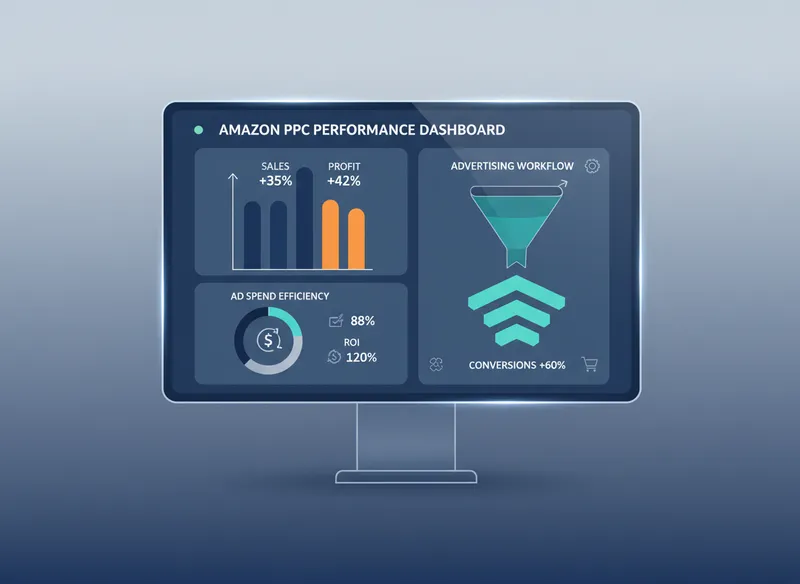
In 2017, the emphasis would be on refining existing campaigns to improve ACOS and ROAS, focusing on profitability rather than just volume. The goal is to squeeze every bit of profit from their established customer base and ensure a high conversion rate amazon. "For mature products, it's all about efficiency and profit optimization," stated a veteran seller. This strategy ensures continued dominance within their niche.
Use Case 3: Clearing Seasonal Inventory
A seller has a surplus of holiday-themed decorations nearing the end of the season. Their objective is to clear inventory quickly, even at a lower profit margin, to avoid carrying costs. Their strategy might include:
- Increased Bids: Temporarily raising bids on relevant seasonal keywords to capture last-minute shoppers.
- Broader Keyword Match Types: Utilizing phrase and broad match to capture more general searches.
- Promotional Banners (if applicable): Leveraging any promotional tools Amazon offered to highlight discounts.
- Focus on Volume: Prioritizing sales volume over a high ACOS, understanding that the goal is inventory liquidation.
In 2017, this would be about maximizing reach during a specific window. The focus is on driving as many sales as possible to move stock, even if the immediate return on ad spend isn't as high as usual. The aim is to make room for new inventory, thus contributing to a healthier overall amazon ecommerce strategy. "Sometimes, the best PPC strategy is one that helps you cut your losses and move forward," a logistics manager commented. This strategy prioritizes moving inventory efficiently.
Common Mistakes to Avoid in Your Amazon PPC Strategy
Even with a solid understanding of Amazon PPC strategy, it's easy to fall into common traps that can derail your efforts. Avoiding these pitfalls is as important as implementing best practices. In 2017, many of these mistakes were prevalent, and they continue to impact sellers today. Being aware of them can save you significant ad spend and improve your overall amazon ecommerce strategy. Our experience has taught us that vigilance against these errors is key to sustained success and maximizing your conversion rate amazon.
Ignoring Keyword Research
This is perhaps the most fundamental mistake. Launching campaigns without proper keyword research is like sailing without a compass. You'll end up targeting irrelevant terms, wasting your ad budget, and failing to reach your target audience. In 2017, many sellers relied too heavily on Amazon's auto-suggestions without digging deeper. Always invest time in understanding what your customers are searching for. This directly impacts your paid search pay per click effectiveness.
| Mistake | Correction | Impact |
|---|---|---|
| Blindly bidding on generic terms. | Conduct in-depth research using multiple sources. | Wasted ad spend, low conversion rates. |
Not Using Negative Keywords
Failing to implement negative keywords is a surefire way to burn through your budget. If your product is a 'dog bed,' you don't want to show up for searches like 'cat bed' or 'bed sheets.' In 2017, this was a common oversight. Regularly review your search term reports to identify irrelevant searches and add them as negative keywords. This is critical for improving your conversion rate amazon and ensuring your ads are seen by the right people. "Negative keywords are the unsung heroes of efficient PPC," a PPC manager emphasized.
| Mistake | Correction | Impact |
|---|---|---|
| Allowing ads to show for unrelated searches. | Regularly review search term reports and add negative keywords. | Irrelevant clicks, low conversion rates, high ACOS. |
Setting and Forgetting Campaigns
Amazon's marketplace is dynamic. What worked yesterday might not work today. Launching a campaign and then never checking on it is a recipe for disaster. Performance can degrade rapidly if bids aren't adjusted or new keywords aren't discovered. In 2017, many sellers treated PPC as a 'set it and forget it' channel. Regular monitoring and optimization are essential for a successful amazon ecommerce strategy. "PPC is not a set-it-and-forget-it game; it's a marathon that requires continuous effort," a seasoned seller advised. This is where automation can be a game-changer.
| Mistake | Correction | Impact |
|---|---|---|
| Launching campaigns and never reviewing them. | Schedule regular performance reviews and optimizations. | Stagnant or declining performance, wasted ad spend. |
Over-Optimizing for ACOS Too Early
While ACOS is a crucial metric, focusing on it too aggressively in the early stages of a campaign can stifle growth. New campaigns need time and data to gather impressions and clicks. In 2017, many sellers would kill campaigns with high ACOS too soon, missing out on potential long-term gains. Allow your campaigns to gather data before making drastic optimization decisions. A balanced approach to your amazon ecommerce strategy is key. "Growth often requires short-term investment. Don't let a high ACOS in week one scare you away from a campaign that could be profitable later," suggests an AdsCrafted trainer.
| Mistake | Correction | Impact |
|---|---|---|
| Cutting off campaigns with high ACOS too early. | Allow campaigns to gather sufficient data before making drastic changes. | Missed opportunities for growth and long-term profitability. |
Ignoring Product Listing Optimization
Your PPC ads drive traffic, but your product listing converts it. If your listing is poorly written, has low-quality images, or lacks compelling features, your PPC efforts will be severely hampered. In 2017, this was a common oversight. Sellers would spend heavily on ads but neglect the crucial element of conversion on the product page. A strong listing is essential for a high conversion rate amazon. "You can't PPC your way out of a bad product listing," is a common saying in the industry. This is where the synergy of your amazon ecommerce strategy truly shines.
| Mistake | Correction | Impact |
|---|---|---|
| Driving traffic to unoptimized product pages. | Ensure titles, bullet points, descriptions, and images are compelling and conversion-focused. | Low conversion rates, wasted ad spend, poor ROI. |
The Evolution of Amazon PPC: Beyond 2017
While this guide focuses on the foundational Amazon PPC strategy relevant to 2017, it's important to acknowledge the platform's evolution. Since then, Amazon has introduced more sophisticated targeting options, ad formats (like Sponsored Brands Video and Demand-Side Platform integrations), and advanced analytics. However, the core principles of strategic keyword targeting, campaign management, and optimization remain the same. Understanding the 2017 landscape provides a strong basis for mastering the current complexities of Amazon advertising and building a robust amazon ecommerce strategy. The introduction of AI-powered tools has further revolutionized how sellers manage their campaigns, aiming to automate many of the manual optimization tasks that were common in 2017. Research from McKinsey indicates that AI adoption in e-commerce has surged, with many businesses leveraging it to improve efficiency and customer targeting.
- New Ad Formats: Sponsored Brands Video, Sponsored Display enhancements.
- Advanced Targeting: More granular audience and product targeting options.
- AI and Automation: Tools to automate bidding, keyword discovery, and campaign management.
- Increased Data & Analytics: Deeper insights into customer behavior and campaign performance.
- Cross-Channel Advertising: Integration with Amazon DSP for broader reach.

The Role of Automation in Modern Amazon PPC
The landscape of Amazon PPC has been significantly reshaped by automation. In 2017, sellers spent considerable time manually optimizing bids and keywords. Today, advanced automation tools can perform these tasks with greater speed and accuracy. These tools leverage algorithms to analyze vast amounts of data, identify trends, and make real-time adjustments to bids and budgets. This allows sellers to focus on higher-level strategy and product development, rather than getting bogged down in day-to-day management. For instance, AdsCrafted's system automates over 30 analysis tools and pre-built rules to drive organic sales and maximize profits. "Automation is no longer a luxury; it's a necessity for staying competitive in Amazon PPC," a digital marketing expert stated. This shift is critical for maintaining a competitive edge and achieving a high conversion rate amazon.
"The future of Amazon PPC is a blend of strategic human oversight and intelligent automation. Tools that can analyze data and execute optimizations at scale are what differentiate the top performers."
Frequently Asked Questions
The primary goal of an Amazon PPC strategy is to increase product visibility, drive targeted traffic to product listings, and ultimately boost sales and profitability. It aims to reach shoppers actively searching for products like yours and convert them into customers, while also potentially improving organic search rankings over time.
It's recommended to review your Amazon PPC campaigns daily for critical issues and at least weekly for performance analysis and optimization. Active campaigns require regular attention to adjust bids, add negative keywords, and identify new opportunities to ensure your strategy remains effective and cost-efficient.
ACOS stands for Advertising Cost of Sales. It's a key performance indicator that measures how much you spend on advertising for every dollar of sales generated. A lower ACOS indicates a more efficient advertising campaign, as you're generating more revenue relative to your ad spend.
Sponsored Products ads appear on search results and product pages, targeting specific keywords or ASINs to drive direct sales. Sponsored Brands ads (formerly Headline Search Ads) appear at the top of search results, featuring your brand logo, a headline, and multiple products, aiming to increase brand awareness and drive traffic to your Storefront.