
Mastering Amazon Optimization: Your Ultimate Guide to Driving Sales and Maximizing Profits
Amazon PPC Specialist with $50M+ in managed ad spend. Helped 500+ sellers optimize their advertising.
Amazon optimization is the comprehensive process of enhancing your product listings, advertising campaigns, and overall presence on the Amazon marketplace to increase visibility, drive sales, and maximize profitability. It involves a strategic combination of keyword research, compelling content creation, effective advertising management, and data-driven analysis to improve how products are discovered and purchased.
Key Takeaways

- Effective Amazon optimization involves a holistic approach encompassing product listing, PPC, and customer experience.
- Strategic keyword research is foundational for both organic visibility and targeted advertising campaigns.
- Amazon PPC (Pay-Per-Click) advertising, when managed effectively, can significantly drive sales and improve organic rankings.
- Data analysis and continuous iteration are crucial for adapting to Amazon's dynamic marketplace and competitor strategies.
- Leveraging automation tools can streamline PPC management, saving time and maximizing profit margins.
What is Amazon Optimization?

Amazon optimization is the comprehensive process of enhancing your product listings, advertising campaigns, and overall presence on the Amazon marketplace to increase visibility, drive sales, and maximize profitability. It involves a strategic combination of keyword research, compelling content creation, effective advertising management, and data-driven analysis.
In today's competitive e-commerce landscape, simply listing a product on Amazon is rarely enough to guarantee success. Sellers must actively engage in a series of practices designed to improve how their products are discovered, perceived, and ultimately purchased by customers. This multifaceted approach is what we refer to as Amazon optimization. It's not a one-time task but an ongoing commitment to refining your strategy based on market trends, customer behavior, and platform algorithm changes. For instance, optimizing your product titles and bullet points with relevant keywords can significantly impact your organic search ranking, a crucial element of Amazon optimization that AdsCrafted focuses on for driving organic sales within 45 days.
Amazon's algorithm, A9, plays a pivotal role in determining product visibility. It considers factors like sales performance, customer reviews, keyword relevance, and conversion rates to rank products. Therefore, every aspect of your Amazon strategy, from the initial product listing to post-purchase follow-ups, should be geared towards positively influencing these ranking factors. This holistic view is essential for any seller aiming for sustained growth. In our experience, sellers who neglect any one of these areas often find their efforts in others are significantly hampered.
The Pillars of Amazon Optimization
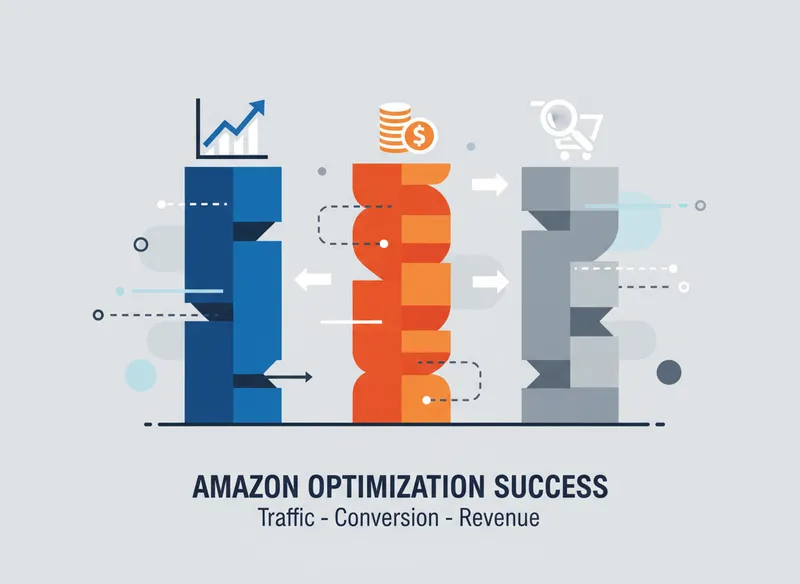
Effective Amazon optimization rests on several interconnected pillars. Neglecting any one of these can lead to missed opportunities and diminished returns. These pillars work in synergy to create a powerful presence that attracts and converts customers.
- Product Listing Optimization: This is the foundation. It involves crafting compelling titles, bullet points, product descriptions, and utilizing high-quality imagery to attract clicks and inform potential buyers.
- Amazon PPC (Pay-Per-Click) Management: Strategic advertising is crucial for immediate visibility and driving sales. This includes keyword targeting, bid management, and campaign structure optimization.
- Search Engine Optimization (SEO) for Amazon: While distinct from web SEO, Amazon has its own search engine. Optimizing for relevant keywords ensures your products appear in organic search results.
- Customer Experience and Reputation Management: Positive reviews, efficient shipping, and excellent customer service build trust and encourage repeat business, indirectly boosting optimization efforts.
- Data Analysis and Iteration: Continuously monitoring performance metrics and adapting strategies based on insights is vital for long-term success.
Deep Dive: Product Listing Optimization for Maximum Impact

Product listing optimization is the bedrock of any successful Amazon strategy, directly influencing organic search rankings and conversion rates. It's about presenting your product in the most attractive and informative way possible to both customers and Amazon's A9 algorithm.
When we analyze underperforming listings, we often find that crucial elements of product listing optimization have been overlooked. This isn't just about stuffing keywords; it's about understanding what a customer is searching for and how they make purchasing decisions. A well-optimized listing acts as a silent salesperson, answering questions before they're asked and highlighting key benefits. Our approach to amazon product listing optimization focuses on this customer-centric yet algorithm-aware methodology.
Crafting Compelling Product Titles
Product titles are the first thing potential customers see in search results. They need to be informative, keyword-rich, and enticing enough to encourage a click. Amazon's A9 algorithm heavily weights keywords present in the title for search relevance.
- Include primary keywords: The most important search terms customers use to find your product should be at the beginning.
- Highlight key features/benefits: Briefly mention what makes your product stand out (e.g., 'Waterproof,' 'Ergonomic Design,' 'Set of 4').
- Specify brand name: Essential for brand recognition and customer trust.
- Use character limits wisely: Amazon has specific character limits for titles (e.g., 200 characters on desktop, 150 on mobile). Prioritize the most impactful information.
- Avoid promotional language: Phrases like 'Best Seller' or 'Free Shipping' are not permitted in titles.
For example, a poorly optimized title might be 'Blue Widget.' An optimized title could be 'AdsCrafted Pro Blue Widget - Ergonomic, Durable, Pack of 2 for Home & Office Use.' This structure ensures key information is immediately visible.
Maximizing Bullet Points for Conversion
Bullet points (also known as key product features) are your prime real estate for elaborating on the benefits and features of your product. They should be concise, benefit-driven, and answer potential customer questions.
- Focus on benefits, not just features: Instead of 'Made of stainless steel,' say 'Durable stainless steel construction ensures long-lasting use and resistance to rust.'
- Incorporate secondary keywords: Weave in relevant keywords naturally that customers might use.
- Address pain points: Explain how your product solves a problem for the customer.
- Use sentence case and proper punctuation: For readability.
- Aim for 5 distinct points: Cover the most critical aspects of your product.
In our amazon product listing optimization audits, we frequently find bullet points that are too generic. For a kitchen gadget, instead of 'Dishwasher safe,' a better bullet point would be 'Effortless cleanup: Simply place in your dishwasher for quick and easy cleaning, saving you valuable time.'
The Power of High-Quality Product Images and Video
Visuals are paramount on Amazon. High-resolution images and videos are crucial for engaging customers, showcasing product details, and building trust. Amazon allows up to nine images and one video per listing.
- Main Image: Must be on a pure white background, showing the product clearly filling at least 85% of the frame.
- Lifestyle Images: Show the product in use, helping customers visualize themselves owning it.
- Infographic Images: Highlight key features, dimensions, or benefits with text overlays.
- Comparison Charts: If applicable, show how your product compares to others or different versions.
- Video: A powerful tool to demonstrate functionality, assembly, or unique selling propositions.
According to a recent study by Wyzowl, 96% of people say they’ve watched an explainer video to learn more about a product or service. Visuals are not just decorative; they are essential tools for conversion. We've seen conversion rate increases of over 20% simply by improving the quality and variety of product imagery.
Optimizing the Product Description and A+ Content
The product description is where you can tell a more in-depth story about your product. For registered brands, A+ Content (Enhanced Brand Content) allows for richer, more visually appealing descriptions with enhanced text formatting and modules.
- Tell a story: Connect with customers on an emotional level.
- Expand on benefits: Provide more detail than possible in bullet points.
- Include keywords naturally: Ensure searchability.
- Use A+ Content for branding: Showcase brand story, values, and product line.
- Structure for readability: Use headings, subheadings, and short paragraphs.
A+ Content can significantly boost conversion rates. Amazon's own data suggests A+ Content can increase sales by up to 10%. This is where detailed explanations of materials, manufacturing processes, and brand heritage can truly shine.
Strategic Amazon PPC Management for Sales Growth
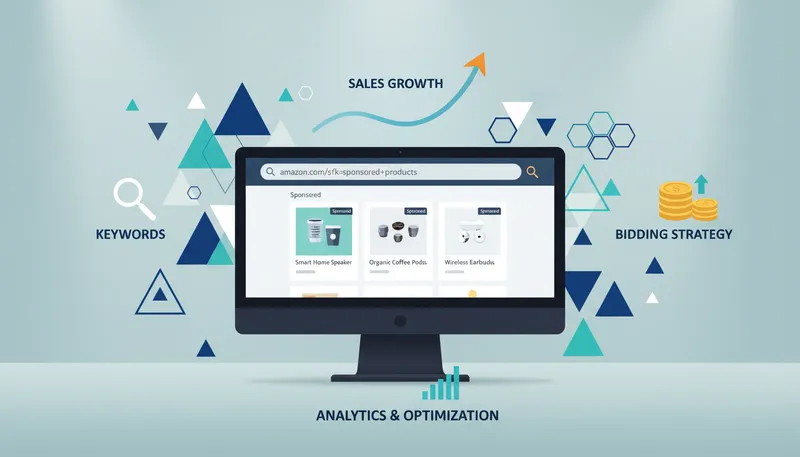
Amazon PPC (Pay-Per-Click) advertising is a powerful tool for driving immediate sales, increasing product visibility, and gathering valuable data for organic optimization. It allows sellers to place their products in prominent positions on Amazon's search results pages and product pages.
Many sellers struggle with PPC because they treat it as a separate entity rather than an integrated part of their overall Amazon optimization strategy. When executed correctly, PPC not only generates direct sales but also influences organic rankings by signaling demand and relevance to Amazon's algorithm. In our experience at AdsCrafted, a well-managed PPC campaign can drive organic sales and maximize profits within 45 days.
Understanding PPC Campaign Types
Amazon offers several PPC campaign types, each serving a distinct purpose in reaching potential customers at different stages of their buying journey.
- Sponsored Products: The most common type, displaying your products in search results and on product detail pages. Ideal for targeting specific keywords and competitor products.
- Sponsored Brands: Appear at the top of search results, featuring your brand logo, a custom headline, and multiple products. Great for brand awareness and driving traffic to your store.
- Sponsored Display: Allows you to target audiences on and off Amazon, based on shopping behaviors and interests. Useful for remarketing and reaching new customer segments.
- Sponsored Video: Appear in search results and on product pages, offering a dynamic way to showcase your product.
Choosing the right campaign type depends on your specific goals, whether it's driving immediate sales with Sponsored Products or building brand recognition with Sponsored Brands. As of 2026, Amazon's advertising revenue continues to grow, making these platforms increasingly important.
Keyword Research for PPC Success
Robust keyword research is the backbone of any successful PPC campaign. It ensures you're targeting the terms customers actually use to find products like yours, leading to higher relevance and better ROI. This is a core component of effective keyword research.
- Identify seed keywords: Start with broad terms related to your product.
- Utilize Amazon search suggestions: Observe terms that appear as you type into the Amazon search bar.
- Analyze competitor keywords: See what terms your successful competitors are ranking for organically and in ads.
- Leverage PPC tools: Tools like the Search Term Report in Seller Central, or third-party adwords management tools, are invaluable.
- Categorize keywords: Group terms into broad, phrase, and exact match types for strategic bidding.
A thorough keyword research process is crucial for effective audit adwords campaigns. For example, if you sell reusable water bottles, you'd look for terms like 'insulated water bottle,' 'BPA-free bottle,' 'sports water bottle,' and 'leak-proof bottle.'
Bid Management and Budget Optimization
Effectively managing bids and budgets is critical for controlling ad spend and maximizing return on ad spend (ROAS). It's a delicate balance between achieving visibility and maintaining profitability.
- Start with reasonable bids: Based on your keyword research and competitor analysis.
- Monitor performance closely: Adjust bids based on conversion rates and ACOS (Advertising Cost of Sale).
- Use negative keywords: Prevent your ads from showing for irrelevant searches, saving budget.
- Allocate budget strategically: Focus more spend on campaigns and ad groups that demonstrate higher ROAS.
- Leverage automation rules: Tools can help adjust bids automatically based on performance thresholds.
The adwords report tool within Amazon Seller Central is essential for this. For instance, if a particular keyword has a high click-through rate but a low conversion rate, you might consider lowering its bid or adding it as a negative keyword to a broader campaign. According to Statista, the average ACOS for Sponsored Products on Amazon was around 35% in 2023, highlighting the importance of careful bid management.
The Role of the Search Term Report
The Amazon Search Term Report is one of the most valuable tools for any PPC manager. It reveals the actual search queries customers used when their ads were clicked, providing gold for optimization.
- Identify new keyword opportunities: Discover high-converting search terms you weren't actively targeting.
- Add negative keywords: Find irrelevant search terms that are wasting your budget.
- Refine existing keywords: Understand which variations of your targeted keywords are performing best.
- Inform organic keyword strategy: Use high-performing search terms in your product listings.
- Analyze performance trends: Track how search terms evolve over time.
In a recent audit adwords, we discovered that a significant portion of ad spend was going towards irrelevant search terms. By systematically adding these as negative keywords from the Search Term Report, we were able to reduce ACOS by 15% and improve overall campaign efficiency. This report is truly a treasure trove for anyone serious about Amazon optimization.
Leveraging Data for Continuous Amazon Optimization

Amazon optimization is not a set-it-and-forget-it process. Continuous data analysis and strategic iteration are essential for adapting to market changes, outperforming competitors, and achieving sustained growth.
The sheer volume of data available on Amazon can be overwhelming, but it's also the key to unlocking higher performance. Sellers who consistently review their metrics and make data-driven decisions are the ones who thrive. In our work, we've found that consistent analysis, often supported by specialized tools like those at AdsCrafted, is the differentiator for top-performing brands. This commitment to an ongoing amazon optimization strategy is paramount.
Key Performance Indicators (KPIs) to Track
Understanding and tracking the right Key Performance Indicators (KPIs) is fundamental to effective Amazon optimization. These metrics provide insights into what's working and what's not.
- Sales Volume & Revenue: The most direct measure of success.
- Conversion Rate: The percentage of visitors who make a purchase.
- Advertising Cost of Sale (ACOS): For PPC campaigns, the ratio of ad spend to sales generated.
- Return on Ad Spend (ROAS): The revenue generated for every dollar spent on advertising.
- Organic Rank: Where your product appears in search results for key terms.
- Customer Reviews & Ratings: Crucial for trust and conversion.
- Inventory Turnover Rate: Ensuring you don't miss sales due to stockouts.
Tracking these KPIs allows us to make informed adjustments. For instance, if conversion rate drops, we'd investigate listing quality, pricing, and competitor activity. Research from McKinsey indicates that companies leveraging data analytics are 23 times more likely to acquire customers. This principle holds true on Amazon.
Utilizing Amazon's Reporting Tools
Amazon provides a suite of reporting tools within Seller Central that are invaluable for understanding performance and identifying optimization opportunities. Mastering these reports is a core skill for Amazon sellers.
- Business Reports: Offer insights into sales performance, traffic, and conversion rates.
- Advertising Reports: Crucial for evaluating PPC campaign performance, including impressions, clicks, spend, and sales.
- Inventory Reports: Help manage stock levels and prevent stockouts.
- Customer Feedback/Reviews: Essential for understanding customer sentiment and identifying product or service issues.
The adwords report tool section, particularly the Search Term Report, is indispensable. It provides the granular data needed to refine keyword targeting and eliminate wasted ad spend. As of 2026, Amazon's reporting capabilities are more robust than ever, offering sellers deeper insights than previously available. You can learn more about the amazon adwords report tool in our dedicated guide.
The Power of Automation in Optimization
For sellers managing multiple products or large PPC campaigns, automation is no longer a luxury but a necessity. Automation tools can streamline repetitive tasks, execute complex strategies, and react to market changes faster than manual methods.
- Automated Bid adjustments: Based on performance metrics to optimize ROAS.
- Campaign creation and management: Setting up new campaigns based on templates and rules.
- Keyword discovery and negative keyword application: Automatically identifying new opportunities and eliminating waste.
- Budget management: Ensuring spend is allocated effectively across campaigns.
- Performance monitoring and alerts: Notifying sellers of significant changes or issues.
AdsCrafted's system, for example, automates much of the PPC management process, allowing sellers to drive organic sales and maximize profits in 45 days without constant manual oversight. This frees up valuable time that can be redirected to product development or broader business strategy. Research from Statista shows that AI adoption in marketing is projected to grow significantly, with many businesses integrating automated solutions to improve efficiency and effectiveness.
Common Mistakes to Avoid in Amazon Optimization

Even with the best intentions, many sellers fall into common traps that hinder their Amazon optimization efforts. Recognizing these pitfalls is the first step to avoiding them and achieving better results.
- Treating PPC as an afterthought: Many sellers focus only on listing optimization and neglect the power of targeted advertising. PPC is not just about immediate sales; it's a vital tool for data collection and boosting organic visibility.
- Inconsistent keyword strategy: Using different keywords in titles, bullet points, backend search terms, and PPC campaigns creates confusion for both customers and the algorithm.
- Ignoring customer reviews: Negative reviews are a goldmine for identifying product or listing issues. Failing to address them means missing opportunities for improvement and losing customer trust. Learning how to get more customer reviews is essential.
- Over-reliance on broad match keywords: While broad match can uncover new terms, it often leads to wasted ad spend on irrelevant searches if not managed with negative keywords.
- Not monitoring competitors: Understanding what your competitors are doing — their pricing, their ad strategies, their listing content — is crucial for staying competitive.
- Failing to update listings: Amazon is dynamic. Product trends, customer preferences, and algorithm updates mean your listings need regular review and refresh.
- Setting and forgetting PPC campaigns: Campaigns require ongoing monitoring, adjustment, and optimization based on performance data. A 'set it and forget it' approach is a recipe for diminishing returns.
The biggest mistake I see sellers make is treating Amazon optimization as a static task. It's a continuous cycle of testing, learning, and adapting. If you're not evolving, you're falling behind.
In our audit adwords process, we often uncover these very mistakes. For example, a client might have a great listing but a poorly managed PPC campaign that's driving irrelevant traffic, thus negatively impacting their conversion rates and overall sales velocity. Addressing these common errors is fundamental to unlocking true Amazon optimization potential.
Examples and Use Cases of Amazon Optimization

To illustrate the impact of Amazon optimization, let's look at a couple of hypothetical scenarios.
-
Scenario 1: A New Entrant in the Home Goods Market
A seller launches a new set of premium kitchen knives. Initially, they have a basic listing with generic keywords. Organic sales are slow. They implement a comprehensive amazon product listing optimization strategy: they invest in professional photography showcasing the knives' craftsmanship, rewrite titles and bullet points using researched keywords like 'professional chef knife set,' 'razor sharp,' and 'ergonomic handle.' They then launch targeted Sponsored Products campaigns focusing on competitor keywords and relevant broad terms. Within weeks, their organic rank improves, and sales pick up significantly, demonstrating the power of combining listing optimization with PPC.
-
Scenario 2: An Established Brand Facing Increased Competition
A well-known brand selling smart home devices sees its market share erode due to new competitors. They conduct a thorough audit adwords. They discover their PPC campaigns are becoming too expensive, and their organic rankings are slipping for key terms like 'smart plug' and 'voice-controlled outlet.' They refine their PPC bids, aggressively add negative keywords identified from the Search Term Report, and leverage A+ Content to highlight their unique selling propositions and superior customer support. They also run Sponsored Brands campaigns to reinforce brand messaging. This data-driven approach helps them regain market share and improve profitability.
These examples highlight how a strategic, data-informed approach to Amazon optimization can yield substantial results, whether you're a new seller or an established brand navigating a competitive landscape. AdsCrafted's system is designed to help sellers achieve these kinds of results, driving organic sales and maximizing profits within a defined timeframe.
Frequently Asked Questions
Results can vary, but many sellers see initial improvements within a few weeks of implementing a consistent optimization strategy. For significant shifts in sales and organic ranking, it often takes 1-3 months. AdsCrafted's system aims to drive noticeable results within 45 days by focusing on core optimization principles and automation.
Yes, Amazon PPC is highly valuable when managed strategically. It directly drives sales, increases product visibility, and provides crucial data for organic optimization. When optimized for a good ROAS, it's a powerful engine for growth. Without it, many products struggle to gain traction.
While all aspects are important, product listing optimization is foundational. A well-optimized listing attracts clicks and converts visitors. However, effective PPC management is critical for accelerating visibility and sales, often influencing organic performance as well. A holistic approach is key.
For active campaigns, daily or every-other-day monitoring is recommended, especially for bid adjustments and budget checks. Weekly deep dives into performance reports and monthly strategic reviews are also crucial. Automation can help manage this frequency.
Yes, you can improve organic visibility through excellent listing optimization (keywords, images, content) and by focusing on customer reviews and sales velocity. However, PPC significantly accelerates this process by providing immediate traffic and sales data, which in turn boosts organic ranking.
Backend search terms are keywords you can add to your product listing that are not visible to customers but are indexed by Amazon's search engine. They are crucial for capturing long-tail keywords and variations that might not fit naturally into your title or bullet points.
Customer reviews are a critical trust signal for both customers and Amazon's algorithm. Positive reviews increase conversion rates and can improve organic ranking. Negative reviews highlight areas for improvement in your product or listing. Actively encouraging reviews is part of a comprehensive optimization strategy.