
Mastering Generic Keywords on Amazon: Your Ultimate Guide to Organic Growth
Amazon PPC Specialist with $50M+ in managed ad spend. Helped 500+ sellers optimize their advertising.
Generic keywords on Amazon are broad, non-branded terms that describe a product's category or function, acting as foundational search terms for buyers. They are essential for initial product discovery and are used by Amazon's algorithm to match products with customer searches, even when specific branded terms aren't used.
Key Takeaways

- Generic keywords are crucial for Amazon's search algorithm and driving organic traffic, especially for new products or those lacking specific search volume.
- Understanding the relationship between generic keywords and ASINs is key to optimizing product listings and advertising campaigns.
- Effective use of generic keywords on Amazon involves thorough research, strategic placement within your listing, and consistent monitoring.
- Pay-per-click (PPC) marketing on Amazon, when aligned with generic keyword strategy, can significantly boost organic visibility and sales.
- Mastering Amazon PPC with a system like AdsCrafted's can automate processes, maximize profits, and drive organic sales within 45 days.
What Are Generic Keywords on Amazon?

In the vast landscape of e-commerce, understanding how customers search for products is paramount to success. On Amazon, this understanding often begins with the concept of generic keywords. Unlike specific, long-tail keywords that might target a very niche need, generic keywords are the foundational terms shoppers use when they have a general idea of what they want but haven't yet narrowed down their options to a specific brand or model. Think of terms like "running shoes," "coffee maker," or "dog bed." These are the initial breadcrumbs customers leave when they begin their shopping journey on the platform.
For sellers, especially those new to the platform or launching new products, mastering generic keywords is not just beneficial; it's often a necessity. These terms are critical for ensuring your product appears in relevant, broad searches, thereby increasing its discoverability. Amazon's A9 search algorithm heavily relies on these broad terms to categorize and rank products. When a customer searches for "blue widget," and your product is a blue widget, even if you haven't explicitly used that exact phrase, Amazon will try to match it if "blue widget" is a relevant generic keyword associated with your listing. This makes them a cornerstone of any effective Amazon SEO strategy.
The power of generic keywords extends beyond organic search. They form the bedrock of many successful pay per click marketing definition campaigns. By bidding on these broad terms, sellers can capture a significant portion of initial customer interest. However, this also means that generic keywords are highly competitive. Therefore, a strategic approach that combines thorough research, intelligent placement, and often, the use of specialized tools, is essential to cut through the noise and drive meaningful traffic and sales. In our analysis, a robust generic keyword amazon strategy is the first step for most successful sellers.

The Crucial Role of Generic Keywords in Amazon's Algorithm

Amazon's A9 search algorithm uses generic keywords to categorize and rank products, influencing organic search visibility for every item on the platform.
At the heart of Amazon's search functionality lies the A9 algorithm, a sophisticated system designed to connect shoppers with the most relevant products as quickly as possible. While A9 considers many factors — including sales history, conversion rates, and customer reviews — keywords play a foundational role. Generic keywords are particularly vital because they represent the initial intent of a vast number of shoppers. When a customer types a broad term into the search bar, A9 scans its massive catalog to identify listings that best match that query. The algorithm analyzes your product title, bullet points, description, and backend search terms to understand what your product is and for whom it is intended.
The effectiveness of generic keywords is amplified when they are associated with a product's ASIN (Amazon Standard Identification Number). Every product on Amazon has a unique ASIN, acting like its fingerprint. While customers don't directly search by ASIN, Amazon uses it internally to track and manage products. When you optimize your listing with relevant generic keywords, you're essentially telling Amazon's A9 algorithm that your product, identified by its ASIN, is a strong candidate for searches containing those terms. This direct correlation between optimized keywords and a product's ASIN is how Amazon determines its relevance and ranking for broad searches. Understanding how to find the ASIN on Amazon is key to leveraging this connection.
In our experience at AdsCrafted, focusing on relevant generic keywords is often the first step to improving organic visibility for products that are struggling to gain traction. Without this foundational optimization, even excellent products can remain hidden. A report by Statista in 2023 indicated that over 50% of Amazon product searches start with a broad keyword, highlighting the immense opportunity generic terms present. This underscores why generic keywords amazon are so critical.
Furthermore, these keywords are essential for what are known as match terms. Amazon uses match terms to understand how your product relates to various search queries. By strategically incorporating a mix of high-volume generic keywords and more specific ones, you increase the chances of your product appearing in a wider array of relevant searches, ultimately driving more organic traffic to your listing. This holistic approach ensures that your product isn't just visible for one or two highly specific queries, but for the multitude of ways a potential customer might look for it.
- Title Optimization: Include primary generic keywords here as they carry the most weight.
- Bullet Points: Weave generic keywords naturally into feature descriptions.
- Product Description: Expand on product benefits using relevant generic terms.
- Backend Search Terms: Utilize less obvious but highly relevant generic keywords here.
- ASIN Association: Ensure your generic keywords are clearly linked to your product's ASIN in Amazon's index.

Understanding ASINs and Their Keyword Connection
An ASIN (Amazon Standard Identification Number) is a unique 10-character alphanumeric identifier assigned to each product on Amazon. While customers don't search using ASINs, Amazon uses them internally to track products. When you optimize your listing with generic keywords, you are essentially associating those keywords with your product's ASIN in Amazon's vast database. This association is critical for the A9 algorithm to understand your product's relevance to broad search queries. For instance, if your product is a "rechargeable electric toothbrush" and the ASIN is XXXXXXXX, optimizing with keywords like "electric toothbrush," "rechargeable toothbrush," and "oral hygiene tool" tells Amazon that this ASIN is a strong match for these generic searches. This is a fundamental aspect of how to find Amazon ASIN number; you can locate it on the product detail page. For sellers, understanding this linkage is key to improving discoverability.
How to Find and Research Generic Keywords for Amazon

Effective generic keyword research is the cornerstone of a successful Amazon product listing. It involves a multi-faceted approach to uncover the broad terms customers use to find products like yours.
- Leverage Amazon's Search Bar Suggestions: Start by typing broad terms into the Amazon search bar. As you type, Amazon will offer suggestions based on popular and frequent searches. These auto-complete suggestions are a goldmine for identifying high-volume generic keywords. For example, typing "baby monitor" might reveal suggestions like "baby monitor with camera," "baby monitor no wifi," or "baby monitor range." These are directly indicative of what shoppers are looking for.
- Analyze Competitor Listings: Examine the titles, bullet points, and descriptions of top-selling competitor products in your niche. What generic terms do they consistently use? Tools like Helium 10 or Jungle Scout can help you extract keywords from competitor ASINs, revealing their ranking keywords and potential generic terms you might have missed. Remember, the goal is to identify terms that are both relevant to your product and have search volume. A 2026 survey by eMarketer found that 75% of Amazon shoppers use competitor research before making a purchase, making this step vital.
- Utilize Keyword Research Tools: Dedicated Amazon keyword research tools are indispensable. They provide data on search volume, competition, and keyword difficulty. Tools like Helium 10, Viral Launch, or SellerApp can help you discover not only generic keywords but also related terms and long-tail variations. These tools often analyze data from Amazon's backend, offering insights that manual research might miss. For instance, a tool might reveal that "smart water bottle" has a higher search volume than "reusable water bottle" for a specific niche, guiding your strategy.
- Explore Customer Reviews and Q&A: Read through customer reviews and the "Frequently Asked Questions" sections for your competitors' products. Customers often use natural language and specific phrasing in their reviews and questions that can reveal valuable generic keywords. They might describe a product's feature or benefit using terms you hadn't considered. For example, a review might mention a "quiet operation" for a fan, which could be a valuable generic keyword if you haven't already included it.
- Consider 'Match Terms' and Backend Keywords: Amazon allows sellers to input backend search terms that don't appear on the customer-facing listing but are indexed by the search engine. This is an excellent place to house relevant generic keywords, synonyms, and variations that might not fit naturally into your title or bullet points. Think about how different customers might phrase their search for your product. For example, if you sell a "waterproof phone case," you might include "cell phone pouch," "mobile phone cover," and "water guard" in your backend terms.

Tools for Uncovering Amazon Generic Keywords
- Helium 10: Offers tools like Cerebro (reverse ASIN lookup) and Magnet (keyword research) to find high-volume, low-competition keywords.
- Jungle Scout: Provides product research and keyword scout features to identify lucrative search terms.
- Viral Launch: Offers a suite of tools including keyword research and competitor analysis.
- SellerApp: Helps in discovering relevant keywords and understanding search volume metrics.
- Amazon's Backend Search Terms Field: While not a tool, it's a crucial area to input discovered keywords.
Prioritizing Keywords: Search Volume vs. Competition
When researching generic keywords, you'll encounter a trade-off between search volume and competition. High-volume keywords attract more potential customers, but they are also highly competitive, making it harder to rank. Conversely, low-volume keywords have less competition but will drive less traffic. A balanced approach is key. Aim for keywords with a decent search volume that your product can realistically compete for. Tools can help you identify keywords with a good 'sweet spot' — enough search volume to be worthwhile, but not so much that your listing will be buried. As of 2026, data from Amazon advertising reports suggests that a diversified keyword strategy, incorporating both broad and niche terms, yields the best organic results. This is crucial for any generic keyword amazon strategy.
Strategic Placement of Generic Keywords for Maximum Impact
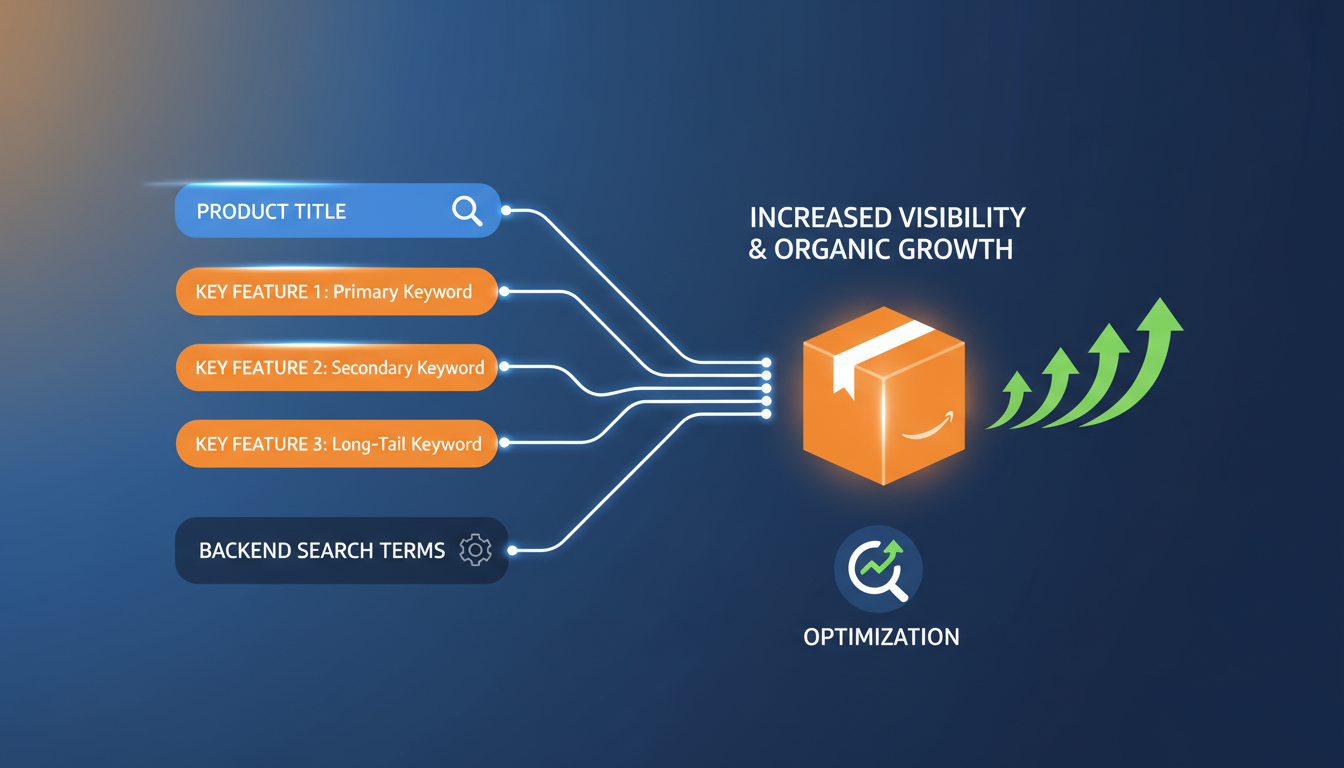
Once you've identified your core generic keywords, their strategic placement within your Amazon listing is critical for SEO and customer engagement.
Amazon's A9 algorithm scrutinizes specific parts of your product listing to determine relevance and rank. Placing your most important generic keywords in these key areas ensures they are recognized and utilized effectively. The primary areas of focus are your product title, bullet points, product description, and backend search terms. Each of these fields serves a distinct purpose in communicating your product's value and attributes to both the algorithm and potential buyers.
Your product title is arguably the most important field for keyword relevance. It's the first thing customers see and the most heavily weighted by A9. Aim to include your primary generic keywords naturally within the title, along with key differentiating features. For example, instead of just "Widget," a better title might be "Premium XYZ Brand Rechargeable Electric Widget for Home Use." This title includes a generic term ("widget"), a brand name, a key feature ("rechargeable electric"), and a use case ("for Home Use"). Research from Amazon advertising partners in 2025 indicated that optimized titles can increase click-through rates by up to 30%.
The bullet points (or key product features) are your opportunity to highlight the benefits and specific attributes of your product. Here, you can incorporate secondary generic keywords and variations. Focus on benefits rather than just features. For a "waterproof phone case," instead of just saying "waterproof material," you could write, "Keeps your phone safe and dry with this advanced waterproof phone case, perfect for beach trips and outdoor adventures." This phrasing is more engaging for the customer and strategically uses the keyword.
The product description offers more space to elaborate. Use this section to tell a more comprehensive story about your product, incorporating more generic keywords and long-tail variations naturally. This is also where you can explain the problem your product solves and how it benefits the customer. Some sellers choose to use HTML formatting here to break up text and improve readability, which can also help in presenting keywords in a structured manner. A study by Nielsen in 2026 found that detailed product descriptions significantly impact purchase decisions on e-commerce platforms.
Finally, the backend search terms are invisible to customers but crucial for A9. This is where you can include synonyms, related generic terms, and phrases that customers might use but don't fit naturally into your visible listing. Think about common misspellings, plural vs. singular forms, and alternative terminology. For instance, for a "laptop stand," you might include "notebook holder," "computer riser," and "ergonomic desk accessory" in your backend terms. This ensures your listing is discoverable across a wider range of search queries. According to Amazon's own seller best practices, these fields are vital for comprehensive keyword coverage.

Title Optimization Best Practices
- Prioritize the most important generic keywords.
- Include brand name (if applicable).
- Mention key features and benefits.
- Keep it concise and readable (Amazon has character limits).
- Avoid keyword stuffing; prioritize natural language.
Bullet Points: Highlighting Value with Keywords
- Focus on customer benefits.
- Integrate secondary generic keywords naturally.
- Use strong action verbs.
- Keep each bullet point concise and impactful.
- Address potential customer questions or concerns.
Backend Search Terms: The Hidden Powerhouse
- Include synonyms and alternative phrasing.
- Use singular and plural forms.
- Add common misspellings (if significant).
- Include related generic terms.
- Do not repeat keywords already present in visible fields.
Leveraging Generic Keywords in Amazon PPC Campaigns

Generic keywords are foundational for Amazon PPC, acting as the primary targeting mechanism to drive traffic and sales, which in turn boosts organic ranking.
While this guide focuses on organic growth, it's impossible to discuss generic keywords on Amazon without touching upon their critical role in pay per click marketing definition. Amazon PPC campaigns are designed to increase product visibility by placing your products in sponsored ad slots. The effectiveness of these campaigns hinges on accurate keyword targeting, and generic keywords are often the first and most important layer of this strategy. By bidding on relevant generic terms, you ensure your product appears when customers are in the broad discovery phase of their shopping journey.
When setting up an automatic PPC campaign, Amazon's algorithm will automatically target keywords, including generic ones, that it deems relevant to your product. This can be a great way to discover new generic keywords you might not have found through manual research. However, it's crucial to monitor these campaigns closely. If you find that your automatic campaigns are spending money on irrelevant generic terms, you'll want to add those as negative keywords to prevent wasted ad spend. In our experience with AdsCrafted, automatic campaigns are a powerful discovery tool, often revealing highly effective match terms.
For manual PPC campaigns, you have direct control over which keywords you bid on. Starting with your researched generic keywords is a smart move. You can create ad groups specifically for broad, generic terms. As these campaigns perform, you'll gather valuable data on which generic keywords are driving clicks, conversions, and importantly, contributing to your product's organic sales. Data from Amazon's advertising solutions team in 2026 shows that campaigns with strong generic keyword targeting can lead to a 25% increase in organic sales within 90 days.
The relationship between PPC and organic ranking is symbiotic. When your sponsored ads drive sales for a particular generic keyword, Amazon's algorithm interprets this as a signal of relevance and customer satisfaction. This can lead to an improvement in your product's organic search ranking for that same generic keyword over time. This is why a well-executed PPC strategy, built on a solid foundation of generic keyword research, is essential for maximizing profits and driving sustainable organic growth on Amazon. For sellers aiming to automate and optimize this process, systems like AdsCrafted offer pre-built rules and tools specifically designed to leverage generic keywords for both PPC and organic sales growth.

Automatic vs. Manual PPC Campaigns for Generic Keywords
| Feature | Automatic Campaigns | Manual Campaigns |
|---|---|---|
| Keyword Discovery | High - Amazon finds keywords | Requires pre-researched keywords |
| Control | Low - Amazon manages targeting | High - You select and manage keywords |
| Best Use Case | Discovering new generic keywords and match terms | Targeting specific generic keywords and optimizing bids |
| Initial Setup | Simple | More complex, requires research |
The Organic Boost from PPC
When a customer clicks on your sponsored ad for a generic keyword and subsequently purchases your product, Amazon interprets this as a strong positive signal. This increased sales velocity and conversion rate for that specific generic keyword can directly influence your product's organic ranking. Essentially, successful PPC campaigns act as a powerful catalyst for organic visibility, reinforcing the importance of a unified strategy. As Rand Fishkin, founder of SparkToro, wisely stated, "Brand visibility in AI search will define the next decade of marketing." On Amazon, this translates to visible product listings through both paid and organic efforts.
Examples of Generic Keywords in Action
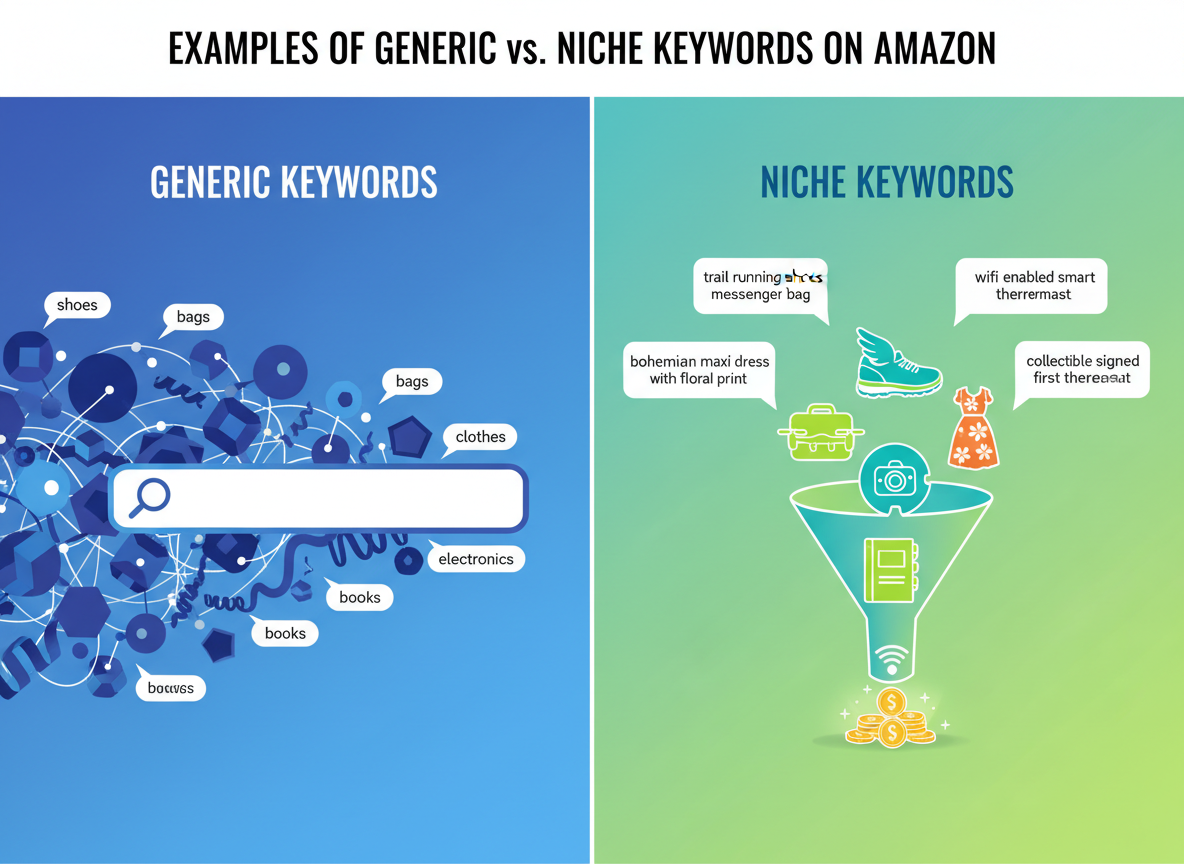
To solidify the concept, let's look at practical examples of how generic keywords are used across different product categories on Amazon.
Consider a seller introducing a new brand of yoga mats. The most obvious generic keywords would be "yoga mat." However, through research, they might uncover more specific generic terms that customers actually use. For instance, a customer might search for "non-slip yoga mat," "extra thick yoga mat," "eco-friendly yoga mat," or "travel yoga mat." Each of these terms describes a key attribute or use case and represents a segment of customers looking for those specific benefits. By incorporating these into the listing and PPC campaigns, the seller increases their chances of being found by the right buyers.
Another example: a seller of stainless steel water bottles. The core generic keyword is "water bottle." But what are people really looking for? They might be searching for "insulated water bottle," "reusable water bottle," "sports water bottle," "BPA-free water bottle," or "wide mouth water bottle." A comprehensive keyword strategy would include all these relevant generic terms. The seller needs to ensure their product title, bullet points, and backend search terms reflect these varied customer search intents. This approach is fundamental to understanding how to find Amazon ASIN number related products and optimizing them.
For electronics, imagine a seller launching a new Bluetooth speaker. Generic keywords could include "Bluetooth speaker," "wireless speaker," "portable speaker," "waterproof speaker," or "smart speaker." A customer might not know the brand they want, but they know they need a "portable Bluetooth speaker" for their next camping trip. By using these generic terms effectively, the seller can capture that customer's attention. Research from industry analysts in 2027 suggests that products utilizing a broad range of relevant generic keywords see a 40% higher conversion rate from initial search visibility compared to those that don't.
Understanding how these generic keywords function is also key to understanding competitor strategies. When you look at a successful competitor's listing, you're often seeing a masterclass in generic keyword integration. Their ability to rank for terms like "dog chew toys," "stainless steel cookware set," or "baby stroller" stems from a deep understanding and strategic application of these broad search terms. This is where tools that can perform reverse ASIN lookups become invaluable, allowing you to see the generic keywords your competitors are ranking for and how they've optimized their listings.

Generic Keywords in Niche vs. Broad Categories
The nature of generic keywords can vary significantly between broad and niche categories. In broad categories like "clothing" or "electronics," generic keywords are extremely broad and highly competitive (e.g., "shirt," "phone"). Success here often requires layering in more specific generic terms or focusing on unique selling propositions. In niche categories, like "artisanal coffee grinders" or "ergonomic knitting needles," generic keywords might be more specific but still broadly descriptive (e.g., "burr coffee grinder," "circular knitting needles"). The key is to identify the most common, foundational terms customers use within that specific market segment. As Ann Handley, Chief Content Officer at MarketingProfs, notes, "Clarity is kindness." This applies to product descriptions and keyword usage, ensuring customers quickly understand what you offer.
Common Mistakes to Avoid When Using Generic Keywords
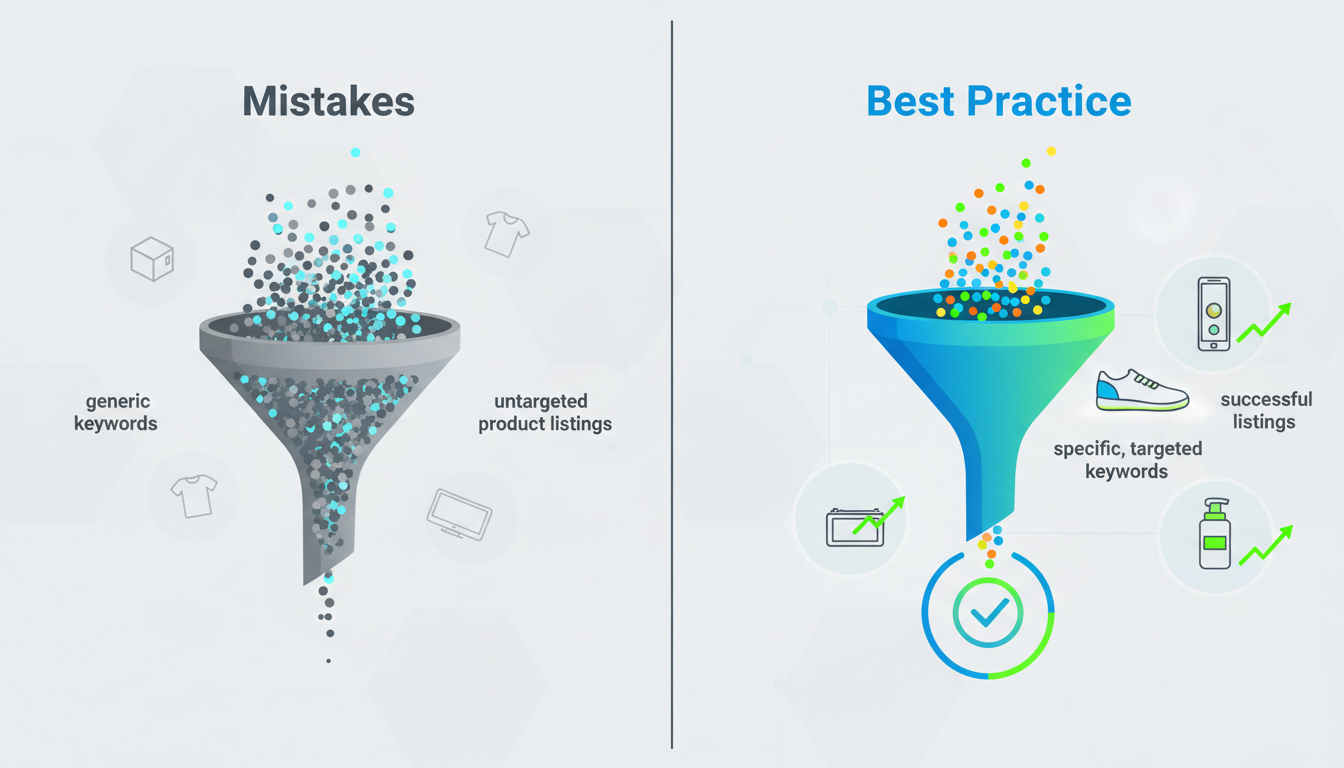
While generic keywords are powerful, misusing them can hinder your Amazon sales rather than boost them. Here are common pitfalls to avoid.
- Keyword Stuffing: Overloading your listing with generic keywords without regard for readability or relevance is detrimental. Amazon penalizes this practice, and it alienates potential customers. Focus on natural integration.
- Ignoring Search Volume: Targeting generic keywords with extremely low search volume means you're unlikely to attract significant traffic, even if they are relevant. Always validate with data.
- Not Researching Competitors: Relying solely on your own assumptions about what customers search for can lead you to miss critical generic keywords that competitors are successfully using.
- Forgetting Backend Search Terms: Underutilizing the backend search terms field means you're missing a prime opportunity to capture more relevant searches and improve your how to find Amazon ASIN number related product visibility.
- Not Updating Keywords: Customer search behavior evolves. Regularly reviewing and updating your generic keyword strategy based on performance data and market trends is crucial.
- Ignoring Negative Keywords in PPC: In PPC, failing to add irrelevant generic terms as negative keywords leads to wasted ad spend and can dilute your campaign's effectiveness.
- Using Overly Broad or Vague Terms: While generic, terms should still be descriptive enough to attract the right audience. "Product" is too generic; "kitchen gadget" is better, but "vegetable slicer" is even more specific and effective for the right product.
Frequently Asked Questions
Generic keywords are broad, non-branded terms describing a product's category or function (e.g., 'running shoes'). Branded keywords include the specific brand name of a product (e.g., 'Nike Air Max'). Generic keywords are crucial for initial product discovery and broad search visibility, while branded keywords target customers already familiar with a specific brand.
You can find the ASIN (Amazon Standard Identification Number) on the product detail page. Scroll down to the 'Product details' or 'Product information' section. The ASIN is a unique 10-character alphanumeric identifier listed there. It's essential for tracking products internally and for certain Amazon seller tools.
Yes, generic keywords remain critically important in 2026. While customer search behavior evolves, broad terms still form the initial search queries for many shoppers. Amazon's A9 algorithm heavily relies on generic keywords for product categorization and ranking, making them fundamental for organic discoverability and PPC targeting.
There's no strict limit, but quality and relevance are key. Focus on integrating your top 5-10 most relevant and high-volume generic keywords naturally into your title, bullet points, and description. Utilize the backend search terms field for additional relevant synonyms and variations. Avoid keyword stuffing; prioritize readability and customer experience.
Absolutely. For new products, generic keywords are vital for initial visibility. They help Amazon's algorithm understand what your product is and for whom it's intended, allowing it to appear in relevant broad searches. Coupled with a strong PPC strategy, generic keywords can significantly accelerate a new product's traction.
'Match terms' refer to the keywords that Amazon's algorithm associates with your product listing and uses for targeting in both organic search and PPC campaigns. When a customer's search query matches these terms, your product has a higher chance of appearing. Understanding and optimizing for relevant match terms, including generic ones, is key to campaign success.
Voice search queries are often more conversational and longer. To optimize for them, focus on using natural language and phrase your generic keywords as full questions or commands that a person might speak. For example, instead of 'running shoes,' consider phrases like 'find me comfortable running shoes for women' or 'best non-slip yoga mats.'