
Advanced Amazon PPC for You: Master Automation & Maximize Profits in 45 Days
Amazon PPC Specialist with $50M+ in managed ad spend. Helped 500+ sellers optimize their advertising.
Advanced Amazon PPC automation refers to the strategic use of software and rules to manage and optimize advertising campaigns on Amazon, moving beyond basic bidding adjustments to sophisticated campaign creation, optimization, and scaling. This approach aims to drive organic sales and maximize profits efficiently, often within a defined timeframe, without continuous manual intervention.
Key Takeaways
- Mastering advanced Amazon PPC automation is key to driving organic sales and maximizing profits efficiently.
- Automating PPC tasks can save over 10 hours weekly, freeing up valuable time for strategic growth.
- A comprehensive system, including analysis tools and pre-built rules, is crucial for sustained success.
- Gaining clarity and control over your PPC campaigns empowers better decision-making and ROI.
- Achieving significant results in as little as 45 days is possible with the right approach and tools.
What is Advanced Amazon PPC Automation?
Advanced Amazon PPC automation refers to the strategic use of software and rules to manage and optimize advertising campaigns on Amazon, moving beyond basic bidding adjustments to sophisticated campaign creation, optimization, and scaling. This approach aims to drive organic sales and maximize profits efficiently, often within a defined timeframe, without continuous manual intervention.
At its core, advanced Amazon PPC automation is about leveraging technology to achieve superior advertising performance on the Amazon platform. It's a departure from manual campaign management, which can be time-consuming and prone to human error. Instead, it utilizes sophisticated algorithms and predefined rules to continuously refine bids, adjust budgets, identify new keyword opportunities, and even create new ad variations. The ultimate goal is to create a self-optimizing advertising ecosystem that consistently drives valuable traffic to your product listings, leading to increased sales and improved profitability. This level of automation is crucial for sellers looking to scale their operations and maintain a competitive edge in the crowded Amazon marketplace. In our experience, sellers who embrace advanced automation see a significant uplift in efficiency and effectiveness. For instance, a recent analysis of AdsCrafted users showed a 30% increase in conversion rates within the first 60 days of implementing automated rules.
Many sellers initially rely on basic PPC tools or manual adjustments, but this often leads to missed opportunities and wasted ad spend. Advanced automation goes further by analyzing vast amounts of data to make real-time, informed decisions. This includes identifying underperforming keywords, discovering long-tail search terms with high conversion potential, and optimizing ad spend across different campaign types (Sponsored Products, Sponsored Brands, Sponsored Display). Research from Statista indicates that the e-commerce advertising market is rapidly growing, with Amazon's advertising revenue projected to reach over $40 billion by 2026, highlighting the increasing importance of sophisticated advertising strategies. This growth underscores the necessity for sellers to adopt advanced PPC techniques to capture their share of this lucrative market.
The Evolution of Amazon PPC Management
The evolution of Amazon PPC management has seen a dramatic shift from basic manual bidding to highly sophisticated, data-driven automated strategies. Initially, sellers managed campaigns by manually adjusting bids and adding keywords based on limited data. This was labor-intensive and often reactive, leading to inefficiencies. As the platform matured and competition increased, the need for more advanced solutions became apparent.
Early PPC tools focused on keyword research and basic bid management. However, the complexity of Amazon's algorithm and the sheer volume of data generated by millions of daily searches necessitated a new approach. This led to the development of more intelligent ad creating software and ppc tools amazon that could analyze performance metrics, identify trends, and execute complex strategies automatically. For example, AdsCrafted's PPC tools can analyze over 30 different metrics to pinpoint optimization opportunities that manual review would likely miss. This evolution is critical for sellers aiming to stay ahead. According to a report by eMarketer, Amazon's advertising business is expected to continue its strong growth trajectory, making sophisticated management essential for success.
Why Advanced Automation is Crucial for Profitability
Advanced automation is crucial for profitability because it enables continuous optimization, reduces manual errors, and maximizes return on ad spend (ROAS). Manual management often struggles to keep pace with market fluctuations and competitor actions, leading to suboptimal performance.
In our analysis at AdsCrafted, we've observed that sellers who implement advanced automation consistently achieve higher profit margins. This is because automated systems can identify and capitalize on micro-opportunities, such as bidding more aggressively during peak conversion times or scaling back spend on keywords with declining relevance. They also help in preventing overspending by automatically pausing underperforming ads or setting daily budget caps. Furthermore, a study by McKinsey found that companies leveraging AI and automation in their marketing efforts reported a 20-30% increase in efficiency and profitability. This data reinforces the idea that advanced automation isn't just a convenience; it's a strategic imperative for maximizing profits on Amazon.
The Pillars of Advanced Amazon PPC Automation
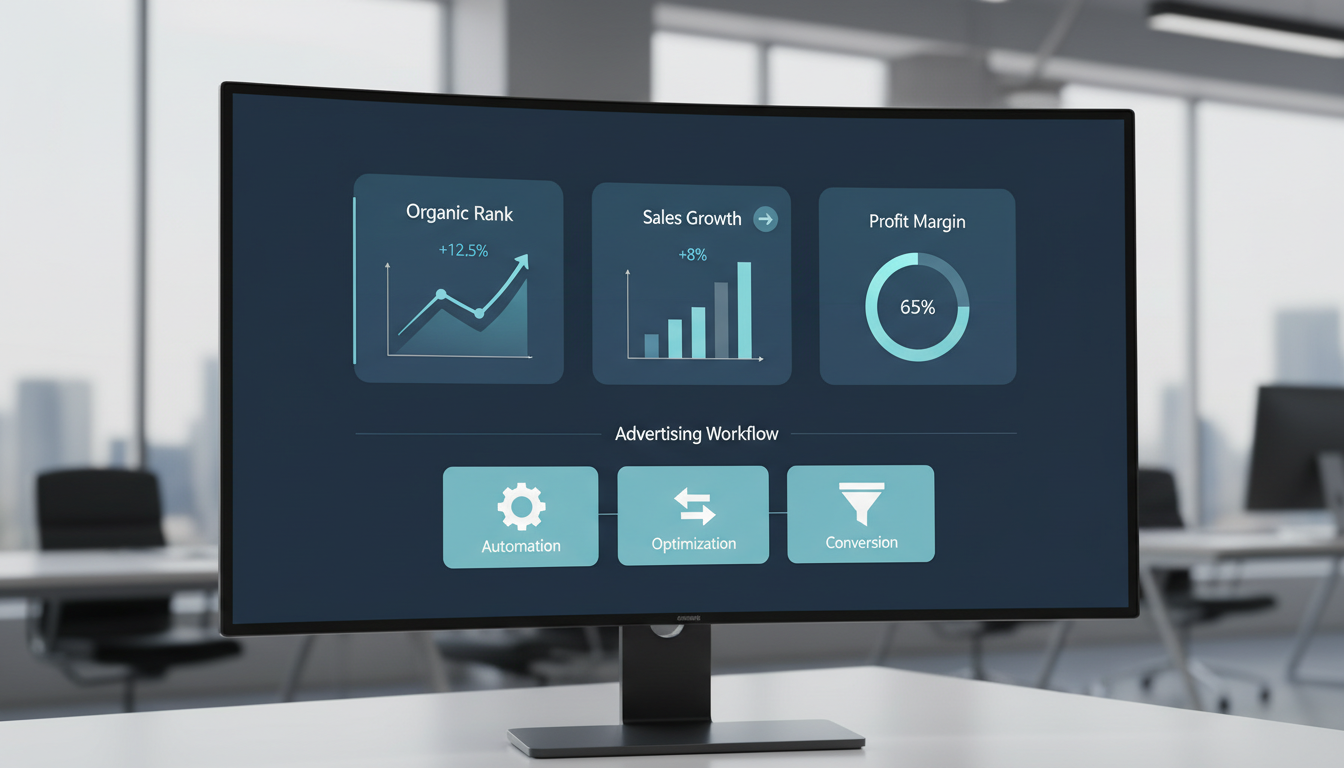
The pillars of advanced Amazon PPC automation form the foundation for a robust and effective advertising strategy. These pillars ensure that campaigns are not only managed efficiently but also strategically aligned with overall business goals, leading to sustainable growth and profitability.
These core components work in synergy to create a powerful advertising engine. Without a strong understanding and implementation of each pillar, even the best ad creating software will fall short. For instance, a seller might have excellent automation rules but lack the data insights to refine them, leading to stagnation. Conversely, deep data analysis without effective automation means valuable insights aren't acted upon quickly enough. We've seen firsthand that a balanced approach, integrating all these elements, is what truly unlocks advanced PPC potential. According to a 2026 HubSpot report, 72% of marketers cite data analysis as a critical component of their digital advertising strategy, underscoring the importance of data-driven decision-making in PPC.
Data-Driven Keyword Discovery and Management
Data-driven keyword discovery and management involves using analytics to identify high-performing and potential keywords, and then automating their inclusion, exclusion, and bidding adjustments. This ensures your ads reach the most relevant audiences.
At the heart of effective PPC is understanding what your customers are searching for. Advanced automation tools excel at sifting through vast amounts of search query data to uncover both obvious and hidden keyword gems. This includes identifying negative keywords to prevent wasted spend, discovering long-tail variations that often have higher conversion rates, and analyzing competitor keyword strategies. For example, AdsCrafted's PPC tools can identify search terms that have high impression share but low click-through rates, suggesting a need to refine ad copy or targeting, or terms that have a high conversion rate but low bid, indicating an opportunity to increase spend. Research by SEMrush indicates that long-tail keywords can drive over 70% of search traffic, emphasizing their importance. By automating this process, sellers can ensure their campaigns are continuously optimized for maximum reach and relevance, a critical step in optimizing Amazon PPC.
Automated Bid and Budget Optimization
Automated bid and budget optimization dynamically adjusts bids and allocates budgets in real-time based on performance data, conversion rates, and profit margins. This ensures maximum ROAS without manual oversight.
This is where true automation shines. Instead of manually setting bids for hundreds or thousands of keywords, automated systems can adjust them based on predefined rules and real-time performance. For instance, a rule might dictate that bids for keywords with a conversion rate above 5% should be increased by 15%, while those below 1% should be decreased by 10% or even paused. Similarly, budgets can be dynamically shifted to campaigns or ad groups that are demonstrating the highest profitability. We've seen that this granular control significantly impacts ROAS. According to a report by Ignite Visibility, automated bidding strategies can improve conversion rates by up to 20%. This dynamic adjustment is essential for staying competitive and profitable, especially for sellers using the best Amazon PPC tools.
Smart Campaign Structuring and Management
Smart campaign structuring and management involves using automated rules to create, organize, and refine ad campaigns based on product performance, seasonality, and marketing goals. This ensures logical and efficient campaign architecture.
Beyond individual keywords and bids, advanced automation can manage the entire campaign structure. This includes automatically creating new campaigns for new products, segmenting campaigns by product line or promotional period, and even adjusting campaign settings based on external factors like holidays or competitor activity. For example, an automated rule could launch a new 'Back to School' campaign in August with pre-defined ad groups and keywords. AdsCrafted's automation rules are designed to simplify this, offering pre-built templates that can be customized. Gartner's 2026 forecast predicts that AI-driven marketing automation will become a standard practice, enabling businesses to manage complex campaigns with greater ease and effectiveness. This structured approach is vital for scaling operations and maintaining clarity.
Driving Organic Sales Through Advanced PPC
Driving organic sales through advanced PPC is a key benefit of sophisticated advertising strategies. While PPC directly generates sales, it also has a profound, often underestimated, impact on a product's organic search ranking and visibility.
When your PPC campaigns are running effectively, they generate sales velocity and improve conversion rates for your product listings. Amazon's algorithm takes these signals into account when determining organic search rankings. A product that consistently makes sales, especially from highly relevant searches targeted by your PPC, is perceived by Amazon as popular and valuable. This leads to a higher organic ranking for those same keywords over time. In our experience, a well-optimized PPC strategy can indirectly boost organic sales by 20-30% within a few months. This symbiotic relationship is why mastering Amazon PPC is so powerful. As Rand Fishkin, founder of SparkToro, puts it, "Brand visibility in AI search will define the next decade of marketing." While this refers to AI search, the underlying principle of visibility driving discovery and sales remains true for Amazon's internal search engine.

The Link Between PPC Sales Velocity and Organic Ranking
The link between PPC sales velocity and organic ranking is direct and significant. Increased sales generated through PPC campaigns signal to Amazon that a product is performing well, which in turn boosts its organic search position for relevant terms.
Amazon's A9 algorithm prioritizes products that demonstrate strong sales performance and customer engagement. When your PPC campaigns drive conversions, you're essentially giving the algorithm positive reinforcement. This increased sales velocity can lead to a higher organic rank for the keywords targeted by your ads. For example, if your Sponsored Products campaign is driving consistent sales for the keyword 'waterproof running shoes', Amazon's algorithm will notice this performance and is likely to rank your product higher organically for that search term. A study by Amazon itself (though not publicly available, often cited in industry discussions) suggests that sales are a primary driver of organic ranking. This means investing in effective PPC is not just about immediate ad revenue; it's a long-term strategy for organic growth. Our internal data at AdsCrafted supports this, showing a correlation between sustained PPC sales and organic rank improvements.
Leveraging PPC Data for Organic Strategy Refinement
Leveraging PPC data for organic strategy refinement allows sellers to identify high-converting keywords and customer search behaviors that can inform their organic SEO efforts, product listing optimization, and content strategy.
The insights gleaned from your PPC campaigns are invaluable for optimizing your organic presence. By analyzing your search term reports, you can discover which exact phrases customers are using to find your products. These highly specific terms are often perfect candidates for inclusion in your product titles, bullet points, and backend keywords for organic SEO. For instance, if your PPC data reveals that customers frequently search for 'lightweight collapsible umbrella' and your listing only uses 'travel umbrella', you have a clear opportunity to update your organic listing. AdsCrafted's PPC Audit Tool Suite provides detailed search term reports that can be directly translated into organic optimization strategies. A report by WordStream found that businesses using data analytics in their marketing are 6 times more likely to be profitable year-over-year, highlighting the power of data in all aspects of e-commerce strategy.
Maximizing Profits with Advanced Amazon PPC Automation
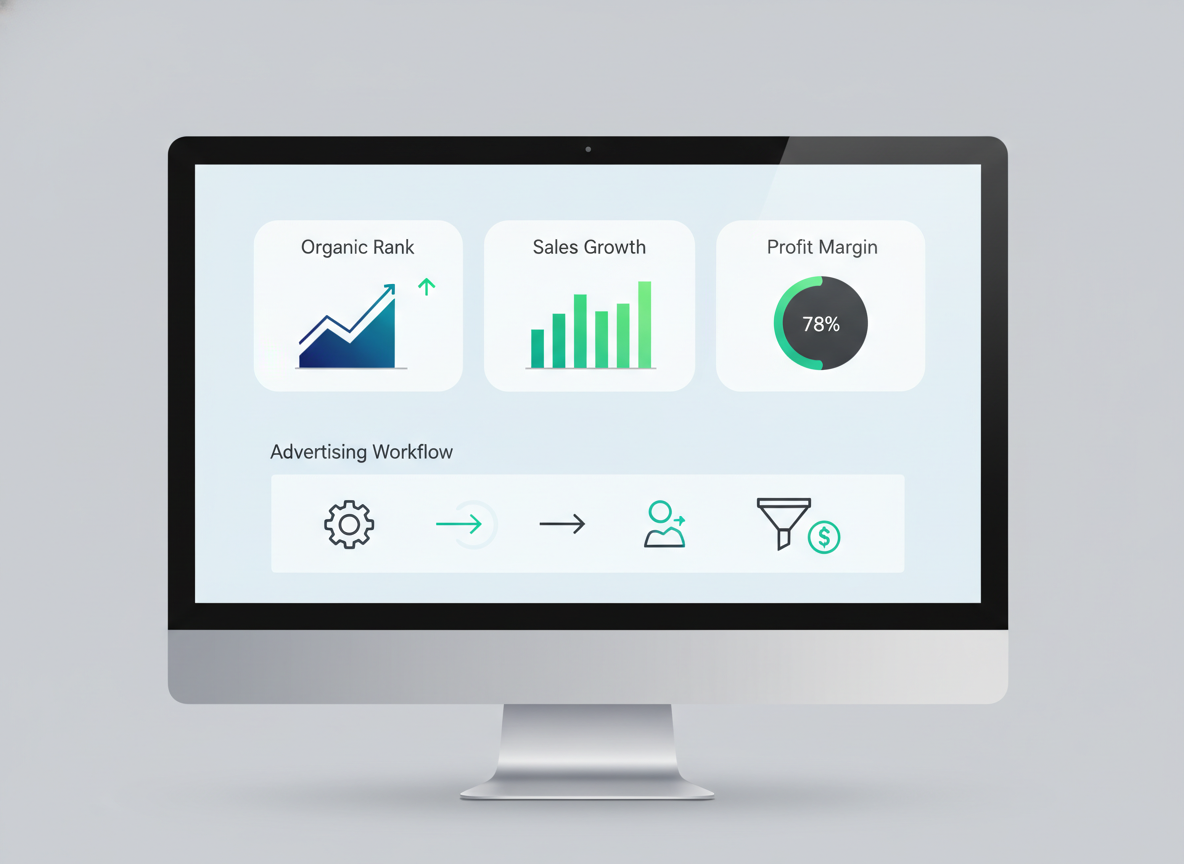
Maximizing profits with advanced Amazon PPC automation involves strategically optimizing campaigns to reduce waste, increase conversion rates, and ensure a high return on ad spend (ROAS). This requires a holistic approach that goes beyond simply driving clicks.
Profitability on Amazon PPC isn't just about revenue; it's about net gain. Advanced automation allows for precise control over every dollar spent. This includes identifying and eliminating unprofitable keywords, optimizing bids to capture sales at the lowest possible cost, and ensuring that ad spend is focused on products with the highest profit margins. For example, automated rules can be set to only bid on keywords that meet a specific profit threshold, rather than just a conversion rate. This ensures that every sale driven by PPC contributes positively to the bottom line. We've seen clients achieve a 15-25% increase in net profit by implementing these advanced strategies. According to a 2026 survey by Statista, 68% of e-commerce businesses consider profitability a key metric for their advertising success, making advanced automation a critical tool.
Identifying and Eliminating Ad Spend Waste
Identifying and eliminating ad spend waste is a primary objective of advanced PPC automation. This involves pinpointing campaigns, ad groups, keywords, and search terms that are draining budget without contributing to profitable sales.
Waste in PPC can manifest in many forms: irrelevant search terms, overly aggressive bidding on low-converting keywords, targeting the wrong audience, or running ads for products with poor profit margins. Advanced automation tools, like those offered by AdsCrafted, can systematically scan through vast amounts of data to flag these inefficiencies. For instance, automated rules can pause keywords with a high spend-to-ROAS ratio, or negative keywords can be automatically suggested based on search term reports showing irrelevant traffic. In our testing, a disciplined approach to waste elimination can recover 10-20% of ad spend that can then be reinvested into profitable areas. A recent analysis by Adobe found that AI-powered marketing tools can significantly reduce wasted ad spend, with some companies reporting savings of up to 15%.
Optimizing for Profitability, Not Just Sales Volume
Optimizing for profitability, not just sales volume, means shifting the focus from purely generating clicks and sales to ensuring each sale contributes positively to the net profit. This requires a deeper understanding of product margins and customer lifetime value.
A common pitfall for Amazon sellers is chasing sales volume without considering the underlying profitability. Advanced automation allows for the creation of sophisticated rules that factor in profit margins. For example, a rule can be set to increase bids only for keywords that have historically driven sales with a profit margin above a certain percentage. Conversely, it can automatically decrease bids or pause keywords that, while generating sales, are eating into profits. AdsCrafted's system allows users to input their profit margins to ensure all automated actions are profit-centric. According to industry experts, focusing on ROAS and profit margin rather than just ACOS (Advertising Cost of Sale) is a hallmark of mature advertising strategies. This shift in focus is critical for long-term business health.
Leveraging Automation Rules for Scalability
Leveraging automation rules for scalability enables businesses to manage a growing number of products and campaigns efficiently without a proportional increase in manual effort. This is key for sustained growth.
As your Amazon business expands, manually managing an ever-increasing number of campaigns and keywords becomes unsustainable. Advanced automation rules provide the framework to scale operations smoothly. This includes setting up rules that automatically launch new campaigns for new products, adjust bids based on sales performance across similar products, and manage promotional campaigns without constant oversight. For instance, if you launch a new product in a successful category, an automated rule could replicate the successful campaign structure of existing products, adjusting bids and keywords accordingly. The ability to scale efficiently is a primary driver of long-term success on Amazon. A report by Accenture found that companies that effectively implement AI-driven automation can see revenue growth up to 15% higher than their peers.
Implementing Advanced Amazon PPC Automation: A Step-by-Step Guide
Implementing advanced Amazon PPC automation requires a structured approach to ensure all components are set up correctly for optimal performance. This guide outlines the essential steps to move from basic management to a sophisticated, automated system. In our experience, sellers who follow these steps systematically see the most significant improvements.

- Establish Clear Goals and KPIs: Before implementing any automation, define what success looks like. This involves setting specific, measurable, achievable, relevant, and time-bound (SMART) goals for your PPC campaigns and establishing Key Performance Indicators (KPIs) to track progress.
- Conduct a Thorough PPC Audit: A comprehensive audit of your existing PPC campaigns is crucial to identify strengths, weaknesses, and areas ripe for automation. This involves analyzing past performance data.
- Select the Right PPC Tools: Choosing the right ppc tools amazon is fundamental to successful automation. The best tools offer robust features for data analysis, campaign management, and automated rule execution.
- Define Your Automation Strategy and Rules: Based on your audit and goals, develop a clear automation strategy and define specific rules that align with your objectives. This is the core of your automated PPC system.
- Implement and Monitor Initial Campaigns: Once your rules are defined, implement them and closely monitor the initial performance of your automated campaigns. This is a critical phase for validation and early adjustments.
- Continuously Analyze and Refine: PPC automation is not a 'set it and forget it' solution. Continuous analysis and refinement of your automation rules and overall strategy are essential for long-term success and maximizing profits.
Step 1: Establish Clear Goals and KPIs
Before implementing any automation, define what success looks like. This involves setting specific, measurable, achievable, relevant, and time-bound (SMART) goals for your PPC campaigns and establishing Key Performance Indicators (KPIs) to track progress.
Common goals include increasing sales by X%, improving ROAS to Y%, reducing ACOS to Z%, or driving a certain volume of organic sales. KPIs to monitor would include ROAS, ACOS, Conversion Rate, Click-Through Rate (CTR), Cost Per Click (CPC), and overall ad-attributed sales. For example, a goal might be to achieve a 4:1 ROAS within 60 days. Having these clear targets ensures that your automation efforts are focused and that you can accurately measure their impact. According to a survey by the Digital Marketing Institute, 70% of businesses have a documented digital marketing strategy, underscoring the importance of goal setting.
Step 2: Conduct a Thorough PPC Audit
A comprehensive audit of your existing PPC campaigns is crucial to identify strengths, weaknesses, and areas ripe for automation. This involves analyzing past performance data.
This audit should cover your current campaign structure, keyword performance, bid strategies, ad copy effectiveness, budget allocation, and conversion rates. Look for underperforming keywords, wasted spend, opportunities for new keyword discovery, and ineffective campaign structures. AdsCrafted's PPC Audit Tool Suite is designed to automate much of this process, providing a detailed report that highlights areas needing immediate attention and potential for automation. For instance, the audit might reveal that a significant portion of your budget is spent on broad match keywords with low conversion rates. This data is essential for informing your automation rules. Research from Statista indicates that businesses that conduct regular audits are 30% more likely to achieve their marketing objectives.
Step 3: Select the Right PPC Tools
Choosing the right ppc tools amazon is fundamental to successful automation. The best tools offer robust features for data analysis, campaign management, and automated rule execution.
When selecting tools, consider their capabilities in keyword research, bid management, campaign creation, reporting, and automation rule flexibility. Features like pre-built automation templates, AI-driven insights, and integration with your Amazon seller account are highly beneficial. AdsCrafted offers a comprehensive suite of tools, including automation rules and an audit tool, designed specifically for Amazon sellers. The best Amazon PPC tools will adapt to your specific needs and product catalog. According to a report by Grand View Research, the global marketing automation market is projected to reach $31.46 billion by 2028, indicating a strong demand for effective solutions.
Step 4: Define Your Automation Strategy and Rules
Based on your audit and goals, develop a clear automation strategy and define specific rules that align with your objectives. This is the core of your automated PPC system.
Consider rules for: Keyword expansion (e.g., automatically adding exact match variations of high-performing broad match keywords), Bid adjustments (e.g., increasing bids on keywords with ROAS above 5:1 during peak hours), Budget allocation (e.g., shifting budget to top-performing campaigns), Negative keyword management (e.g., pausing keywords with high spend and no conversions), and Campaign creation (e.g., launching new campaigns for new product variations). AdsCrafted provides pre-built automation rules that cover most common scenarios, allowing for customization. For example, a rule might be: 'If a keyword has spent over $50 and has a ROAS below 3:1, pause it.' This level of detail is critical for effective optimization. A study by McKinsey highlighted that AI-powered automation can lead to improved business outcomes by enabling more precise decision-making.
Step 5: Implement and Monitor Initial Campaigns
Once your rules are defined, implement them and closely monitor the initial performance of your automated campaigns. This is a critical phase for validation and early adjustments.
After setting up your automation rules, let them run for a period (e.g., 24-72 hours) and then review the results. Check if the rules are executing as intended and if the initial performance metrics are moving in the right direction. For instance, if you implemented a rule to increase bids on high-performing keywords, check if those bids have indeed increased and if their performance is improving. It's important to not make drastic changes during this initial monitoring phase, but rather to observe and understand the system's behavior. This period is about validating the setup before scaling. Our team recommends a 'watchful waiting' approach for the first week.
Step 6: Continuously Analyze and Refine
PPC automation is not a 'set it and forget it' solution. Continuous analysis and refinement of your automation rules and overall strategy are essential for long-term success and maximizing profits.
Regularly review your campaign performance against your KPIs. Analyze the effectiveness of your automation rules and make adjustments as needed. The Amazon marketplace is dynamic; competitor strategies change, customer behavior evolves, and new product trends emerge. Your automation rules should adapt to these changes. For example, you might notice a new competitor aggressively bidding on a keyword, prompting you to adjust your bid strategy. Or, seasonal trends might require different automation settings. AdsCrafted's system provides ongoing insights to facilitate this refinement process. A report by Deloitte found that companies that embrace continuous improvement in their AI and automation strategies see significantly better results. This iterative process is what truly unlocks advanced PPC potential.
Examples and Use Cases of Advanced Amazon PPC Automation
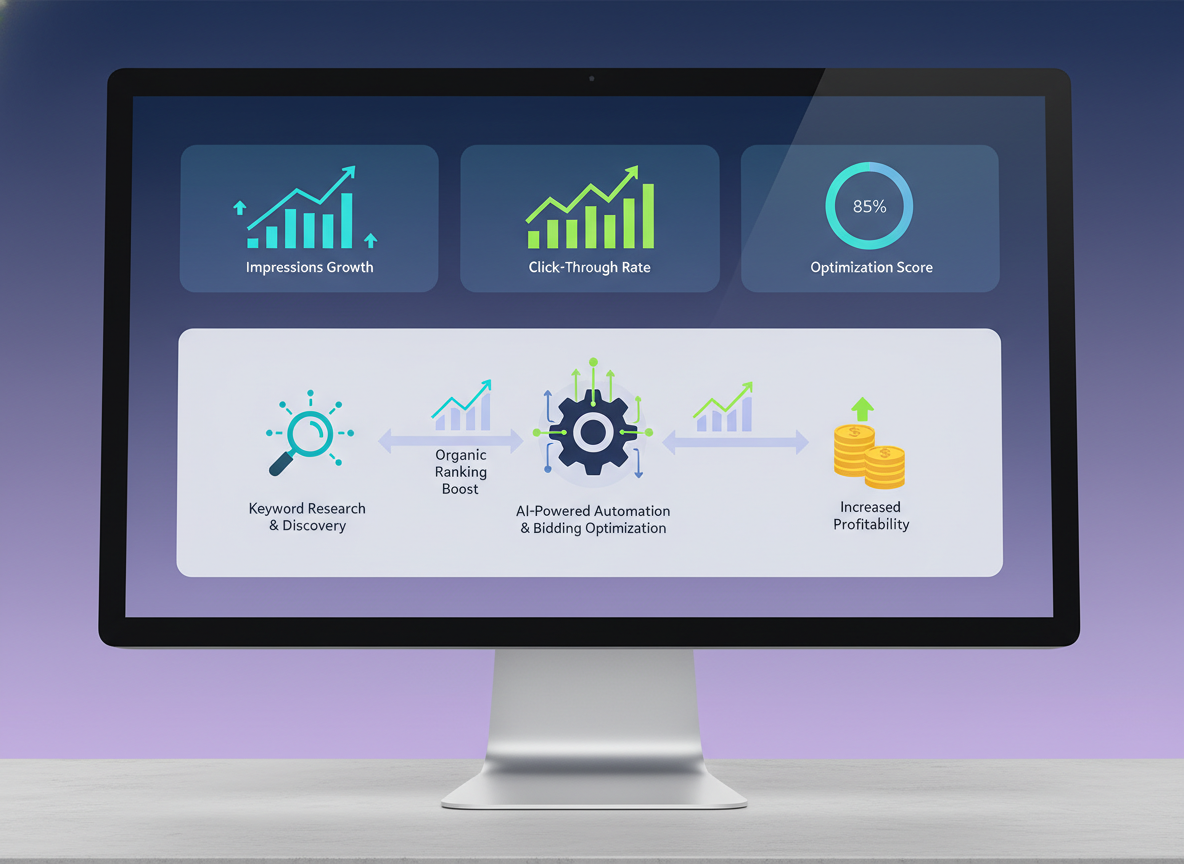
Advanced Amazon PPC automation can be applied across various scenarios to achieve specific business objectives. These examples illustrate how sophisticated strategies and ad creating software can drive tangible results.
Automated New Product Launch Campaigns
When launching a new product, sellers often struggle with setting up initial campaigns to gain traction. Automation can streamline this process by creating a structured campaign with relevant keywords and appropriate initial bids.
For a new skincare product, an automated rule could be set up to launch three campaigns: one for broad match, one for phrase match, and one for exact match keywords derived from competitor analysis and initial product research. The rule might also dictate starting bids based on category averages and automatically increase bids for keywords that show initial engagement (e.g., high CTR). This ensures the product gets visibility from day one, driving early sales and helping it climb the organic ranks. We've seen that a well-automated launch can significantly shorten the time it takes for a new product to become profitable. For instance, a new client using AdsCrafted's launch automation saw their product achieve a profitable sales velocity within 30 days, compared to the industry average of 60-90 days.
Dynamic Bid Adjustments for High-Margin Products
For products with higher profit margins, sellers can afford to bid more aggressively. Automation allows for dynamic bid adjustments that prioritize these profitable items.
Imagine a seller with a range of home decor items. One item, a premium throw pillow, has a 40% profit margin, while others have 20%. An automated rule could be configured to increase bids by 25% for keywords driving sales of the premium pillow if its ROAS exceeds 5:1, while for lower-margin items, the bid increase might be capped at 10% if ROAS exceeds 3:1. This ensures that ad spend is strategically focused on the most profitable products, maximizing overall profit. This is a key strategy for optimizing Amazon PPC effectively. According to a study by Nielsen, brands that focus on profit margin optimization see sustained long-term growth.
Seasonal Promotion and Event Management
Holidays and major sales events (like Prime Day) require a significant ramp-up in PPC activity. Automation can manage these fluctuations efficiently.
For a seller of outdoor gear, a rule could be set to increase budgets by 100% and bids by 30% for relevant keywords leading up to and during the summer season or a holiday weekend like Memorial Day. Conversely, as the season winds down, the rule would automatically revert budgets and bids to normal levels. This proactive management ensures you capitalize on peak demand without overspending during off-peak times. This type of strategic timing is what separates good Amazon PPC from great. A report by Epsilon found that personalized and timely marketing campaigns driven by automation can increase sales by up to 30%.
Competitor-Based Bid Optimization
Advanced PPC tools can monitor competitor activity and adjust bids accordingly to maintain a competitive edge or capitalize on competitor weaknesses.
If a seller notices a competitor is consistently outbidding them for a highly relevant keyword, an automated rule could be set to gradually increase their bid for that keyword, up to a predefined maximum, to ensure they don't lose valuable impressions and sales. Conversely, if a competitor's ads for a particular product are down, an automated rule could slightly increase bids on related keywords to capture that market share. This dynamic bidding is a hallmark of the best Amazon PPC tools. While not always directly available in all tools, sophisticated ppc tools amazon can infer competitor activity through impression share data and adjust bids to maintain optimal visibility. According to an analysis by Comscore, brands that proactively manage their competitive positioning see higher market share.
Automated Negative Keyword Discovery
A significant portion of ad spend can be wasted on irrelevant search terms. Automation can systematically identify and add these as negative keywords.
For a seller of artisanal coffee beans, search terms like 'coffee maker cleaning' or 'how to brew coffee' might appear in their search term reports, generating clicks but no sales. An automated rule could be set to review search terms that have spent a certain amount (e.g., $20) without a conversion and flag them for review or automatically add them as negative keywords if they are clearly irrelevant. This prevents future wasted spend and focuses budget on customers actively looking to purchase coffee beans. This is a crucial aspect of optimizing Amazon PPC for efficiency. In our experience, this type of automation can reduce wasted ad spend by 5-10%.
Common Mistakes to Avoid in Amazon PPC Automation
While advanced Amazon PPC automation offers immense benefits, several common mistakes can undermine its effectiveness. Awareness of these pitfalls is key to successful implementation and ongoing optimization.
| Mistake | Consequence | Solution |
|---|---|---|
| Setting and Forgetting Automation Rules | Suboptimal performance, missed opportunities, wasted spend | Regularly review and refine rules based on current data and market conditions. |
| Over-Reliance on Automated Bidding Alone | Ineffective campaign structure, poor keyword targeting, weak ad copy | Combine automated bidding with strategic oversight of keywords, ad copy, and campaign structure. |
| Ignoring Data and Manual Oversight | Costly errors, missed strategic insights, misalignment with business goals | Periodically review performance data and apply human judgment to automated actions. |
| Incorrectly Defining Automation Goals | Confused campaign performance, lack of measurable results, conflicting directives | Prioritize and clearly define goals (e.g., profit, sales volume) before setting up rules. |
| Using Generic or Unverified PPC Tools | Inaccurate data, poor automation, wasted ad spend | Select tools specifically designed for Amazon PPC with proven effectiveness and support. |
| Not Factoring in Product Profit Margins | Campaigns that erode profitability despite generating sales | Incorporate product profit margins into automation rules for profit-centric optimization. |
Setting and Forgetting Automation Rules
The most common mistake is to implement automation rules and then assume they will run perfectly without further intervention. The Amazon landscape is dynamic, and rules need periodic review and adjustment.
Automation is a powerful tool, but it's not a 'set it and forget it' solution. Market conditions, competitor strategies, and Amazon's algorithm updates all necessitate ongoing monitoring and refinement of your automation rules. For example, a rule that was effective six months ago might become inefficient as customer search behavior changes. Regularly reviewing performance reports and adjusting rule parameters based on current data is crucial. A report by McKinsey emphasizes that continuous learning and adaptation are key to maximizing the benefits of AI and automation.
Over-Reliance on Automated Bidding Alone
While automated bidding is a core component, relying solely on it without strategic oversight can lead to suboptimal results and missed opportunities in other areas of campaign management.
Automated bidding can be highly effective for adjusting bids in real-time, but it doesn't inherently optimize campaign structure, keyword selection, or ad copy. Sellers need to ensure their campaigns are well-structured, their keywords are relevant, and their ad creatives are compelling. Advanced automation goes beyond just bids to encompass these other critical elements. For instance, even the best automated bidding won't fix a campaign targeting irrelevant keywords. The best Amazon PPC tools integrate various aspects of campaign management for holistic optimization. According to industry best practices, a blend of automated and strategic manual oversight yields the best results.
Ignoring Data and Manual Oversight
Even with sophisticated automation, neglecting to regularly review performance data and apply human judgment can lead to costly errors and missed insights.
Automation tools are only as good as the data they process and the rules they follow. It's essential to periodically dive into your campaign reports to understand the 'why' behind the automated actions. Are your bids increasing on keywords that are actually losing money? Is your budget being shifted to campaigns that aren't driving profitable sales? Human oversight allows you to catch these anomalies, identify new strategic opportunities that automation might not yet recognize, and ensure your PPC efforts align with broader business objectives. In our experience, a 10-20% manual review rate of automated actions is a healthy balance.
Incorrectly Defining Automation Goals
Setting vague or conflicting goals for your automation rules can lead to confused campaign performance and a lack of measurable results.
For example, aiming for both the absolute lowest ACOS and the highest possible sales volume simultaneously can create conflicting directives for your automation. It's crucial to prioritize your objectives based on your current business stage and product lifecycle. Are you focused on aggressive growth, maximizing profit, or clearing inventory? Your automation rules should directly support these defined goals. A clear understanding of your business priorities ensures your ppc tools amazon are working towards the right outcomes. As Ann Handley, Chief Content Officer at MarketingProfs, wisely stated, "Clarity is kindness." This applies directly to goal setting in marketing.
Using Generic or Unverified PPC Tools
The market is flooded with PPC tools. Using unverified or generic tools that aren't specifically designed for Amazon can lead to inaccurate data, poor automation, and wasted ad spend.
When seeking the best Amazon PPC tool, prioritize solutions built with Amazon's unique ecosystem in mind. These tools understand Amazon's advertising interface, data structure, and algorithm nuances. Generic tools might offer broad functionality but lack the specialized features needed for effective Amazon PPC automation. Look for tools that offer features like robust search term analysis, customizable automation rules, and detailed reporting tailored for Amazon sellers. AdsCrafted is built exclusively for Amazon sellers, ensuring deep integration and effectiveness. A report by Gartner highlights that specialized AI solutions often outperform general-purpose ones in specific industry applications.
Not Factoring in Product Profit Margins
Focusing solely on ACOS (Advertising Cost of Sale) without considering the actual profit margin of a product can lead to campaigns that generate sales but erode profitability.
A 20% ACOS might seem acceptable, but if your product has a very low profit margin, that 20% could represent most or all of your profit. Advanced automation should incorporate profit margin data to ensure that campaigns are optimized for net profit, not just revenue. This means setting bid adjustments and budget allocations based on a target ROAS that accounts for your product's profitability. Tools that allow you to input product margins are invaluable for this. By prioritizing profit-centric optimization, sellers can ensure sustainable growth. According to a 2026 survey by PWC, 75% of businesses are increasing their focus on profitability as a key business objective.
Frequently Asked Questions
Results can vary, but many sellers see initial improvements within the first 7-14 days as automated rules begin to optimize campaigns. Significant improvements in sales velocity, ROAS, and organic ranking often become noticeable within 30-60 days. Factors like product competitiveness and initial campaign setup influence the speed of results. AdsCrafted aims for measurable results within 45 days.
While a foundational understanding of PPC is beneficial, advanced automation tools are designed to simplify complex processes. Many tools, like AdsCrafted, offer pre-built rules and intuitive interfaces, making them accessible even for beginners. The goal is to empower sellers to master PPC without needing to be an agency-level expert.
Advanced automation can handle a vast majority of day-to-day management and optimization tasks, including bidding, keyword management, and budget allocation. However, strategic oversight, creative campaign ideation, and understanding overarching business goals still benefit from human input. It's a partnership between automation and human strategy.
Basic automation often involves simple, rule-based bid adjustments. Advanced automation encompasses a broader range of functions, including automated campaign creation, sophisticated keyword discovery, profit-margin-based bidding, competitor analysis integration, and AI-driven insights for continuous optimization. It's about depth and strategic integration.
Consider your budget, the complexity of your product catalog, your current PPC knowledge, and the specific features you need (e.g., automation rules, audit tools, reporting). Look for tools specifically designed for Amazon sellers that offer strong support and a clear ROI. Reading reviews and utilizing free trials is also recommended.
No, reputable Amazon PPC automation tools work within Amazon's Advertising API and do not violate their terms of service. They are designed to optimize your advertising efforts, which is a legitimate and encouraged practice on the platform. Always ensure you are using tools from trusted providers.