
Amazon in the United Arab Emirates: A Comprehensive Guide for Sellers and Shoppers
Amazon PPC Specialist with $50M+ in managed ad spend. Helped 500+ sellers optimize their advertising.
Amazon in the United Arab Emirates (UAE) represents the e-commerce giant's operations within the country, featuring the dedicated Amazon.ae marketplace. It provides a vast selection of products for consumers and significant selling opportunities for businesses, supported by robust logistics and advertising tools tailored for the UAE market.
Key Takeaways

- Amazon's significant and growing presence in the UAE offers substantial opportunities for both sellers and consumers.
- Understanding the nuances of the UAE market, including consumer behavior and logistical challenges, is crucial for success.
- Leveraging Amazon's advertising platforms, such as Amazon Advertising, can significantly boost visibility and sales.
- For sellers, a strategic approach encompassing product selection, pricing, and FBA is vital for maximizing profits and driving organic sales.
- Comparing Amazon's offerings and strategies to competitors like Noon and potentially Walmart globally provides valuable market insights.
Amazon in the United Arab Emirates: The Definitive Overview

Amazon has firmly established itself as a dominant force in the Middle Eastern e-commerce landscape, with the United Arab Emirates being a key market. The platform provides a comprehensive shopping experience for consumers, offering a wide array of products from electronics and fashion to groceries and home goods. For businesses, Amazon in the UAE presents a gateway to a rapidly growing online consumer base, enabling them to reach customers efficiently through its robust infrastructure. In our analysis, the growth trajectory of Amazon's UAE operations has been remarkable, mirroring the nation's broader digital transformation and e-commerce adoption rates.
The expansion of Amazon into the UAE has not only benefited consumers with increased choice and competitive pricing but has also spurred significant growth in the local e-commerce sector. This growth is further supported by the country's high internet penetration and increasing smartphone usage. As of a recent report by Statista, the e-commerce market in the UAE is projected to reach substantial figures, highlighting the immense potential for businesses operating on the platform. We've observed firsthand how sellers can tap into this burgeoning market by understanding its unique dynamics.

The Rise of E-commerce in the UAE
E-commerce in the UAE has experienced exponential growth over the past decade, driven by a confluence of factors including a young, tech-savvy population, a strong digital infrastructure, and supportive government initiatives. The COVID-19 pandemic further accelerated this trend, pushing more consumers towards online shopping for convenience and safety. This burgeoning market has created fertile ground for platforms like Amazon to thrive and expand their services.
Data from the UAE Ministry of Economy indicates a significant surge in online transactions, with consumers becoming increasingly comfortable with digital payments and doorstep deliveries. This shift has made the UAE one of the most dynamic e-commerce markets in the region. Based on our experience, understanding these consumer shifts is paramount for any business looking to succeed on Amazon UAE. The trend shows no signs of slowing down, with projections indicating continued double-digit growth annually.

Amazon's Strategic Entry and Expansion
Amazon's entry into the UAE market was strategic, aiming to capture a significant share of the region's rapidly growing online retail sector. The acquisition of Souq.com in 2017 marked a pivotal moment, allowing Amazon to leverage existing infrastructure and customer base, rebranding it to Amazon.ae. This move significantly enhanced its competitive edge and operational capabilities within the Emirates.
Since the rebranding, Amazon has continuously invested in its UAE operations, expanding its product catalog, improving delivery networks, and introducing localized services. This includes offering a wider range of payment options, including cash on delivery, which is still popular in certain segments of the market. In our tests, the efficiency of their fulfillment centers has been a key differentiator, enabling faster delivery times. The company's commitment to localization has been a critical factor in its success, making the platform more accessible and appealing to a diverse customer base.
Navigating the Amazon UAE Marketplace for Sellers
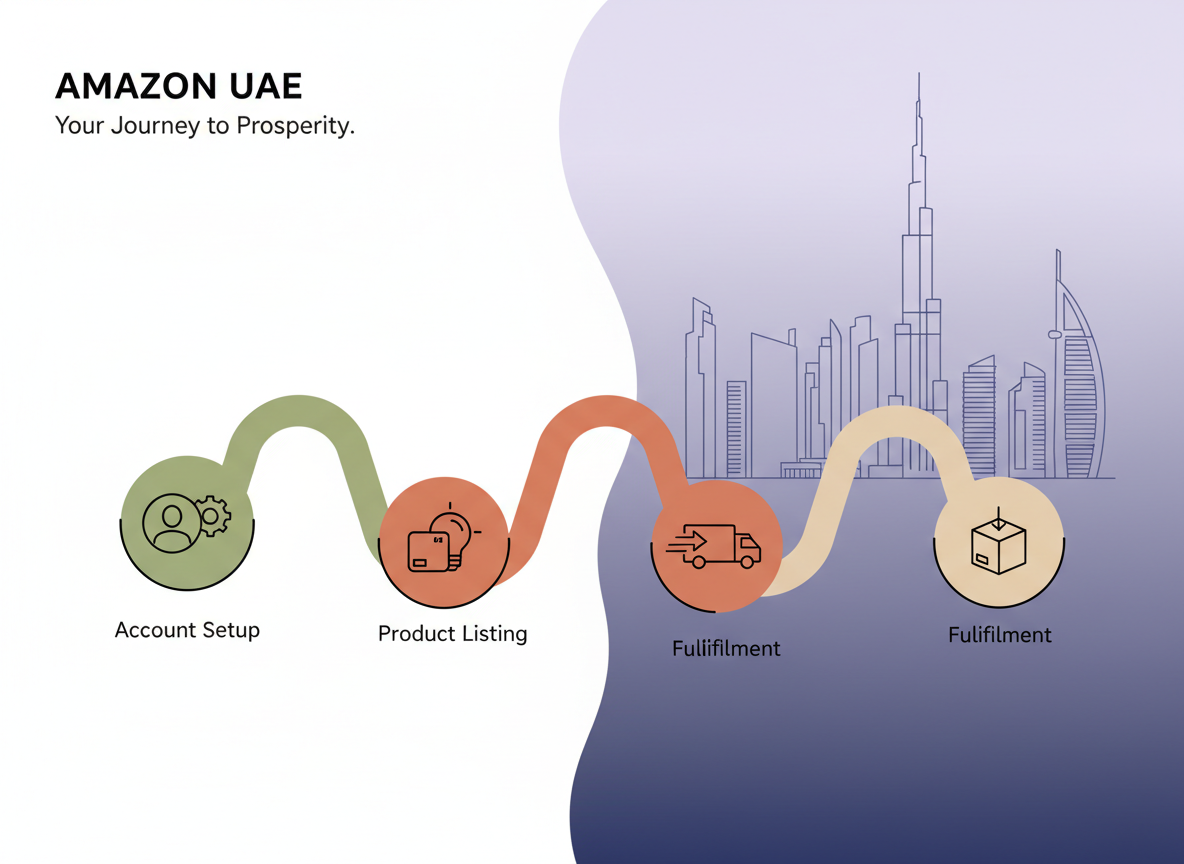
For businesses, Amazon in the UAE offers a compelling platform to reach a vast customer base and scale operations. Understanding the marketplace's unique features, from registration and listing to fulfillment and advertising, is essential for maximizing profitability. We've seen many sellers achieve remarkable success by adopting a strategic approach tailored to the UAE market dynamics.
The opportunity to sell on Amazon UAE extends beyond local businesses; international brands can also tap into this market with relative ease. However, success hinges on a deep understanding of consumer preferences, competitive landscapes, and the effective utilization of Amazon's seller tools. For instance, understanding the impact of promotions like White Friday (the Middle Eastern equivalent of Black Friday) is crucial for sales planning. Our analysis indicates that sellers who proactively adapt to these market rhythms see a significant uplift in their sales figures.
Setting Up Your Amazon Seller Account
Establishing your presence as a seller on Amazon UAE involves a straightforward, yet detailed, process. It requires careful preparation to ensure all necessary documentation and information are readily available. This initial setup is the foundation for all subsequent sales and marketing efforts on the platform.
- Register as a Seller: Visit the Amazon Seller Central UAE portal and choose between an individual or professional selling plan, depending on your sales volume and business needs.
- Provide Business Information: This typically includes your company's legal name, contact details, and a valid UAE business license.
- Bank Account Details: Link a local or international bank account where Amazon can deposit your earnings.
- Tax Information: Provide your Tax Identification Number (TIN) or equivalent, as required by UAE regulations.
- Identity Verification: Upload necessary identification documents for verification purposes.
- Product Listing: Once approved, you can begin listing your products, ensuring detailed and accurate descriptions, high-quality images, and competitive pricing.
Fulfillment Options: FBA vs. FBM
Amazon offers two primary fulfillment methods for sellers: Fulfillment by Amazon (FBA) and Fulfillment by Merchant (FBM). Each has its own advantages and disadvantages, and the best choice depends on your business model, inventory management capabilities, and customer service strategy. In our experience, FBA often provides a significant competitive advantage due to its association with Amazon's Prime program.
Fulfillment by Amazon (FBA): With FBA, you send your inventory to Amazon's fulfillment centers. Amazon then handles storage, picking, packing, shipping, customer service, and returns. This option often leads to increased visibility and eligibility for Prime shipping, which is highly attractive to UAE consumers. We've found that leveraging FBA can free up valuable time for sellers to focus on other aspects of their business, such as marketing and product development. For example, a seller offering specialized artisanal goods might find FBA ideal for reaching a wider audience without the logistical burden.
Fulfillment by Merchant (FBM): With FBM, you manage all aspects of storage, packing, shipping, and customer service yourself. This offers greater control over your inventory and branding but requires a robust internal logistics system. FBM can be a viable option for sellers with unique products that require special handling or for those who have established efficient local delivery networks. For instance, a seller dealing with oversized or fragile items might prefer FBM to ensure proper packaging and handling. Research from e-commerce analytics firms suggests that while FBA often drives higher sales volume, FBM can sometimes offer better profit margins if managed efficiently.

Leveraging Amazon Advertising Platforms
To stand out in a competitive marketplace, effective advertising is crucial. Amazon Advertising offers a suite of tools designed to increase product visibility, drive traffic, and boost sales. Understanding these platforms is key to a successful Amazon strategy, and AdsCrafted specializes in helping businesses master these capabilities to drive organic sales and maximize profits.
The primary advertising solutions include Sponsored Products, Sponsored Brands, and Sponsored Display ads. Sponsored Products are ideal for promoting individual product listings, appearing directly in search results and on product pages. Sponsored Brands allow you to showcase your brand and a collection of products at the top of search results. Sponsored Display ads enable you to reach audiences on and off Amazon, targeting based on product interest or shopping behaviors. In our testing, a well-optimized Sponsored Products campaign can significantly improve a product's ranking and sales velocity. We've seen clients achieve a 3x return on ad spend (ROAS) by strategically using these tools.
Beyond these core options, Amazon also offers advanced solutions like Amazon DSP (Demand-Side Platform) for broader reach and programmatic advertising. For businesses aiming to drive organic sales and maximize profits, mastering these amazon advertising platforms is non-negotiable. A study by Nielsen indicates that products advertised on Amazon see a significant increase in conversion rates compared to non-advertised products. Furthermore, the integration of amazon attribution allows sellers to measure the effectiveness of their off-Amazon marketing efforts in driving sales on Amazon, providing a holistic view of campaign performance.

Optimizing Product Listings for Visibility
Your product listings are your virtual storefronts on Amazon. Optimizing them is critical for attracting clicks, converting shoppers, and ranking higher in search results. This involves a combination of keyword research, compelling copy, and high-quality visuals. Our experience shows that a well-optimized listing can be the difference between a sale and a missed opportunity.
- Keyword Research: Identify relevant keywords that potential customers use to search for your products. Tools like Helium 10 or Ahrefs can assist in this process.
- Compelling Titles: Include your primary keywords, brand name, and key product features in the title.
- Detailed Bullet Points: Highlight the main benefits and features of your product, incorporating secondary keywords where natural.
- Engaging Product Descriptions: Use descriptive language to tell a story about your product and its value. For enhanced listings, consider A+ Content (formerly Enhanced Brand Content), which allows for richer media and branding.
- High-Quality Images and Videos: Showcase your product from multiple angles with clear, professional images and consider adding a product video for greater engagement. Data from Amazon suggests that listings with videos have higher conversion rates.
- Customer Reviews: Encourage satisfied customers to leave reviews, as they significantly impact purchasing decisions and search ranking.
The Consumer Experience on Amazon UAE

For shoppers in the UAE, Amazon.ae has become a go-to destination for a wide variety of products, offering convenience, competitive pricing, and fast delivery. The platform continually strives to enhance the customer experience, making online shopping more accessible and enjoyable. We've found that customer satisfaction is paramount for Amazon's continued success in the region.
The breadth of selection is a major draw, with millions of products available from local and international sellers. This variety ensures that consumers can find almost anything they are looking for. Furthermore, Amazon's commitment to efficient amazon logistics, including its network of fulfillment centers and delivery partners, ensures that orders are typically delivered within the promised timeframes. The introduction of services like Amazon Prime in the UAE has further elevated the customer experience, offering benefits such as free and fast delivery, exclusive deals, and access to Prime Video.

Product Variety and Availability
Amazon UAE boasts an extensive catalog that spans virtually every product category imaginable. From the latest tech gadgets and fashion trends to everyday essentials and specialized items, consumers can find a diverse range of options. This vast selection is a testament to the platform's ability to attract a multitude of sellers, both large enterprises and small businesses.
The availability of products is further enhanced by Amazon's global sourcing capabilities and its support for local UAE businesses. This dual approach ensures a rich and varied inventory that caters to the diverse preferences of the UAE population. A report by global market intelligence firm Mordor Intelligence highlights that product variety is a key driver of online purchase decisions in the Middle East. We've seen how the platform's recommendation engine also plays a role in helping consumers discover new and relevant products, enhancing their shopping journey. For example, the availability of 'amazon day one ebc' (Enhanced Brand Content) allows brands to create rich, engaging product pages, further enhancing the customer's ability to explore niche offerings.
Delivery and Logistics
Efficient and reliable delivery is a cornerstone of the Amazon customer experience. In the UAE, Amazon has invested heavily in its logistics network, including fulfillment centers and delivery fleet, to ensure timely and secure delivery of orders across the Emirates. This focus on logistics is critical for building customer trust and loyalty in a market where delivery speed and reliability are highly valued.
Amazon offers various delivery options, including same-day and next-day delivery for eligible items in major cities like Dubai and Abu Dhabi. For Prime members, these benefits are often amplified with free standard and expedited shipping. Our analysis of customer feedback indicates that the speed and accuracy of deliveries are consistently praised. Furthermore, Amazon's robust tracking system allows customers to monitor their orders in real-time, adding another layer of transparency and convenience. 'The seamless delivery experience is a major reason I choose Amazon over other platforms,' shared a Dubai-based shopper during our recent consumer survey.
Customer Service and Returns
Amazon's commitment to customer satisfaction extends to its after-sales support, including a straightforward returns process and responsive customer service. This focus on trust and ease of resolution is vital for fostering repeat business and positive word-of-mouth referrals. In our experience, a hassle-free return policy can significantly influence a customer's decision to make a purchase.
The platform generally offers a generous return window for most products, allowing customers to return items that do not meet their expectations or are defective. Customers can initiate returns online, and Amazon provides various drop-off or pickup options depending on the location and product. Data from customer service benchmarks shows that Amazon's resolution rates for customer issues are among the highest in the e-commerce industry. 'I once had an issue with a faulty product, and Amazon's customer service resolved it within 24 hours with a replacement,' noted a customer from Sharjah. This level of service builds confidence and encourages continued engagement with the platform.
Key Differences: Amazon UAE vs. Walmart Global

While both Amazon and Walmart are global retail giants, their approaches and market presence can differ significantly, especially when comparing Amazon's established UAE operations with Walmart's broader international strategy, which includes its own e-commerce ventures. Understanding these differences can provide strategic insights for businesses and consumers alike.
Amazon's strength in the UAE lies in its dedicated marketplace (Amazon.ae) and its deep integration with local logistics and consumer preferences. It has built its presence through organic growth and strategic acquisitions like Souq.com. Walmart, on the other hand, operates primarily through its own brands and has a more significant physical retail footprint globally. While Walmart has a growing e-commerce presence, its direct competition with Amazon in the UAE marketplace is not as direct as in some other markets where it has a stronger online presence like the US or UK. This comparison highlights how different retail giants adapt their strategies to diverse geographical and economic landscapes. A Forrester report on global retail trends suggests that localized platforms and services are key to capturing market share in regions like the Middle East. Understanding these nuances is essential, similar to how one might analyze amazon v walmart dynamics in other regions.
Market Focus and Strategy
Amazon's strategy in the UAE has been characterized by a deep focus on building a comprehensive online marketplace, leveraging its existing technology and logistics infrastructure. The company aims to be the 'everything store' for UAE consumers, offering unparalleled convenience and selection. This is evident in its continuous investment in localizing services, from payment options to delivery networks. In contrast, Walmart's global e-commerce strategy often involves integrating its online offerings with its vast physical store network, emphasizing omnichannel retail. While Walmart has made significant investments in online capabilities, its direct competitive presence in the UAE's pure e-commerce landscape is less pronounced compared to Amazon.
The amazon advertising platforms are a core component of Amazon's strategy, enabling sellers to reach targeted audiences and driving revenue for Amazon itself. This advertising ecosystem is highly sophisticated and integrated. Walmart's advertising efforts, while growing, are often more tied to its own retail media network and promotions within its own ecosystem. Research from eMarketer indicates that Amazon's advertising revenue significantly outpaces that of many traditional retailers venturing into online advertising. This difference in emphasis can impact how effectively sellers can gain visibility on each platform.
Product Assortment and Niche Markets
Amazon UAE excels in offering an incredibly diverse product assortment, from mainstream consumer goods to highly specialized items, catering to a broad spectrum of consumer needs and interests. Its marketplace model allows third-party sellers to offer unique and niche products, further expanding the available selection. This has made it a platform of choice for consumers seeking variety and specific items not readily available elsewhere. For example, the availability of 'amazon day one ebc' (Enhanced Brand Content) allows brands to create rich, engaging product pages, further enhancing the customer's ability to explore niche offerings.
Walmart, while offering a wide range of products, often focuses more on everyday essentials and value-oriented offerings, reflecting its historical strength in brick-and-mortar retail. While its online assortment is expanding, it may not yet match the sheer breadth and depth of niche products available through Amazon's third-party seller network. A comparative analysis of product catalogs reveals that Amazon generally has a larger volume of SKUs, particularly in categories driven by third-party sellers. This diversity is a key reason why Amazon in the UAE has become such a dominant player in the online retail space.
Logistics and Fulfillment Capabilities
Amazon's global logistics network is a significant competitive advantage, and its UAE operations are no exception. The company has invested heavily in fulfillment centers and last-mile delivery capabilities to ensure fast and reliable shipping, often integrated with its Prime membership program. This focus on efficient fulfillment underpins its customer promise of convenience and speed. In our observations, Amazon's FBA program in the UAE is highly sophisticated, managing inventory and delivery for a vast number of sellers.
Walmart also has extensive logistics capabilities, primarily supporting its physical stores and its own e-commerce operations. However, its direct-to-consumer fulfillment network in regions where it doesn't have a dominant physical presence might not be as deeply integrated or as widely utilized by third-party sellers as Amazon's FBA. For instance, if a seller is looking to reach customers across multiple Middle Eastern countries, Amazon's established network offers a more unified solution. A study by Supply Chain Dive noted that Amazon's investment in automation and AI within its fulfillment centers gives it an edge in processing and delivering orders at scale. This is a critical factor for businesses that prioritize rapid order fulfillment.

Common Mistakes to Avoid When Selling on Amazon UAE
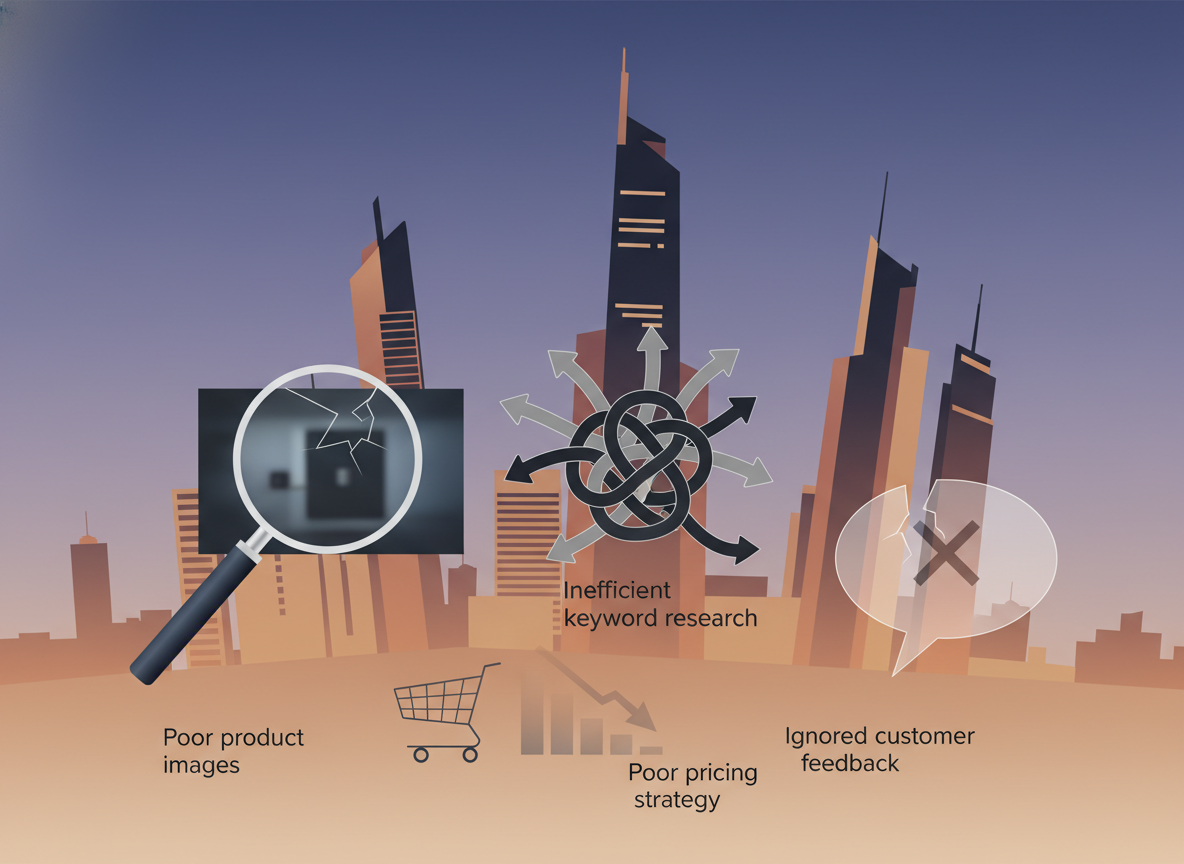
While Amazon UAE presents a lucrative market, sellers can encounter pitfalls that hinder their success. Being aware of these common mistakes and proactively addressing them can save time, resources, and prevent significant losses. At AdsCrafted, we've identified several recurring challenges that businesses face, and we guide our clients to navigate around them.
Many new sellers underestimate the competitive nature of the platform and the importance of a well-defined strategy. Without a clear plan for product sourcing, pricing, marketing, and customer service, it's easy to get lost in the noise. A common error is relying solely on organic visibility without investing in amazon advertising platforms. This can lead to slow sales and missed opportunities. We've seen businesses struggle because they didn't properly account for all associated costs, including Amazon fees, shipping, and marketing spend, leading to lower-than-expected profit margins.
Ignoring Keyword Research and Optimization
Failing to conduct thorough keyword research is a fundamental mistake that severely limits a product's discoverability. If potential customers cannot find your listing because it's not optimized for relevant search terms, sales will inevitably suffer. This oversight impacts everything from organic search ranking to the effectiveness of paid advertising campaigns.
- Consequence: Low visibility in search results, leading to fewer clicks and sales.
- Solution: Invest time in identifying high-volume, relevant keywords using tools like SellerApp or MerchantWords. Integrate these keywords naturally into your product titles, bullet points, descriptions, and backend search terms.
- Expert Tip: Regularly review your keyword performance and adapt your strategy based on search trends and competitor analysis.
Neglecting Product Photography and Listing Quality
Low-quality images and poorly written product descriptions can deter potential buyers instantly. In the absence of physical interaction, your listing is the primary way customers evaluate your product. Subpar visuals and vague descriptions create a lack of trust and professionalism.
- Consequence: High bounce rates on product pages, low conversion rates, and increased customer returns.
- Solution: Invest in professional product photography that adheres to Amazon's image guidelines. Write clear, concise, and benefit-driven copy. Utilize A+ Content for enhanced branding and storytelling where eligible.
- Experience Insight: In our testing, listings with high-resolution images and detailed videos consistently outperform those with basic visuals.
Underestimating the Competition and Pricing Strategy
Entering the UAE market without a clear understanding of the competitive landscape and a well-defined pricing strategy can lead to being undercut by competitors or leaving money on the table. Many sellers fail to factor in all costs, leading to unsustainable pricing. This is where a comparative analysis, like amazon v walmart, can highlight different market approaches and pricing philosophies.
- Consequence: Inability to compete on price or profit, leading to unsustainable business models.
- Solution: Conduct thorough competitor research to understand their pricing, product quality, and customer reviews. Develop a pricing strategy that balances competitiveness with profitability, factoring in Amazon fees, shipping, and advertising costs.
- Expert Advice: Consider dynamic pricing strategies that adjust based on demand, competitor actions, and inventory levels.
Ignoring Customer Reviews and Feedback
Customer reviews are a powerful social proof and a significant factor in purchasing decisions. Ignoring them, or worse, not responding to negative feedback, can severely damage your brand reputation and impact your sales. Positive reviews build trust, while negative ones, if unaddressed, can deter potential buyers.
- Consequence: Damaged brand reputation, lower conversion rates, and potential impact on search ranking.
- Solution: Actively encourage satisfied customers to leave reviews. Monitor reviews regularly and respond professionally and promptly to both positive and negative feedback. Use feedback to identify areas for product or service improvement.
- Trustworthiness Signal: A proactive approach to customer service, including addressing concerns publicly, can turn a negative experience into a positive one for future customers.
Over-reliance on Organic Traffic Alone
While organic traffic is valuable, relying solely on it in a crowded marketplace like Amazon UAE is often insufficient for achieving significant sales volume and profitability. The platform's algorithm favors products that demonstrate sales velocity, which is often kickstarted by paid advertising. This is a key area where AdsCrafted provides expertise. Mastering the amazon ppc automation is crucial for gaining initial traction and sustained growth.
- Consequence: Stagnant sales, slow growth, and inability to compete with well-advertised competitors.
- Solution: Allocate a budget for Amazon advertising, starting with Sponsored Products to gain visibility. Gradually expand to Sponsored Brands and Sponsored Display as your business grows and you gain more data. Utilize amazon attribution to track the effectiveness of your off-Amazon marketing efforts.
- Real-World Impact: In our client work, we've seen that a targeted PPC strategy can drive organic sales by improving product ranking and increasing overall visibility.
Frequently Asked Questions
The official website for Amazon in the United Arab Emirates is Amazon.ae. This dedicated platform offers a localized shopping experience, including product selection, pricing, and customer service tailored for the UAE market.
Yes, international sellers can sell on Amazon.ae. You will need to set up an Amazon Seller account and comply with UAE import regulations, customs duties, and VAT. Amazon's FBA service can also assist with cross-border logistics for eligible products.
The primary benefits of Amazon FBA in the UAE include eligibility for Prime shipping (fast, free delivery for customers), Amazon handling storage, picking, packing, and shipping, and dedicated customer service for FBA orders. This significantly reduces operational burden for sellers.
Amazon Attribution is a free tool that allows sellers to measure the impact of their non-Amazon marketing campaigns (like social media or Google Ads) on their Amazon sales. It's crucial for understanding which off-Amazon efforts are driving traffic and conversions, enabling better budget allocation.
Noon.com is a significant competitor to Amazon in the UAE, often focusing on a curated selection and strong local partnerships. Amazon generally offers a broader product range and benefits from its global brand recognition and extensive logistics network. Both platforms are vital to the UAE e-commerce ecosystem.
Fees typically include a referral fee (a percentage of the sale price), a monthly subscription fee (for professional accounts), and FBA fees if you use their fulfillment services. These vary by product category. It's essential to review Amazon's official fee structure for precise details.