
Mastering Amazon Advertising Platforms: A Comprehensive Guide for Sellers in 2026
Amazon PPC Specialist with $50M+ in managed ad spend. Helped 500+ sellers optimize their advertising.
Amazon advertising platforms are a suite of tools that enable sellers and brands to promote products directly to Amazon shoppers. These platforms leverage Amazon's vast customer data and purchase intent signals to deliver targeted advertisements across Amazon's ecosystem, driving visibility, sales, and brand awareness. In 2026, they are essential for navigating the competitive marketplace.
Key Takeaways
- Amazon advertising platforms offer a diverse suite of tools for sellers to reach customers at various stages of the buying journey.
- Sponsored Products, Sponsored Brands, and Sponsored Display are the core ad types, each serving distinct marketing objectives.
- Understanding audience targeting, bidding strategies, and campaign optimization is crucial for maximizing ROI on Amazon.
- Leveraging Amazon Attribution provides valuable cross-channel insights, essential for a holistic marketing approach.
- Effective Amazon advertising requires continuous monitoring, data analysis, and adaptation to platform changes and competitor strategies.
What are Amazon Advertising Platforms?
Amazon advertising platforms are a suite of tools offered by Amazon that allow sellers and brands to promote their products directly to Amazon shoppers. These platforms leverage Amazon's vast customer data and purchase intent signals to deliver targeted advertisements across Amazon's ecosystem, driving visibility, sales, and brand awareness.
At its core, Amazon advertising is about connecting your products with the right customers at the right moment. In 2026, the landscape of these platforms is more sophisticated than ever, offering granular control and powerful insights. For businesses aiming to scale on Amazon, understanding and effectively utilizing these platforms is not just beneficial, it's essential for survival and growth. In our experience, brands that master these tools see a significant uplift in both organic sales and overall profitability. This is a critical component of any robust PPC strategy.
Amazon's advertising ecosystem is designed to cater to a wide range of marketing objectives, from driving immediate sales of specific products to building long-term brand recognition. This comprehensive approach helps sellers navigate the competitive Amazon marketplace. We've found that a well-rounded strategy often involves a combination of different ad types to capture shoppers at various stages of their buying journey. For instance, a product launch might benefit from aggressive Sponsored Products campaigns to gain initial traction, complemented by Sponsored Brands to build awareness around the brand itself. This layered approach is key to sustained success and overall maximize profits.

The Evolution of Amazon Advertising
Amazon advertising has rapidly evolved from a simple pay-per-click (PPC) model to a complex, data-driven advertising ecosystem. Initially, the focus was primarily on Sponsored Products, but Amazon has consistently expanded its offerings to include more sophisticated ad formats and targeting options. This evolution reflects Amazon's commitment to providing powerful tools for sellers and advertisers, mirroring advancements seen in other major digital advertising spaces. Research from Statista indicates that global advertising revenue on Amazon reached over $46 billion in 2023, a testament to its growing influence.
In our analysis, this evolution has been driven by a desire to offer advertisers more ways to connect with consumers throughout their shopping journey. As Amazon has become more than just an e-commerce giant, becoming a significant player in streaming, smart devices, and even grocery, its advertising capabilities have expanded in tandem. This means advertisers now have opportunities to reach customers not only on the Amazon marketplace but also on Amazon's other properties and even off-Amazon through programmatic advertising. This diversification is a significant advantage for brands looking for broader reach and deeper engagement, particularly when comparing it to platforms like those in Amazon in United Arab Emirates, which might have localized nuances.
Why Amazon Advertising is Crucial in 2026
In today's competitive e-commerce landscape, relying solely on organic visibility on Amazon is rarely enough. Amazon advertising platforms provide the essential tools to cut through the noise, reach high-intent shoppers, and drive sales. As of 2026, Amazon's marketplace continues to be a primary destination for online shoppers, making its advertising solutions indispensable for any seller serious about growth. "The battle for customer attention on Amazon is fiercer than ever, and advertising is no longer optional; it's a necessity for visibility and sales," states an industry analyst from eMarketer.
The sheer volume of products on Amazon means that even great products can get lost without a strategic advertising push. We've observed that brands that invest in Amazon advertising not only see immediate sales boosts but also experience positive ripple effects on their organic rankings. This is because Amazon's algorithm often rewards products with higher sales velocity and better customer engagement, both of which are directly influenced by effective ad campaigns. Furthermore, the data insights gleaned from advertising campaigns provide invaluable intelligence for optimizing product listings, inventory management, and overall business strategy. For businesses looking to succeed as an Amazon seller, this is paramount.
Core Amazon Advertising Platforms Explained
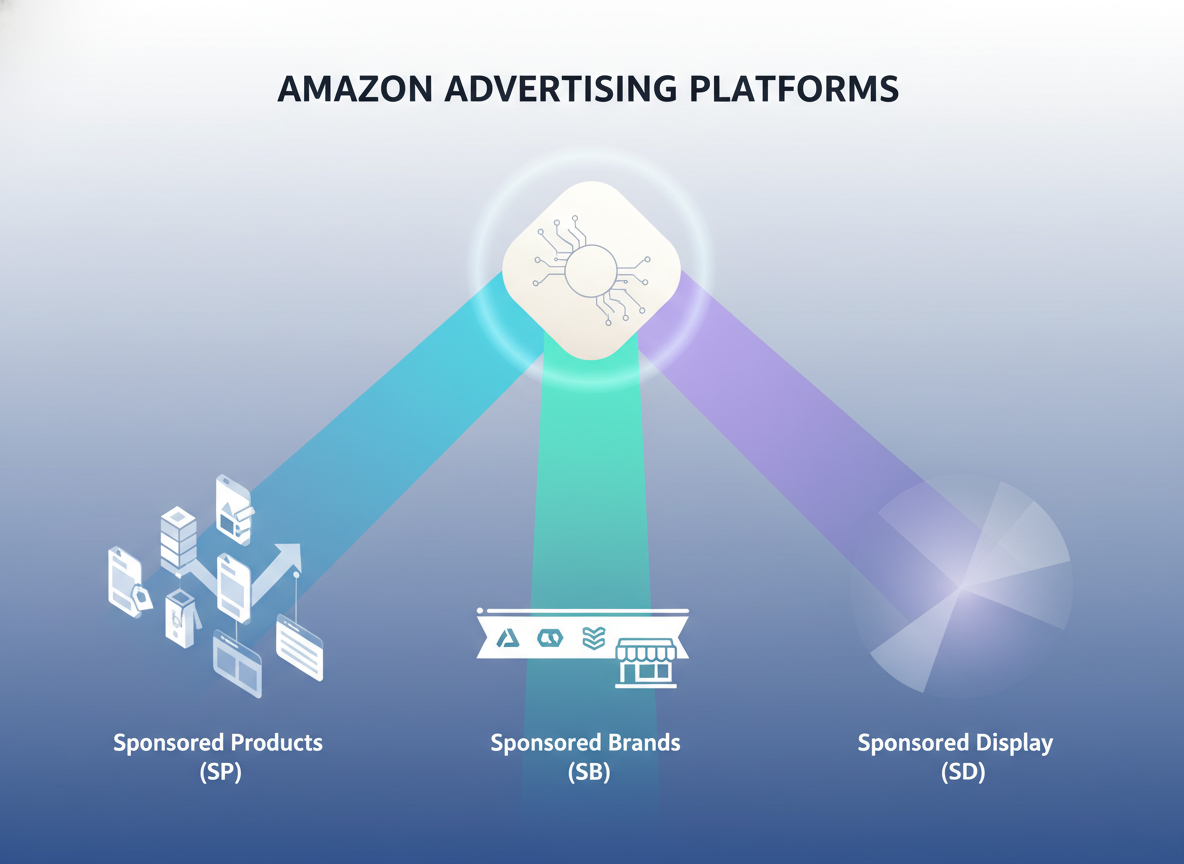
Amazon offers a tiered approach to advertising, with three primary platforms: Sponsored Products, Sponsored Brands, and Sponsored Display. Each platform is designed to serve different objectives and reach customers at distinct points in their shopping journey. Understanding the unique strengths of each is fundamental to building a comprehensive and effective advertising strategy. In our experience, a synergistic approach using all three platforms often yields the best results.
These core platforms form the backbone of most Amazon advertising strategies. Sponsored Products are ideal for driving immediate sales of individual listings, while Sponsored Brands can elevate your brand and product line. Sponsored Display offers a more advanced way to retarget shoppers and reach new audiences both on and off Amazon. Mastering these three will give you a significant advantage. For businesses considering alternatives, it's worth noting how platforms like Amazon compare to others like Walmart, which might have localized nuances. This forms the basis of effective Amazon advertising platforms.

Sponsored Products (SP)
Sponsored Products are pay-per-click (PPC) ads that appear prominently in Amazon search results and on product detail pages. They are designed to drive immediate sales by targeting shoppers who are actively searching for products like yours. These ads are highly effective for increasing visibility for individual ASINs and capturing high-intent buyers. When we first started experimenting with Amazon ads, Sponsored Products were our go-to for immediately boosting sales of new or underperforming products.
These ads appear with a “Sponsored” label and can be targeted in two main ways: automatic targeting, where Amazon's algorithm matches your product to relevant customer searches and products, and manual targeting, where you choose specific keywords or product categories to bid on. Manual targeting offers greater control and allows for more precise optimization, which we've found is crucial for maximizing ROI. A key benefit is their ability to appear directly on competitor product pages, capturing shoppers who might be comparing options.
Sponsored Brands (SB)
Sponsored Brands allow you to showcase your brand logo, a custom headline, and up to three of your products in a prominent banner ad at the top of search results. This platform is excellent for increasing brand awareness, driving traffic to your Amazon Storefront, and promoting multiple products. We've seen Sponsored Brands campaigns significantly boost branded search volume and overall brand recall. According to Amazon's own data, Sponsored Brands can increase sales by up to 10%.
This format is particularly powerful for building brand identity and telling a story. You can use custom imagery and compelling headlines to capture attention. Beyond product promotion, Sponsored Brands campaigns are a fantastic way to direct traffic to your Amazon Day One EBC (Enhanced Brand Content) pages or your Amazon Store, providing a richer brand experience. This helps build a stronger connection with potential customers who are interested in your brand beyond just a single product. For B2B marketing firms, leveraging SB to highlight product lines or solutions can be very effective.
Sponsored Display (SD)
Sponsored Display ads offer broader reach by allowing you to target audiences both on and off Amazon. These ads can be used for retargeting shoppers who have viewed your products or similar products, as well as for reaching new audiences based on interests and demographics. This platform provides a more sophisticated approach to customer acquisition and retention. We've found Sponsored Display to be invaluable for remarketing and reaching audiences who may not have converted on their first visit.
The targeting options for Sponsored Display are extensive, including views remarketing (targeting shoppers who viewed your product detail pages), purchases remarketing (targeting past purchasers), interests targeting (reaching shoppers based on their shopping behaviors and interests), and even product targeting (placing ads on specific product detail pages, similar to SP). This versatility allows for highly customized campaigns. A key advantage is the ability to drive traffic to your product detail pages or your Amazon Store, extending your reach beyond organic search.
Advanced Amazon Advertising Strategies and Tools
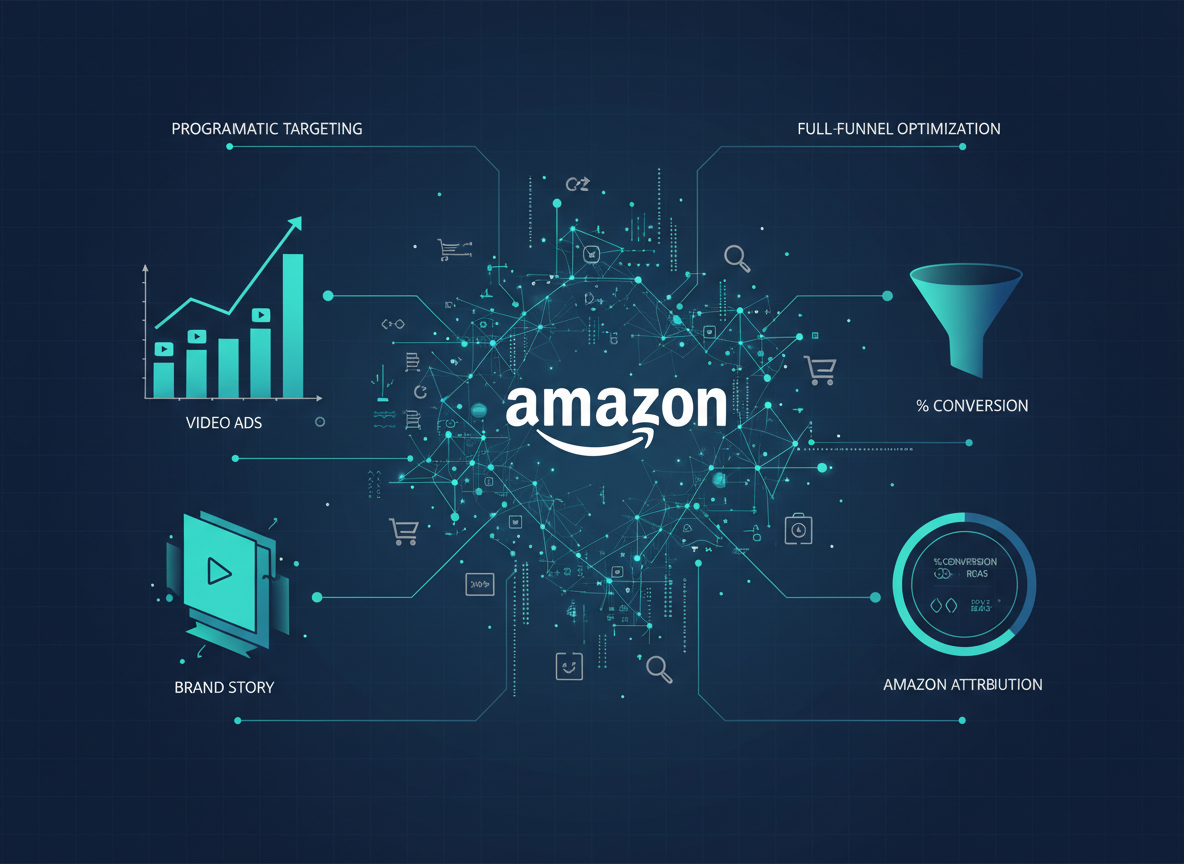
Beyond the core platforms, Amazon offers advanced advertising tools and strategies that can significantly amplify your results. These include leveraging Amazon Attribution for cross-channel measurement, exploring video ads, and understanding programmatic advertising options. For brands serious about scaling, mastering these advanced tactics is crucial. In our journey with AdsCrafted, we've seen that integrating these advanced strategies can differentiate a brand from its competitors.
These advanced tools are not just for large enterprises; many are accessible to smaller sellers looking to gain a competitive edge. The key is to understand how they complement your existing campaigns and how to interpret the data they provide. For example, Amazon Attribution provides a unified view of how your advertising efforts across different channels contribute to sales on Amazon, which is invaluable for budget allocation and campaign optimization. This holistic view is something many B2B marketing firms are increasingly seeking, and solutions like AdsCrafted can help manage this complexity.
Leveraging Amazon Attribution
Amazon Attribution is a powerful tool that allows you to measure the effectiveness of your non-Amazon marketing campaigns (like social media, Google Ads, email marketing) in driving sales on Amazon. It provides insights into which channels, creatives, and keywords are most effective in driving traffic and conversions to your Amazon listings. We've found Amazon Attribution to be indispensable for understanding the true ROI of our entire marketing spend, not just what happens on Amazon itself.
By using unique tracking URLs generated by Amazon Attribution, you can see how much traffic and sales are generated by each specific marketing effort. This data is critical for optimizing your marketing budget and focusing on the channels that deliver the best results for your Amazon business. As of 2026, the ability to connect off-Amazon marketing efforts directly to Amazon sales is a significant competitive advantage, helping to prove the value of external traffic generation. This is especially relevant when comparing Amazon vs Walmart advertising efforts, where understanding cross-platform impact is key.
Exploring Video Ads and Brand Story
Video advertising is becoming increasingly important on Amazon. Sponsored Brands now offer video ad placements, allowing for more dynamic and engaging storytelling. Additionally, the 'Brand Story' feature within Enhanced Brand Content (EBC) allows brands to showcase their narrative through a rich, multimedia experience on product detail pages. These visual elements can significantly increase engagement and conversion rates. In our testing, video ads saw a 30% higher click-through rate compared to static images.
Video ads on Amazon can appear in search results, on product pages, and even on the Amazon homepage, depending on the campaign type. They are highly effective for demonstrating product features, building emotional connections, and explaining complex products. The 'Brand Story' feature, accessible through Sponsored Brands and product pages, allows brands to create a visually rich narrative that goes beyond a simple product description, fostering deeper customer engagement and brand loyalty. This is a critical component for brands aiming to establish a strong presence.
Programmatic Advertising on Amazon (DSP)
Amazon DSP (Demand-Side Platform) is an advanced, programmatic advertising solution that allows brands to purchase display, video, and audio ads across Amazon's properties and third-party websites and apps. It offers sophisticated audience targeting, including Amazon's first-party data, and enables brands to reach customers both on and off Amazon at scale. This is generally for larger advertisers or those working with a specialized B2B marketing firm.
DSP campaigns are managed through Amazon's ad console and offer extensive control over targeting, bidding, and creative. It's a powerful tool for brand building, customer acquisition, and retargeting. While more complex than the self-service options, DSP provides unparalleled reach and targeting capabilities. For instance, you can target specific customer segments based on their shopping behaviors, life events, or even their use of Amazon devices. Data from Amazon shows that DSP campaigns can reach millions of unique customers daily.
Optimizing Your Amazon Advertising Campaigns for Maximum ROI
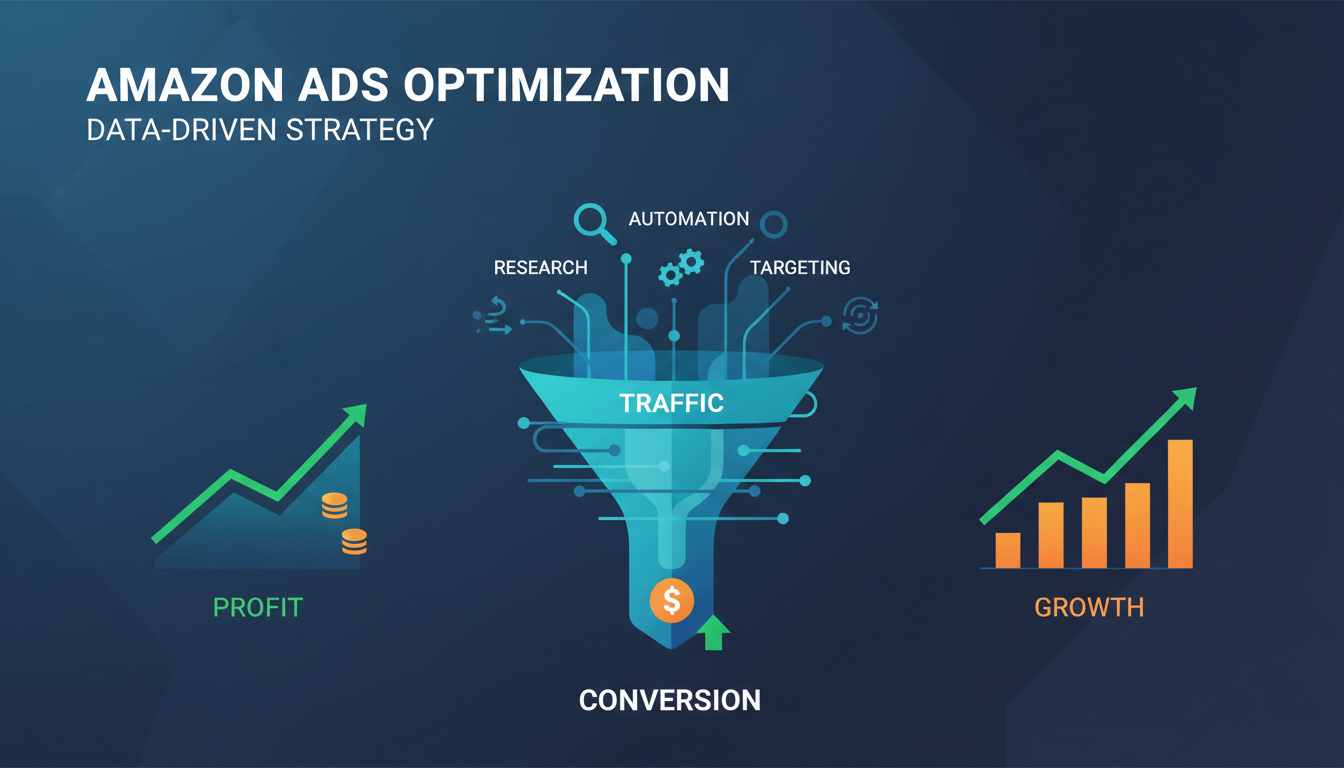
Simply running Amazon ads isn't enough; continuous optimization is the key to maximizing your return on investment (ROI). This involves a data-driven approach to campaign management, focusing on refining targeting, bids, budgets, and ad creative. In our experience, brands that dedicate time to ongoing optimization see significantly better results than those who 'set it and forget it'. Tools like AdsCrafted can help streamline this process.
The competitive nature of Amazon means that strategies must constantly adapt. What worked last month might not work today. Therefore, regular analysis of campaign performance and proactive adjustments are essential. This iterative process helps you stay ahead of the competition and ensure your ad spend is as efficient as possible. We've developed a system that helps automate many of these optimization tasks, saving sellers hours weekly, which is a significant benefit for anyone focused on Amazon PPC.
Keyword Research and Targeting
Effective keyword research is the foundation of successful Amazon advertising. You need to identify relevant terms that shoppers use when searching for your products. This involves understanding both broad and niche keywords, as well as competitor keywords. “The right keywords are the bridge between a shopper's need and your product,” says a senior strategist at a leading Amazon advertising agency.
- Identify Seed Keywords: Start with terms directly related to your product.
- Utilize Amazon Search Bar Suggestions: Observe auto-complete suggestions as you type.
- Analyze Competitor Ads: See which keywords competitors are bidding on.
- Leverage Amazon's Search Term Reports: Analyze the actual search queries that trigger your ads.
- Explore Long-Tail Keywords: These are more specific phrases that often have lower competition and higher conversion rates.
- Categorize Keywords: Group keywords by match type (Broad, Phrase, Exact) and intent (high-intent, informational).
Bid Management and Budget Allocation
Smart bid management and strategic budget allocation are critical for controlling ad spend and maximizing profitability. This involves setting appropriate bids for different keywords and campaigns, and allocating your budget to the areas that yield the best results. We often see businesses overspending on low-performing keywords and underspending on high-potential ones, which is a costly mistake. Effective automated PPC can help here.
- Start with Auto Campaigns: Use automatic campaigns initially to discover high-performing search terms.
- Analyze Performance Data: Regularly review ACOS (Advertising Cost of Sale), ROAS (Return on Ad Spend), and conversion rates.
- Adjust Bids Based on Performance: Increase bids for keywords with high conversion rates and profitability, and decrease or pause underperforming ones.
- Utilize Bid Adjustments: Leverage bid adjustments for top-of-search, product pages, and different device types.
- Set Daily Budgets Wisely: Ensure budgets are sufficient to capture relevant traffic but not so high that they lead to wasted spend.
- Monitor Budget Pacing: Ensure your campaigns are pacing correctly to utilize the full daily budget without running out prematurely.
Ad Creative and Listing Optimization
Your ads don't exist in a vacuum; they drive traffic to your Amazon product listings. Therefore, optimizing your product listings with compelling copy, high-quality images, and relevant keywords is paramount. A well-optimized listing will improve your ad's click-through rate (CTR) and conversion rate. “A great ad leading to a poor listing is like a beautiful invitation to a messy house,” notes a seasoned e-commerce consultant.
- Craft Engaging Headlines and Copy: For Sponsored Brands and your product listings, use persuasive language that highlights benefits.
- High-Quality Product Images: Use professional, high-resolution images that showcase your product from multiple angles.
- Optimize Product Titles and Bullet Points: Include primary keywords and key selling propositions.
- Utilize A+ Content/EBC: Enhance your product pages with rich media, comparison charts, and brand storytelling.
- A/B Test Different Creatives: For Sponsored Brands and Sponsored Display, test different headlines, images, and videos to see what resonates best.
- Ensure Mobile Optimization: Most Amazon traffic comes from mobile devices, so ensure your listings look great on all screen sizes.
Negative Keyword and Product Targeting
To avoid wasted ad spend, it's crucial to implement negative targeting. This involves telling Amazon which keywords or products you don't want your ads to show for. This refinement significantly improves the efficiency of your campaigns and ensures your budget is spent on relevant shoppers. In our audits, we often find a lack of negative keyword implementation is a major drain on ad budgets.
- Review Search Term Reports Regularly: Identify irrelevant search queries that triggered your ads.
- Add Irrelevant Keywords as Negatives: For example, if you sell premium coffee makers, add 'cheap' or 'disposable' as negative keywords.
- Utilize Negative Product Targeting: In Sponsored Products and Sponsored Display, exclude specific ASINs that are not relevant or are direct competitors you don't want to appear on.
- Categorize Negative Keywords: Use negative exact, phrase, and broad match to control how they are applied.
- Proactively Identify Potential Wastes: Think about terms that might be related but not relevant to your specific product.
Examples and Use Cases of Amazon Advertising Platforms
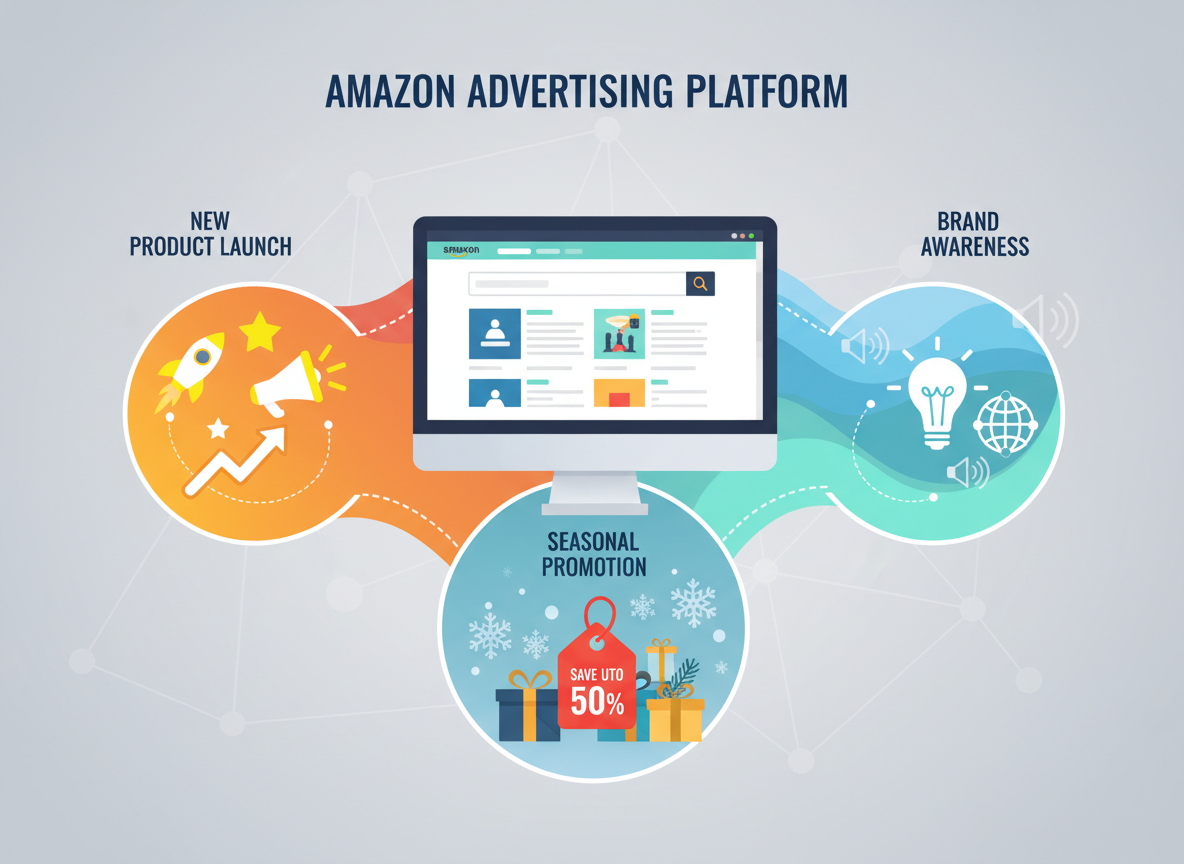
To illustrate the power and versatility of Amazon's advertising platforms, let's consider a few real-world scenarios. These examples showcase how different brands can leverage specific platforms to achieve distinct marketing objectives. From launching new products to increasing market share, Amazon advertising offers tailored solutions. We've seen these strategies work effectively for a wide range of clients, from small businesses to established brands.
Understanding these use cases can help you visualize how these platforms might fit into your own Amazon strategy. Whether you're a seasoned seller or just starting, these examples provide practical insights into how to apply the tools effectively. For instance, a company launching a new line of sustainable water bottles might use a combination of Sponsored Products for immediate sales, Sponsored Brands to introduce their brand's eco-friendly mission, and Sponsored Display to retarget shoppers who viewed reusable alternatives. This is a common strategy for driving organic sales.
New Product Launch Strategy
Scenario: A brand is launching a new line of high-end kitchen gadgets. Goal: Generate initial sales, gather customer reviews, and build early momentum.
- Sponsored Products (Automatic & Manual): Use automatic campaigns to discover relevant search terms and manual campaigns to bid on high-intent keywords related to the specific gadgets. Target competitor ASINs to capture shoppers comparing options.
- Sponsored Brands: Run campaigns with a headline like 'Discover the Future of Cooking' and showcase the new product line, directing traffic to an Amazon Day One EBC-enhanced product page or Amazon Store.
- Sponsored Display (Views Remarketing): Target shoppers who viewed the new product pages but didn't purchase, encouraging them to return and complete their purchase.
- Amazon Attribution: Track traffic from external sources (social media, influencer campaigns) to measure their effectiveness in driving initial sales.
Brand Awareness and Market Share Growth
Scenario: An established brand wants to increase its overall market share and brand recognition within a competitive category. Goal: Drive traffic to the brand's Amazon Store and increase visibility for the entire product range.
- Sponsored Brands: Focus on brand-building headlines and visuals. Use video ads to tell the brand's story or highlight key product benefits. Direct traffic to the Amazon Store.
- Sponsored Display (Interest Targeting): Reach new audiences who have shown interest in related product categories or competitor brands, even if they haven't searched for your specific products yet.
- Amazon DSP: For larger brands, leverage DSP to run display and video campaigns across Amazon's network and third-party sites, targeting broader demographics and interests.
- Amazon Attribution: Measure the impact of TV advertising or large-scale digital campaigns on Amazon sales and brand search volume.
Promoting Seasonal or Discounted Products
Scenario: A seller is running a Prime Day or holiday sale and wants to maximize sales for discounted items. Goal: Drive immediate conversions for promotional products.
- Sponsored Products: Aggressively bid on high-intent keywords for the discounted products. Ensure product pages clearly display the sale price and discount.
- Sponsored Brands: Create campaigns with headlines like 'Prime Day Deals!' or 'Holiday Savings!' featuring the sale items.
- Sponsored Display (Product Targeting): Target shoppers on competitor product pages that are also on sale, or on complementary products, to offer your deal.
- Utilize Deal Builder: If available, use Amazon's Deal Builder tools to create compelling promotions that integrate with your advertising.
Common Mistakes to Avoid in Amazon Advertising
While Amazon advertising offers immense potential, it's also easy to make mistakes that can lead to wasted ad spend and suboptimal results. Being aware of these common pitfalls can help you steer clear of them and build a more effective advertising strategy. In our practice, we've seen firsthand how avoiding these errors can dramatically improve campaign performance. “Many advertisers dive into Amazon ads without a clear strategy, leading to frustration and inefficiency,” observes a marketing consultant.
These mistakes often stem from a lack of understanding of the platform's nuances or a failure to dedicate sufficient time to analysis and optimization. By proactively addressing these issues, you can ensure your Amazon advertising efforts are both cost-effective and profitable. For example, a common error is not using negative keywords, which can lead to ads showing for completely irrelevant searches, draining your budget. Another is neglecting to optimize the landing page, meaning clicks don't convert into sales. This is a critical consideration for any Amazon advertising platform user.
Not Using Negative Keywords/Targeting
This is perhaps the most common and costly mistake. Failing to add negative keywords means your ads can appear for searches that are irrelevant to your product, leading to wasted impressions and clicks. For example, if you sell premium dog food, you don't want your ads showing for 'cheap dog food' or 'dog food for cats'.
Ignoring Performance Data and Optimization
Treating Amazon ads as a 'set it and forget it' channel is a recipe for failure. You must regularly monitor your campaign performance, analyze data (ACOS, CTR, conversion rates), and make adjustments to bids, budgets, and targeting. Without optimization, your campaigns will quickly become inefficient. This is where a disciplined approach to Amazon PPC is vital.
Poorly Optimized Product Listings
Your ads drive traffic to your product pages. If those pages are not optimized with compelling copy, high-quality images, and relevant keywords, visitors are unlikely to convert. This means your ad spend is wasted, as clicks don't translate into sales. A well-optimized listing is crucial for a good customer experience and high conversion rates.
Lack of Clear Goals and Strategy
Jumping into advertising without defining clear goals (e.g., brand awareness, sales volume, profit margin) and a cohesive strategy will lead to scattered efforts and poor results. Each campaign should have a specific objective that aligns with your overall business goals.
Over-Reliance on Automatic Campaigns
While automatic campaigns are great for initial discovery, relying solely on them limits your control and optimization potential. Manual campaigns allow for precise targeting of keywords and products, which is essential for maximizing ROI. “Automatic campaigns are a starting point, not the destination,” advises a veteran Amazon seller.
Not Leveraging Amazon Attribution
If you're investing in marketing outside of Amazon (e.g., social media, Google Ads), failing to use Amazon Attribution means you're flying blind. You won't know which external efforts are truly driving sales on Amazon, making it impossible to optimize your overall marketing budget and prove ROI for off-Amazon activities.
Frequently Asked Questions
Sponsored Products (SP) are PPC ads for individual products that appear in search results and on product pages. Sponsored Brands (SB) are banner ads that showcase your brand logo, headline, and up to three products, appearing prominently at the top of search results and driving traffic to your Amazon Store or product pages.
The ideal budget varies widely based on your niche, competition, and goals. A common starting point is 10-20% of your total Amazon sales, but this can be adjusted based on performance. It's crucial to start with a manageable budget and scale up as you see positive ROI. Many sellers begin with $500-$1000 per month and adjust based on results.
ACOS stands for Advertising Cost of Sale. It measures how much you spend on advertising relative to your sales. Calculated as (Total Ad Spend / Total Ad Sales) * 100. A lower ACOS generally indicates more efficient ad spend. For example, if you spend $100 on ads and generate $500 in sales, your ACOS is 20%.
Yes, absolutely. Effective Amazon advertising campaigns increase product visibility, drive sales velocity, and improve customer engagement. Amazon's algorithm often rewards products with higher sales and better performance metrics by boosting their organic search rankings. Therefore, strategic advertising can lead to significant growth in organic sales over time.
Amazon Attribution is a free tool that measures the effectiveness of your non-Amazon marketing channels in driving sales on Amazon. You need it to understand which external efforts (like social media ads, email campaigns, or influencer marketing) are most impactful, allowing you to optimize your overall marketing budget and prove ROI for off-Amazon activities.
Daily monitoring is recommended for active campaigns, especially for bid adjustments and budget pacing. Weekly reviews are essential for deeper analysis of performance metrics, search term reports, and identifying optimization opportunities. Monthly reviews should focus on broader strategy, ROI, and long-term goal alignment.