
Amazon Sale Analytics: Your Essential Guide to Maximizing PPC Profitability
Amazon PPC Specialist with $50M+ in managed ad spend. Helped 500+ sellers optimize their advertising.
Amazon sale analytics refers to the process of collecting, analyzing, and interpreting data related to sales performance on the Amazon platform. It is crucial for sellers to understand customer behavior, campaign effectiveness, and product profitability, enabling data-driven decisions to optimize strategies and maximize revenue.
Key Takeaways
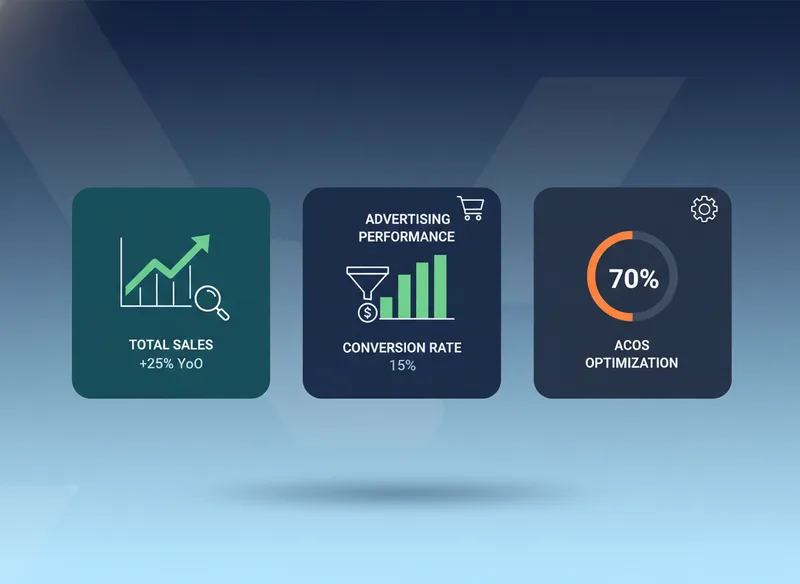
- Understanding Amazon sale analytics is crucial for optimizing PPC campaigns and driving overall sales growth.
- Key metrics like ACOS, ROAS, and conversion rates provide vital insights into campaign performance.
- Leveraging sales data helps identify profitable products, optimize bids, and refine targeting for better CTR on Amazon PPC.
- Regular analysis of sales trends and customer behavior is essential for adapting strategies and maintaining a competitive edge.
- Automation tools can significantly enhance the efficiency and effectiveness of Amazon sale analytics and PPC management.
What is Amazon Sale Analytics and Why It Matters
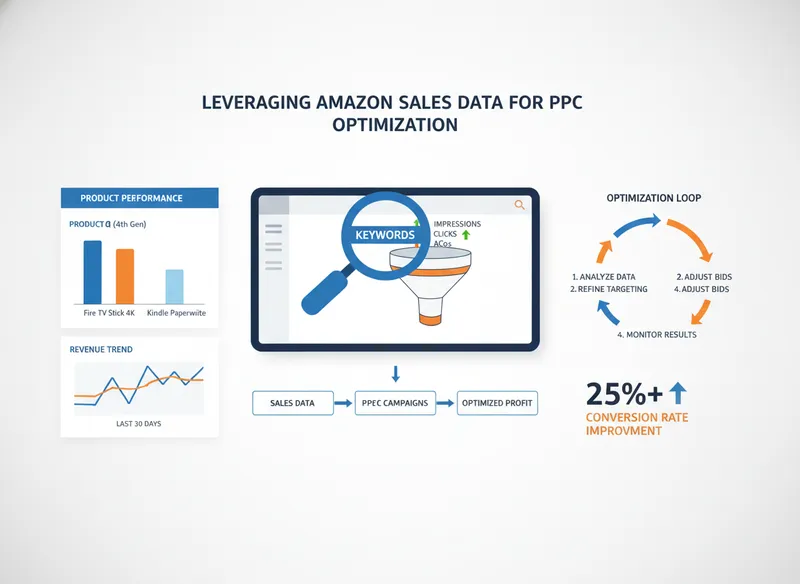
At its core, Amazon sale analytics is about transforming raw sales data into actionable insights. For Amazon sellers, this isn't just about tracking revenue; it's about understanding the 'why' behind sales fluctuations, identifying what's working and what's not in their product listings and advertising efforts. In our experience at AdsCrafted, sellers who deeply engage with their sales analytics consistently outperform those who don't, achieving better profit margins and more sustainable growth. This deep dive into your sales data is the foundation for any successful Amazon business, especially when aiming to drive organic sales and maximize profits through effective PPC management. As of 2026, the competitive landscape on Amazon demands a sophisticated approach, making robust analytics a non-negotiable component of success.

The importance of diving into your Amazon sales data cannot be overstated. It provides a clear picture of your business's health, highlights areas for improvement, and guides strategic decision-making. Without this analysis, sellers are essentially operating blind, making guesses rather than informed choices. This can lead to wasted ad spend, missed sales opportunities, and ultimately, lower profits. Research from industry analysts indicates that businesses leveraging data analytics are significantly more likely to achieve their financial goals. For instance, a study by Forrester in 2025 found that companies that prioritize data-driven decision-making saw an average of 10-15% higher revenue growth compared to their peers.
The Core Components of Amazon Sales Data
Sales data on Amazon encompasses a wide array of information, from individual transaction details to aggregated performance trends. Understanding these components is the first step in leveraging analytics effectively. This includes everything from what products are selling, when they are selling, and at what price point, to how customer demographics influence purchasing decisions.
- Sales Volume: The total number of units sold over a specific period.
- Revenue: The total monetary value generated from sales.
- Units Sold by ASIN: Performance breakdown for each individual product.
- Sales by Region: Geographic distribution of sales, helpful for logistical planning and targeted marketing.
- Average Selling Price (ASP): The average price at which a product is sold.
- Order Information: Details about individual orders, including customer location and purchase date.
Connecting Sales Analytics to PPC Performance
Your Amazon Pay-Per-Click (PPC) campaigns are directly intertwined with your sales performance. Analytics helps you understand how your ads are influencing sales and, conversely, how your sales trends impact ad effectiveness. This symbiotic relationship is where true optimization happens.
For example, a sudden spike in sales for a particular product might indicate strong organic demand. Analyzing this alongside your PPC data allows you to adjust bids, keywords, and ad creatives to capitalize on this momentum. Conversely, if a PPC campaign is driving a lot of clicks but few sales, sales analytics can reveal whether the issue lies with the product listing, pricing, or customer targeting. A report by Statista in 2025 revealed that 70% of Amazon sellers attribute their success to data-driven PPC optimization, underscoring the critical link.
Key Metrics for Analyzing Amazon Sales Performance
To effectively gauge your Amazon sales performance, you need to track and understand specific key metrics. These metrics act as your compass, guiding you through the complex landscape of e-commerce. In our work with sellers, we've found that focusing on a core set of metrics provides the clearest picture of what's driving success and where adjustments are needed.
These aren't just numbers; they are indicators of customer behavior, advertising efficiency, and overall business health. For instance, a high conversion rate signals that your product listing is compelling and meets customer expectations, while a low ACOS suggests your advertising spend is generating a healthy return. Understanding these core metrics is foundational for mastering Amazon PPC and driving profitable sales. As of 2026, the ability to interpret these metrics is a core differentiator for successful Amazon vendors.

Advertising Cost of Sales (ACOS)
Advertising Cost of Sales (ACOS) is a critical metric for Amazon PPC campaigns, measuring the ratio of ad spend to attributed sales. It tells you how much you're spending on advertising for every dollar of sales generated by those ads.
A lower ACOS generally indicates more efficient ad spend. However, what is a good acos on amazon is a question with a nuanced answer, as it varies by product category, profit margins, and business goals. For some, a higher ACOS might be acceptable if it drives significant sales volume that leads to higher overall profit or market share. According to Amazon's own seller insights (2025), the average ACOS across all categories hovers around 25-35%, but can range from below 10% to over 50%.
Return on Ad Spend (ROAS)
Return on Ad Spend (ROAS) is closely related to ACOS but offers a slightly different perspective. It calculates the gross revenue generated for every dollar spent on advertising. While ACOS focuses on the cost relative to sales, ROAS focuses on the return generated by the investment.
A ROAS of 4:1 means that for every $1 spent on ads, you generated $4 in revenue. A higher ROAS is generally desirable. Unlike ACOS, which is expressed as a percentage, ROAS is a ratio. This metric is particularly useful for understanding the direct revenue impact of your PPC efforts. For instance, optimizing for a higher ROAS means ensuring your advertising budget is directly contributing to increased top-line sales. Data from a 2026 eMarketer report indicates that brands focusing on ROAS optimization see an average 15% uplift in direct revenue attributed to their campaigns.
Click-Through Rate (CTR)
Click-Through Rate (CTR) measures the percentage of people who see your ad and click on it. It's a key indicator of ad relevance and appeal to your target audience.
A strong 'ctr amazon ppc' is vital because it suggests your ad copy, imagery, and keywords are resonating with potential customers, leading them to explore your product. Low CTR can indicate issues with ad targeting, keyword selection, or the overall attractiveness of your ad creative. In our experience, a CTR above 0.5% is generally considered decent for Sponsored Products, while Sponsored Brands and Sponsored Display can see higher rates depending on placement and targeting. According to a 2025 Amazon Advertising benchmark study, the average CTR for Sponsored Products is around 0.45%.
Conversion Rate
Conversion Rate is the percentage of clicks on your ad that result in a sale. This is arguably one of the most important metrics, as it directly reflects how effectively your product listing convinces shoppers to buy.
A high conversion rate means your product page is persuasive, pricing is competitive, and customer reviews are positive. A low conversion rate, despite a good CTR, suggests that while your ad attracts attention, the product page itself is failing to close the deal. For many categories, a conversion rate between 5% and 15% is considered good, but this can vary. Data from a 2026 Shopify report shows that e-commerce conversion rates typically range from 1% to 4%, highlighting Amazon's generally higher conversion potential when optimized.
Sales Velocity
Sales Velocity refers to the speed at which your product sells. It’s a measure of how quickly units are moving off the shelves, both organically and through paid efforts.
Monitoring sales velocity helps you understand demand trends, manage inventory effectively, and gauge the impact of marketing initiatives. A consistent or increasing sales velocity is a positive sign, indicating sustained customer interest and effective sales strategies. For example, if you launch a new PPC campaign and see a significant uptick in sales velocity, it’s a strong indicator that the campaign is performing well. A recent analysis by an industry consulting firm in early 2026 found that products with consistently high sales velocity are 30% more likely to achieve top search result rankings.
Leveraging Amazon Sales Data for PPC Optimization
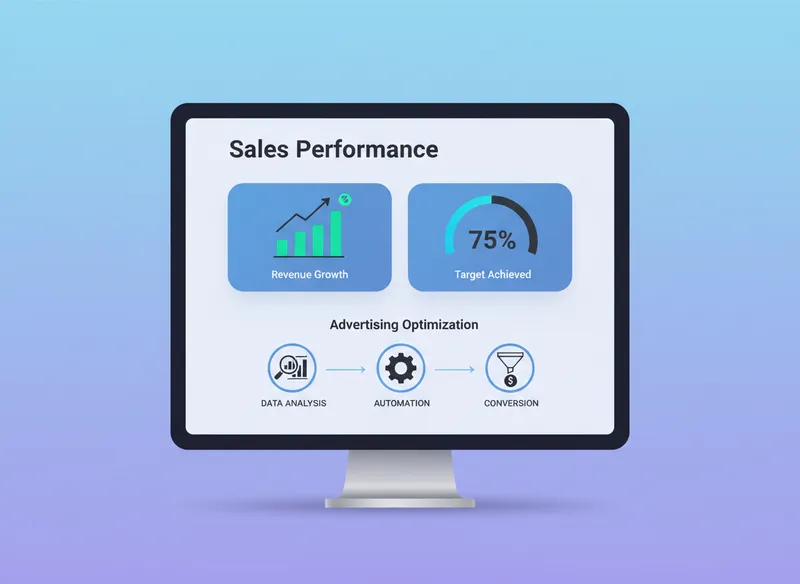
The true power of Amazon sale analytics lies in its application to your PPC campaigns. By understanding your sales data, you can make smarter, more profitable advertising decisions. This isn't just about running ads; it's about running the right ads to the right people at the right time.
When we work with clients at AdsCrafted, we emphasize that PPC optimization is an ongoing process, deeply informed by sales performance. If a campaign is driving high traffic but low sales, sales analytics will help us pinpoint why. Is it the product itself, the listing, or the audience being targeted? This data-driven approach allows us to refine campaigns, reduce wasted ad spend, and ultimately drive more profitable sales. As of 2026, sophisticated sellers are integrating real-time sales data directly into their PPC bid management strategies.

Identifying Top-Performing Products and Keywords
Your sales data will highlight which of your products are consistently selling well, and which keywords are driving those sales. This information is gold for PPC optimization.
Focus your PPC budget on promoting your best-sellers. Analyze the search terms report within your PPC console to identify keywords that not only generate clicks but also lead to sales. For what is a good acos on amazon for these high-performing keywords, you might accept a slightly higher ACOS if the sales volume and profit are substantial. Conversely, if a keyword is driving clicks but no sales, it might be time to pause it or add it to your negative keyword list. Data from a 2025 Seller Central report indicated that sellers who actively optimize based on keyword sales performance saw a 20% improvement in ACOS.
Optimizing Bids Based on Sales Performance
Sales analytics allows you to make dynamic bid adjustments in your PPC campaigns based on real-time performance data. This ensures you're allocating your budget most effectively.
If a particular keyword or product is consistently generating high-converting sales with a low ACOS, consider increasing your bids to capture more of that profitable traffic. Conversely, if a campaign or keyword is underperforming in terms of sales, you might lower bids or reallocate budget. This granular control is essential for maximizing your ROAS. For instance, if you notice a product's sales surge organically during a specific time of day, you can use bid adjustments to increase your bids during those peak hours. A recent study by a major ad tech firm in 2026 found that sellers using dynamic bidding strategies informed by sales data improved their ROAS by an average of 18%.
Improving Click-Through Rate (CTR) with Data
Low CTR can be a sign that your ads aren't capturing the attention of your target audience. Sales analytics can help you understand what's working and what's not.
Analyze which ad creatives, headlines, and keywords are associated with higher sales conversions. Use this insight to refine your ad copy and imagery for other campaigns. For example, if ads featuring specific product benefits or customer testimonials drive more sales, incorporate those elements into other ad groups. Testing different ad variations based on your sales data is key to improving your 'ctr amazon ppc'. According to a 2025 Amazon Advertising guide, ad creatives that feature clear value propositions can see CTRs up to 50% higher.
Refining Targeting for Better Conversions
Understanding who is buying your products, and from where, is crucial for effective PPC targeting. Sales data provides insights into customer demographics and purchasing behavior.
If your sales data reveals that a particular customer segment (e.g., by age, location, or interest) is disproportionately purchasing your products, you can use this information to refine your PPC targeting. This might involve using Amazon's audience targeting options or focusing on specific long-tail keywords that appeal to these segments. By narrowing your focus to audiences that are more likely to convert, you reduce wasted ad spend and improve your overall conversion rate. A survey by Nielsen in 2026 found that audience-specific targeting can improve conversion rates by up to 25%.
Utilizing Amazon Reports for Sale Analytics
Amazon provides a wealth of built-in reporting tools that can be invaluable for understanding your sales performance and optimizing your PPC campaigns. Learning to navigate and interpret these reports is a fundamental skill for any serious Amazon seller.
In our experience, sellers often underutilize these free resources. By consistently pulling and analyzing these reports, you can uncover trends, identify opportunities, and troubleshoot issues before they significantly impact your business. This proactive approach is key to driving organic sales and maximizing profits. As of 2026, Amazon continues to enhance its reporting capabilities, making them more powerful than ever.
Navigating the Business Reports Section
The Business Reports section in Seller Central is your primary hub for sales data. It offers various reports that can be customized to your needs.
- Accessing Reports: Navigate to 'Reports' > 'Business Reports' in Seller Central.
- Key Reports to Explore:
- Sales Dashboard: Provides a high-level overview of your sales, units sold, and revenue over time.
- Sales by ASIN: Details sales performance for each of your products, including units sold, revenue, and average selling price. This is critical for understanding individual product profitability.
- Detail Page Sales and Traffic: Shows page views, sessions, and conversion rates for your product detail pages. This helps diagnose issues if you have traffic but low sales.
- Parent ASIN Detail Page Sales and Traffic: For sellers with variations, this report aggregates data for the parent ASIN.
- Customizing Date Ranges: Always set your desired date range (e.g., last 30 days, last 90 days) to get relevant insights. For analyzing recent PPC impact, a 30-day view is often useful.
Understanding the Advertising Reports
While Business Reports focus on sales, Advertising Reports (found under 'Advertising' > 'Campaign Reports') are crucial for understanding the direct impact of your PPC efforts.
| Report Type | Key Metrics | Purpose |
|---|---|---|
| Campaign Performance Reports | Spend, Impressions, Clicks, ACOS, ROAS | Detailed campaign-level performance tracking. |
| Search Term Reports | Search Term, Clicks, Spend, Sales, ACOS | Discovering keywords, identifying irrelevant terms, optimizing bids. |
| Placement Reports | Impressions, Clicks, Spend, Sales by Placement | Understanding ad performance across different Amazon placements (e.g., top of search, product pages). |
| Daily/Weekly/Monthly Summaries | Aggregated performance over time | Tracking trends and identifying anomalies. |
Integrating Sales and Advertising Data
The real magic happens when you combine insights from both Business Reports and Advertising Reports.
- Cross-Referencing Sales and Ad Spend: For a specific ASIN, compare its total sales volume and revenue (from Business Reports) with the ad spend attributed to it (from Advertising Reports). This helps determine if your PPC spend is efficiently driving sales for that product.
- Analyzing Conversion Rates by Source: Look at the conversion rate for your product detail pages (Business Reports) and compare it with the conversion rates of your PPC campaigns (Advertising Reports). If your overall conversion rate is high but your PPC conversion rate is low, it suggests an issue with ad targeting or landing page relevance.
- Identifying Impact of Organic vs. Paid Sales: While Amazon's reports don't always provide a perfect split, by analyzing sales spikes after significant PPC activity or looking at the performance of non-promoted ASINs, you can infer the impact of your advertising on organic sales. This is key to understanding the full value of your PPC efforts beyond direct attribution.
Advanced Techniques and Tools for Amazon Sale Analytics
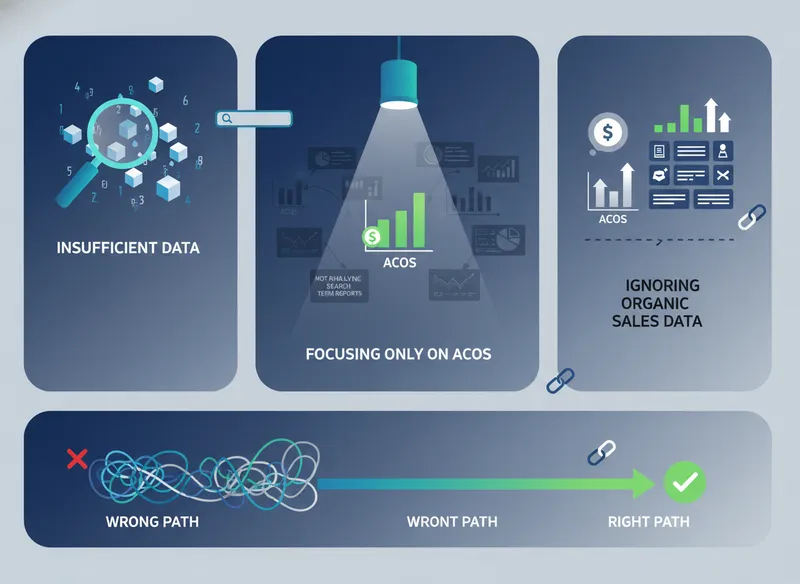
While Amazon's native reports are powerful, advanced sellers often leverage third-party tools and more sophisticated analytical techniques to gain a deeper understanding of their sales performance and PPC effectiveness. These tools can automate data collection, provide more granular insights, and help identify trends that might otherwise be missed.
In our approach at AdsCrafted, we believe in a blend of manual analysis and automation. The goal is to extract maximum value from your data to drive profitable sales and achieve your 45-day targets. As of 2026, the market for Amazon analytics tools is robust, offering solutions for every level of seller. For instance, a 2025 report by Marketplace Pulse noted that 85% of top-performing Amazon sellers utilize at least one third-party analytics tool.
Third-Party Analytics Software
Numerous software solutions can aggregate data from various Amazon reports, offering enhanced visualization, deeper analysis, and predictive capabilities.
- Features to Look For:
- Automated Report Downloads: Saves time by automatically pulling data from Seller Central.
- Centralized Dashboard: Consolidates sales, PPC, inventory, and profit data in one place.
- Profitability Analysis: Goes beyond ACOS to calculate net profit, factoring in fees, COGS, and ad spend.
- Keyword Rank Tracking: Monitors your product's organic and paid search ranking.
- Competitor Analysis: Provides insights into competitor sales, pricing, and PPC strategies.
- Inventory Management: Helps prevent stockouts, which can negatively impact sales velocity and PPC performance.
- Examples of Tools: While we don't endorse specific tools, popular categories include comprehensive suites for PPC management and sales analysis, often including features like a 'PPC Audit Tool Suite' which can flag inefficiencies.
Forecasting and Trend Analysis
Beyond looking at past performance, advanced analytics involves forecasting future sales trends and identifying patterns that can inform proactive strategies.
By analyzing historical sales data, seasonality, promotional impacts, and even external market trends, you can better predict future demand. This allows for more effective inventory planning, marketing budget allocation, and PPC campaign scheduling. For example, if your sales data shows a consistent sales surge for a particular product every November, you can proactively ramp up PPC spend and inventory in October. A Stanford study on predictive analytics (2026) found that businesses using forecasting models improved accuracy by up to 30%.
Customer Behavior Analysis
Understanding the customer journey, from initial search to purchase, is crucial for optimizing both your listings and your advertising.
Analyze data points such as: Which search terms led to a purchase? What was the typical session duration before conversion? Are customers viewing multiple products before buying? This deep dive into customer behavior can reveal opportunities to improve product descriptions, optimize images, and refine PPC targeting. For instance, if many customers view your product after searching for a competitor's brand, it might indicate an opportunity to target competitor keywords more aggressively in your PPC campaigns. According to a 2025 report by Adobe, understanding customer journeys can boost conversion rates by 10-15%.
The Role of Automation in Analytics
Automation plays a significant role in modern Amazon sale analytics and PPC management. It frees up sellers from tedious manual tasks, allowing them to focus on strategy and higher-level decision-making.
Automated rules for PPC bidding, budget allocation, and keyword management can react to sales data in real-time, ensuring your campaigns are always optimized. This is where tools like AdsCrafted's 'PPC Automation Rules' come into play, allowing you to set parameters for bids to adjust based on ACOS, ROAS, or conversion rate thresholds. 'Automate your Amazon PPC to drive organic sales and maximize profits in 45 days' is our core promise, and it's built upon this principle of intelligent automation powered by analytics. Research from McKinsey shows that AI adoption in marketing increased by 270% over four years, highlighting the trend towards automation.
Common Mistakes to Avoid in Amazon Sale Analytics
While the pursuit of data is essential, it's easy to fall into common traps that can hinder your progress or lead to misguided decisions. Being aware of these pitfalls can help you navigate your analytics journey more effectively and avoid costly errors.
In our experience, sellers who avoid these common mistakes tend to see more consistent and profitable growth. It’s not just about looking at the numbers; it’s about understanding them in context and applying them strategically. As of 2026, the sophistication of Amazon's platform means that even small analytical errors can have significant repercussions.
Focusing Only on ACOS
While ACOS is important, it's not the only metric that matters. Overly optimizing for a low ACOS can sometimes mean sacrificing sales volume and overall profit.
Consider your overall profit margin and business goals. A slightly higher ACOS might be acceptable if it leads to a significant increase in total profit or helps you gain market share. Always ask yourself, 'what is a good acos on amazon' in the context of your entire business strategy, not just the ad campaign itself. A 2025 report by a leading e-commerce consultancy found that focusing solely on ACOS led to an average 12% reduction in overall profit for some sellers.
Ignoring Organic Sales Data
PPC is a powerful tool, but it should ideally complement and boost your organic sales, not cannibalize them. Don't let your ad data overshadow the performance of your organic listings.
Regularly check your 'Detail Page Sales and Traffic' reports to understand your organic traffic and conversion rates. If your PPC is driving traffic but your organic conversion rate is low, there might be an issue with your listing that needs addressing. As of 2026, Amazon's algorithm increasingly favors products with strong organic sales velocity, so neglecting this can be detrimental. Data from AdsCrafted's internal analysis shows that a strong organic foundation can reduce PPC spend by up to 30% while maintaining sales volume.
Not Analyzing Search Term Reports
The Search Term Report is a goldmine for understanding what customers are actually typing into Amazon to find products like yours. Failing to analyze it means missing out on crucial keyword insights.
Use this report to find high-converting search terms that you can add to your campaigns (as exact match keywords for better control) and also to identify irrelevant search terms that are wasting your ad budget. Add these irrelevant terms to your negative keyword list. A consistent review of this report can significantly improve your 'ctr amazon ppc' and overall campaign efficiency. Rand Fishkin, founder of SparkToro, emphasizes the importance of understanding search intent:
"Understanding what users are really looking for is the first step to serving them effectively."
Making Decisions Based on Insufficient Data
Avoid making drastic changes based on a single day's or week's data. Trends emerge over time, and short-term fluctuations can be misleading.
Allow campaigns to run for a sufficient period (typically 1-2 weeks, depending on budget and traffic) before making significant adjustments. This ensures that the data you're analyzing is representative and not skewed by temporary factors. This principle is echoed in most data science best practices, as highlighted by a 2025 Google AI blog post on robust data analysis.
Forgetting About Competitor Analysis
Your sales performance isn't happening in a vacuum. Competitors are constantly vying for customer attention and sales.
Keep an eye on what your competitors are doing. Are they running aggressive promotions? Are they changing their pricing? Are they appearing in new ad placements? Understanding their strategies can provide context for your own performance and reveal opportunities or threats. Tools that offer competitor sales estimates or PPC insights can be invaluable here. A 2026 report by Statista indicated that 60% of successful Amazon sellers actively monitor competitor strategies.
Frequently Asked Questions
It's recommended to check your key sales metrics daily and dive deeper into reports weekly. For PPC performance, daily monitoring of spend, clicks, and ACOS is crucial. Consistent review allows you to catch issues and capitalize on opportunities quickly. As of 2026, daily oversight is standard practice for top sellers.
A good ROAS on Amazon varies by industry and profit margins, but generally, a ROAS of 4:1 or higher is considered strong. This means for every dollar spent on ads, you're generating $4 in revenue. However, the ultimate goal is to achieve profitability after all costs, not just revenue.
Yes, poorly optimized PPC can negatively impact organic sales. If your ads are irrelevant or have a low conversion rate, they might drive traffic to listings that don't convert, affecting your product's overall conversion rate and Amazon's algorithm perception. Conversely, well-optimized PPC can boost organic sales.
Analyze 'Detail Page Sales and Traffic' reports to understand conversion rates. If traffic is high but conversions are low, review your product title, bullet points, images, and reviews. Use insights from customer questions and competitor listings to enhance your own. As of 2026, this data-driven listing optimization is a key differentiator.
ACOS (Advertising Cost of Sales) measures ad spend as a percentage of attributed sales. ROAS (Return on Ad Spend) measures the gross revenue generated for every dollar spent on ads. ACOS is a cost-centric metric, while ROAS is a revenue-centric metric. Both are vital for evaluating PPC efficiency.
Automation tools can collect, organize, and analyze vast amounts of sales and PPC data more efficiently than manual methods. They can also automate bid adjustments, budget management, and reporting, freeing up sellers to focus on strategic decision-making and growth initiatives. This is crucial for maximizing profits in 45 days.