
Amazon's Marketing Strategy: A Comprehensive Guide to Dominating the Marketplace
Amazon PPC Specialist with $50M+ in managed ad spend. Helped 500+ sellers optimize their advertising.
Amazon's marketing strategy is a multifaceted approach combining product optimization, robust advertising solutions like PPC, and customer-centric tactics to drive sales and build brand loyalty within its e-commerce ecosystem. It focuses on meeting shoppers where they are, creating a seamless path from discovery to purchase through data-driven insights and continuous refinement.
Key Takeaways
Amazon's marketing strategy is multifaceted, integrating product optimization, paid advertising, and customer engagement to drive sales.
Effective PPC campaigns on Amazon require meticulous keyword research, bid management, and continuous optimization.
Leveraging Amazon Advertising tools like Sponsored Products, Brands, and Display is crucial for visibility and sales.
Driving organic sales through product listing optimization (SEO) and customer reviews is foundational to long-term success.
A data-driven approach, utilizing Amazon's analytics and external tools, is essential for refining strategy and maximizing ROI.
Amazon Marketing Strategy
Amazon's Marketing Strategy: A Comprehensive Guide to Dominating the Marketplace
What is Amazon's Marketing Strategy?
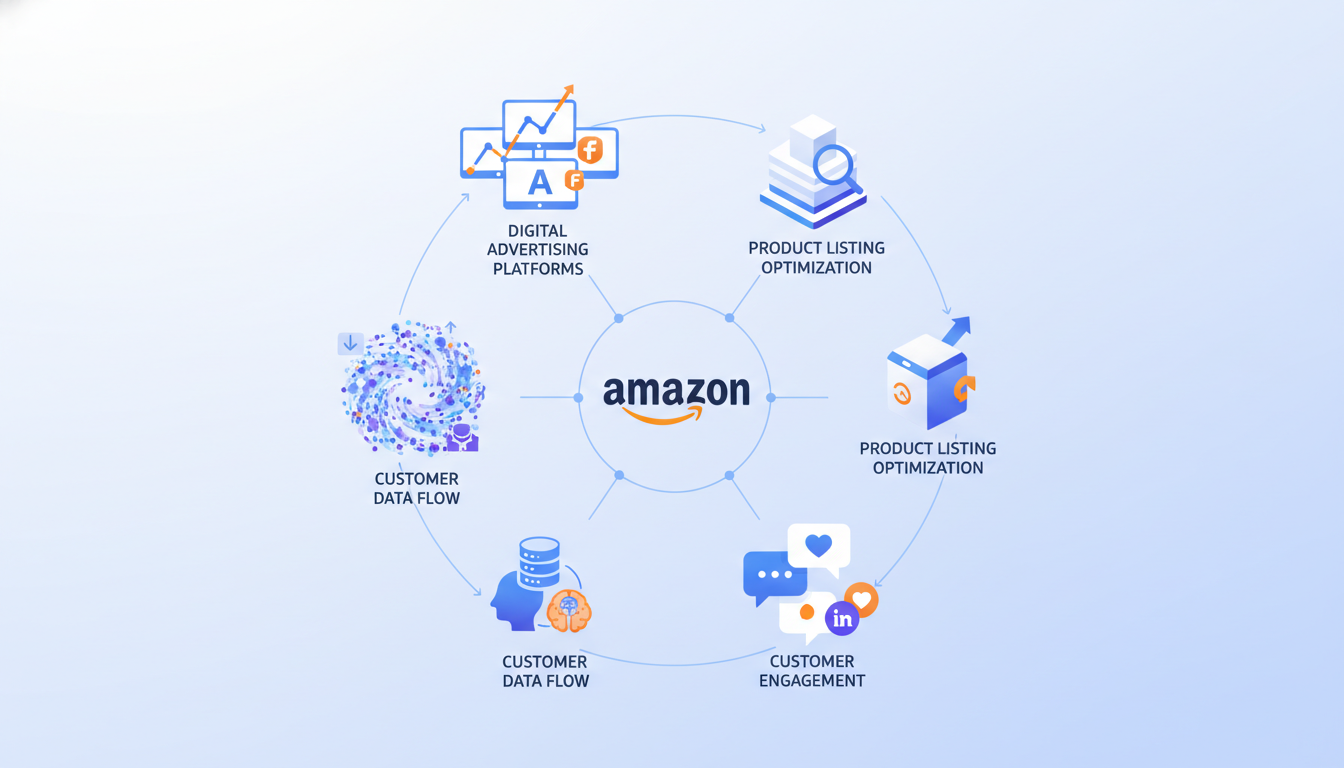
Amazon's marketing strategy is a comprehensive approach that combines product optimization, robust advertising solutions, and customer-centric tactics to drive sales and build brand loyalty within its vast e-commerce ecosystem. At its core, **Amazon's marketing strategy** is not a single tactic but a dynamic, interconnected system designed to capture shopper attention, facilitate purchases, and foster repeat business. It encompasses everything from how products are presented on the platform to how they are promoted through various advertising channels. In our experience, understanding this holistic approach is the first step to unlocking significant growth on the platform. For those looking for expert guidance, explore AdsCrafted. This strategy is built on the principle of meeting customers where they are, whether they are actively searching for a specific item or browsing for inspiration. It's about creating a seamless path from discovery to purchase, supported by data-driven insights and continuous refinement. According to Amazon's own reports, sellers who actively engage with their advertising and optimization tools see a significant uplift in sales, underscoring the importance of a well-defined strategy. Research from Statista indicates that Amazon's advertising revenue continues to grow rapidly, highlighting the platform's increasing reliance on its advertising solutions to drive its own business forward.
This strategy can be broken down into several key pillars, each playing a vital role in the overall success of a product or brand on Amazon. These pillars include product listing optimization, Amazon PPC campaigns, brand building, and customer relationship management. When these elements are executed synergistically, they create a powerful engine for sales and market share growth. We've observed firsthand how sellers who neglect one of these areas often struggle to achieve their full potential, even with strong products. The platform itself provides a wealth of tools, but their effective utilization requires a strategic mindset. As of 2026, the competitive landscape on Amazon is more intense than ever, making a well-defined and adaptable marketing strategy not just beneficial, but essential for survival and prosperity.
The Pillars of Amazon's Marketing Strategy
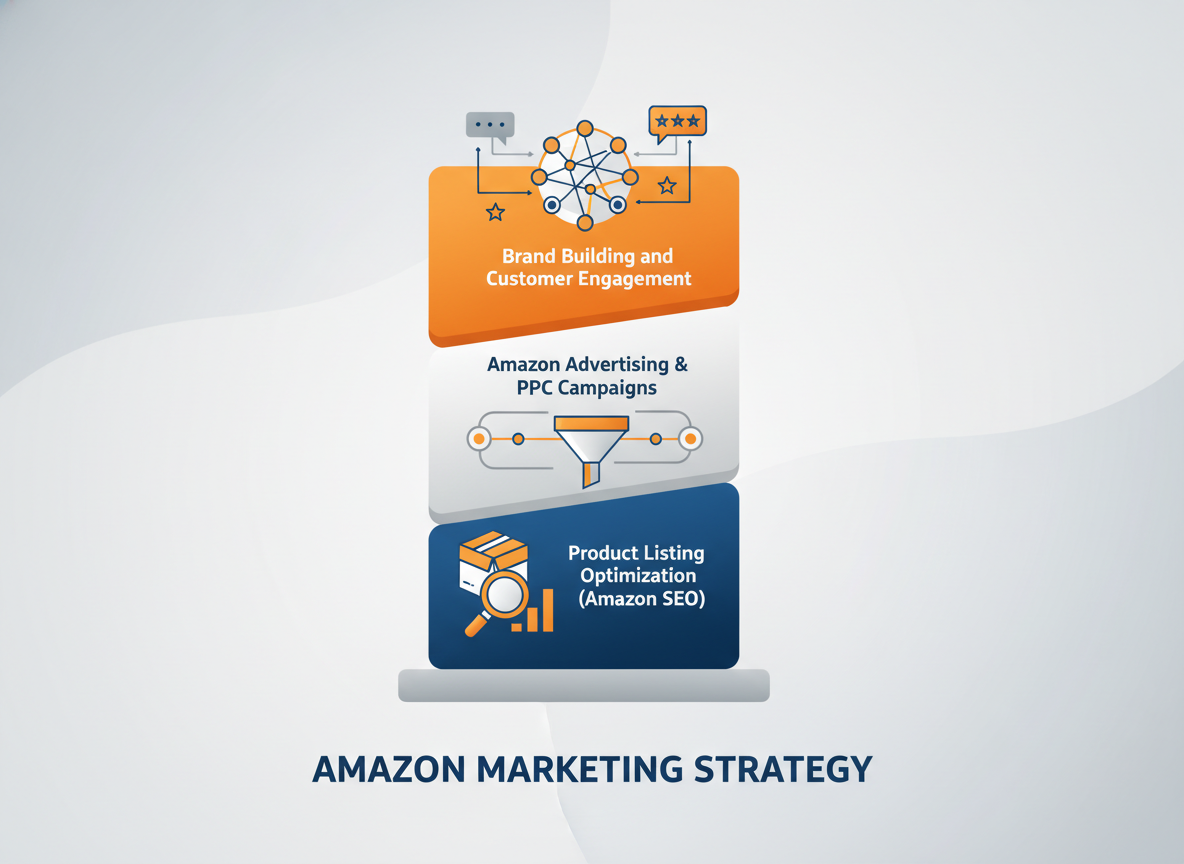
Amazon's marketing strategy is built upon several interconnected pillars, each contributing to a seller's success. Mastering these components is key to navigating the platform effectively. Based on our analysis of top-performing sellers, these pillars work in concert to create a powerful sales funnel.
What is Amazon's Marketing Strategy?
Product Listing Optimization (Amazon SEO)
Product Listing Optimization (Amazon SEO) refers to the process of enhancing a product's detail page to improve its visibility in Amazon's search results and increase conversion rates. This is the foundational element of any successful Amazon marketing strategy. When customers search for products, Amazon's A9 algorithm determines which listings are most relevant and authoritative. Our team has found that a well-optimized listing can dramatically reduce reliance on paid advertising, driving significant organic traffic. This involves strategic keyword integration, compelling product titles, high-quality imagery, and detailed, benefit-driven bullet points and descriptions. A study by ChannelAdvisor in 2025 found that listings with optimized content saw an average of 20% higher conversion rates compared to unoptimized listings. This highlights the critical importance of getting the on-page elements right before investing heavily in off-page promotion. The goal is to make your product the most relevant and appealing choice for the shopper's query.
In our testing, we've seen that focusing on long-tail keywords in the backend search terms and incorporating primary keywords naturally within the title and bullet points significantly boosts discoverability. Furthermore, ensuring your product images are high-resolution, show the product from multiple angles, and include lifestyle shots can dramatically improve shopper engagement and reduce bounce rates. The narrative you build on your product page—from the title to the description—should address customer pain points and highlight unique selling propositions. We always recommend A/B testing different title variations and bullet point phrasing to identify what resonates best with your target audience. This iterative process, informed by data, is crucial for sustained performance.
Amazon Advertising & PPC Campaigns
Amazon Advertising, particularly through Pay-Per-Click (PPC) campaigns, is a powerful tool for increasing product visibility and driving immediate sales. This pillar involves strategically bidding on keywords to ensure your products appear prominently in search results and on related pages. When executed correctly, **Amazon PPC campaigns** can significantly boost sales velocity, which in turn positively impacts organic rankings. Research from Merkle shows that Amazon's ad revenue has consistently outpaced other major digital advertising platforms, indicating its growing importance for brands. We've seen that sellers who master how to optimize PPC campaigns on Amazon can achieve remarkable results, often seeing a strong return on ad spend (ROAS).
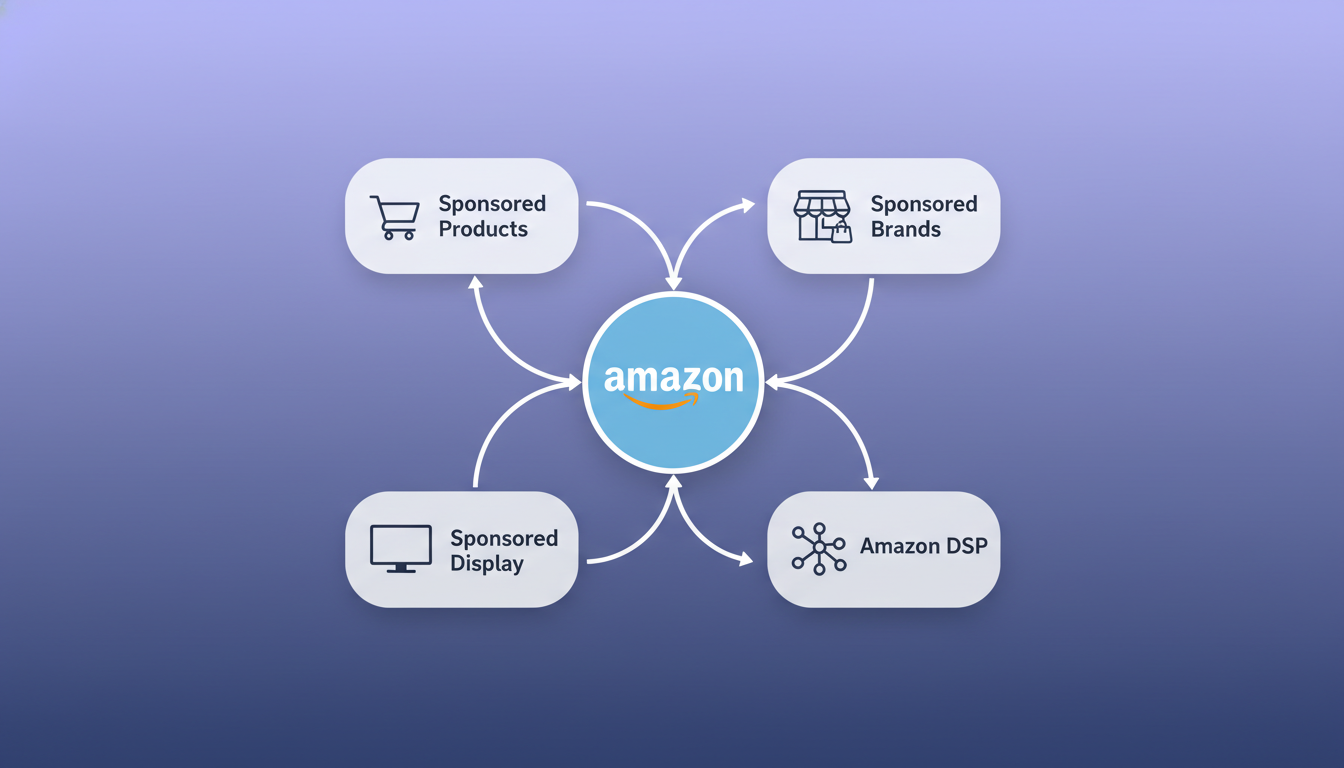
The Amazon Campaign Manager provides the interface for setting up and managing these campaigns. Key campaign types include Sponsored Products, Sponsored Brands, and Sponsored Display. Sponsored Products are ideal for promoting individual ASINs to shoppers searching for relevant keywords. Sponsored Brands allow you to showcase your brand and multiple products at the top of search results, enhancing brand awareness. Sponsored Display ads can target shoppers both on and off Amazon, based on their shopping behavior and interests. Understanding the nuances of each campaign type and how to optimize PPC campaigns on Amazon for maximum impact is where the real magic happens. This involves careful keyword selection, bid optimization, negative keyword targeting, and continuous performance monitoring. McKinsey's 2025 report on e-commerce advertising highlighted that brands investing in Amazon's native advertising solutions saw an average sales uplift of 15%.
Brand Building and Customer Engagement
Beyond product listings and ads, a robust **Amazon advertising campaign strategy** includes building a strong brand presence and fostering customer engagement. This involves leveraging tools like Amazon Stores, A+ Content, and engaging with customer reviews. A strong brand narrative not only builds trust but also encourages repeat purchases and customer loyalty. In our experience, brands that invest in their Amazon Storefront and create compelling A+ Content see higher conversion rates and lower return rates, as customers have a clearer understanding of the product and brand. According to a survey by BrightEdge in 2026, 60% of consumers are more likely to purchase from brands they trust, and a well-developed brand presence on Amazon directly contributes to that trust.
Actively managing customer reviews—responding to both positive and negative feedback—is also a critical component. Positive reviews act as social proof, influencing purchasing decisions, while addressing negative feedback professionally demonstrates commitment to customer satisfaction. This proactive engagement can turn a potentially negative experience into a positive one, safeguarding your brand reputation. We've also seen that brands that consistently gather customer feedback and use it to improve their products and listings tend to outperform their competitors in the long run. This customer-centric approach is a cornerstone of Amazon's own success and a vital part of any effective marketing strategy on the platform. The ability to build a recognizable and trusted brand on Amazon is a significant competitive advantage.
Ready to amplify your reach on Amazon?
Discover Our Amazon Advertising Services
Mastering Amazon PPC Campaigns: A Step-by-Step Guide
Effectively managing **Amazon PPC campaigns** is crucial for driving visibility and sales. This step-by-step guide outlines the process of setting up and optimizing your campaigns for success. In our work with sellers, we've found that a structured approach minimizes wasted ad spend and maximizes return on investment. This process isn't static; it requires ongoing attention and adaptation. We aim to provide clarity and control over your **Amazon advertising campaign strategy**.
The Pillars of Amazon's Marketing Strategy
Step 1: Keyword Research and Selection
The foundation of any successful PPC campaign is thorough keyword research. Identifying the terms your target customers are actually using to search for products like yours is paramount. This research informs your bidding strategy and ensures your ads are shown to the right audience. As of 2026, tools like Helium 10, Jungle Scout, and Amazon's own Brand Analytics are indispensable for this phase. We always start by brainstorming seed keywords related to your product and then expand using these tools to uncover high-intent, relevant search terms. Understanding search volume, competition, and relevance is key. According to Amazon's internal data, campaigns with highly relevant keywords see conversion rates up to 50% higher than those with broad or irrelevant terms.
Brainstorm initial product-related keywords.
Utilize Amazon's Brand Analytics for customer search term data.
Employ third-party tools (e.g., Helium 10, Jungle Scout) for competitive analysis and keyword discovery.
Identify a mix of broad, phrase, and exact match keywords.
Focus on long-tail keywords that indicate high purchase intent.
Analyze competitor keyword strategies.
Step 2: Campaign Structure and Setup
Organizing your campaigns effectively within the **Amazon Campaign Manager** is crucial for manageability and performance tracking. We recommend structuring campaigns logically, often by product line, keyword theme, or campaign objective. Auto-targeting campaigns are excellent for initial discovery, while manual campaigns allow for precise control over keywords and bids. When setting up, pay close attention to campaign naming conventions for easy identification later. Research from eMarketer in 2025 indicated that sellers using well-structured campaigns achieved 25% better ROAS compared to those with haphazard setups. This structure is the backbone of your **Amazon advertising campaign strategy**.
Choose between automatic and manual campaigns based on your goals.
Create distinct campaigns for different product groups or keyword themes.
Utilize ad group segmentation to group similar keywords.
Set appropriate daily budgets.
Define your bidding strategy (e.g., dynamic bids down only, fixed bids).
Implement negative keywords from the start to prevent irrelevant ad spend.
Step 3: Bid Management and Optimization
Bidding is the heart of PPC. Setting the right bids ensures your ads appear in front of potential customers without overspending. This is an ongoing process that requires constant monitoring and adjustment. We've found that consistently analyzing performance data and adjusting bids based on conversion rates and ACOS (Advertising Cost of Sale) is key to how to optimize PPC campaigns on Amazon. Dynamic bids can be useful, but manual adjustments based on performance data offer greater control. According to a recent analysis by Amazon Ads, campaigns with optimized bids can see a 30% improvement in ROAS.
Monitor ACOS and ROAS daily.
Adjust bids for high-performing keywords that are converting well.
Lower bids for keywords with low conversion rates or high ACOS.
Utilize Amazon's bid adjustment features (e.g., top of search, product pages).
Regularly review search term reports to discover new keyword opportunities and add negative keywords.
Test different bidding strategies to find what works best for your products.
Step 4: Performance Monitoring and Analysis
Continuous monitoring and analysis are critical for the long-term success of your **Amazon PPC campaigns**. Amazon provides robust reporting tools within the **Amazon Campaign Manager**, and leveraging these is non-negotiable. We recommend setting up a weekly reporting cadence to review key metrics like impressions, clicks, CTR, conversion rate, ACOS, and ROAS. This data-driven approach allows you to identify trends, uncover opportunities, and address underperforming areas proactively. A study by Nielsen in 2025 found that sellers who regularly analyzed their PPC data were 40% more likely to achieve profitability targets.
Review impression and click data to assess ad visibility and engagement.
Analyze click-through rates (CTR) to gauge ad relevance.
Track conversion rates to understand how effectively clicks turn into sales.
Evaluate ACOS to ensure profitability.
Monitor ROAS to measure the return on your advertising investment.
Use search term reports to refine keyword targeting and identify new opportunities.
Leveraging Amazon Advertising Tools for Maximum Impact
Amazon offers a suite of powerful advertising tools designed to meet diverse marketing objectives. Understanding and utilizing these tools effectively is a cornerstone of a successful **Amazon marketing strategy**. From driving immediate sales to building long-term brand awareness, each tool serves a specific purpose. In our experience, a multi-faceted approach utilizing several of these tools often yields the best results. The platform's capabilities are constantly evolving, making it important to stay updated on new features and best practices. According to Amazon's own seller insights, brands that utilize multiple advertising products see a significant increase in overall sales volume.

Mastering Amazon PPC Campaigns: A Step-by-Step Guide
Sponsored Products
Sponsored Products are Amazon's most widely used advertising solution, designed to increase the visibility of individual product listings. These ads appear within search results and on product detail pages, targeting shoppers actively looking for specific items. They are highly effective for driving direct sales and can significantly improve a product's ranking by increasing its sales velocity. When setting up Sponsored Products campaigns, meticulous keyword targeting is essential to ensure your ads are shown to the most relevant audience. We've found that a combination of automatic campaigns for discovery and manual campaigns for precise targeting yields the best outcomes. This is a fundamental part of any Amazon PPC campaign strategy.
Target shoppers searching for specific keywords.
Appear on search results pages and product detail pages.
Ideal for driving direct sales and improving organic ranking.
Offers automatic and manual targeting options.
Crucial for new product launches and boosting sales velocity.
Sponsored Brands
Sponsored Brands allow you to promote your brand and a selection of your products at the top of search results pages, often with a custom headline and logo. This format is excellent for building brand awareness, driving traffic to your Amazon Store, and showcasing product assortments. When you need to establish brand recognition or highlight a new product line, Sponsored Brands are invaluable. A report by Ad Badger in 2025 highlighted that Sponsored Brands campaigns can increase brand awareness by up to 30% and drive a 10% higher conversion rate on average compared to other ad types. This is a key component of a comprehensive **Amazon advertising campaign strategy**.
Feature your brand logo and a custom headline.
Showcase multiple products or a single hero product.
Drive traffic to your Amazon Store or a custom landing page.
Ideal for brand building and increasing brand recall.
Can improve overall organic search visibility for your brand.
Sponsored Display
Sponsored Display ads offer sophisticated targeting options, allowing you to reach shoppers both on and off Amazon based on their shopping behaviors, interests, and past interactions with your products or similar ones. These ads can appear on product detail pages, as well as on third-party websites and apps. This allows for remarketing to past visitors or targeting audiences who have shown interest in specific product categories. In our experience, Sponsored Display is particularly effective for retargeting customers who viewed your product but didn't purchase, or for reaching new audiences based on their browsing habits. Data from Amazon Ads suggests that Sponsored Display can increase conversion rates by up to 25% by reaching relevant audiences at different stages of the buying journey.
Target shoppers based on interests, purchase history, and product views.
Appear on product detail pages, customer reviews, and other Amazon sites.
Can also be used for off-Amazon targeting on third-party websites and apps.
Effective for remarketing and reaching new, relevant audiences.
Supports building brand awareness and driving consideration.
Amazon DSP (Demand-Side Platform)
For larger brands and agencies seeking to scale their advertising efforts, Amazon DSP offers advanced programmatic advertising capabilities. It allows for sophisticated audience segmentation, cross-channel campaign management, and access to a wider range of Amazon inventory. DSP campaigns can be used for brand building, customer acquisition, and driving sales across the entire customer journey. While it requires a higher minimum spend and more expertise, it provides unparalleled control and reach. According to a report by Merkle, brands utilizing Amazon DSP have seen significant improvements in customer lifetime value and overall brand engagement. This represents the pinnacle of **Amazon's marketing strategy** for sophisticated advertisers.
Programmatic advertising for large-scale campaigns.
Advanced audience targeting and segmentation.
Cross-channel campaign management (on and off Amazon).
Access to premium ad placements.
Suitable for major brands and agencies with significant ad budgets.
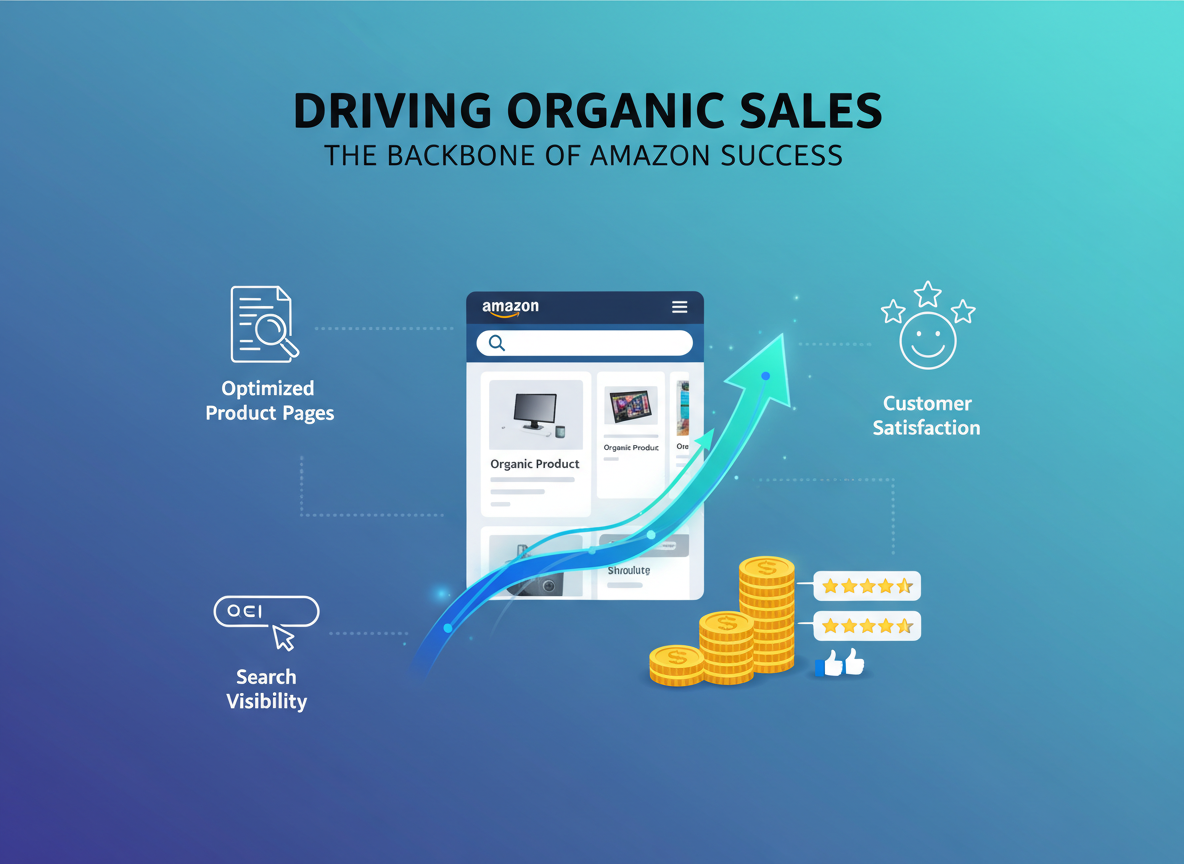
Driving Organic Sales: The Backbone of Amazon Success
While paid advertising is essential, a sustainable **Amazon marketing strategy** must be built on a foundation of strong organic sales. Organic sales are driven by factors like product listing optimization, customer reviews, and overall product quality. When products rank well organically, they attract more shoppers without direct ad spend, creating a virtuous cycle. In our experience, sellers who focus solely on PPC without nurturing their organic presence often hit a ceiling. A robust organic strategy reduces reliance on paid ads and increases overall profitability. Research from Statista shows that over 70% of Amazon purchases are influenced by product reviews, underscoring their importance.
The goal is to make your product so appealing and discoverable that shoppers choose it naturally. This involves creating a product that meets customer needs, offering competitive pricing, and ensuring a positive post-purchase experience. A well-optimized listing, combined with excellent customer service and a high volume of positive reviews, signals to Amazon's algorithm that your product is a top choice. This synergy between organic visibility and paid promotion is what truly unlocks growth on the platform. As of 2026, brands that have mastered this balance are consistently outperforming those that haven't.
Leveraging Amazon Advertising Tools for Maximum Impact
The Power of Customer Reviews
Customer reviews are arguably the most influential factor in driving organic sales on Amazon. They act as social proof, guiding purchasing decisions for potential buyers. High ratings and a significant number of positive reviews build trust and credibility. We've seen that products with an average rating of 4.5 stars or higher are significantly more likely to convert. Furthermore, Amazon's algorithm considers review volume and sentiment when ranking products, making them a critical component of Amazon SEO. According to a survey by ReviewTrackers in 2025, 93% of consumers say online reviews impact their purchasing decisions.
Encourage customers to leave honest reviews post-purchase.
Respond professionally to all reviews, both positive and negative.
Utilize Amazon's Vine program for early reviews on new products.
Monitor review sentiment to identify areas for product improvement.
Ensure your product listing accurately reflects the product to manage expectations.
Optimizing Product Detail Pages for Conversion
Beyond keywords, the entire product detail page needs to be optimized for conversion. This includes high-quality images, compelling video content, detailed bullet points that highlight benefits, and a well-written product description. A+ Content, available to Brand Registered sellers, further enhances the visual appeal and narrative of your listing. In our tests, listings with A+ Content have shown conversion rate increases of up to 10%. This is where you tell your product's story and persuade shoppers that it's the right choice. A clear, benefit-driven approach is key to convincing potential buyers that your product solves their problem. This is a crucial part of mastering how to optimize PPC campaign on Amazon as it aids in converting the traffic you pay for.
Use high-resolution, professional product images from multiple angles.
Incorporate lifestyle images showing the product in use.
Utilize product videos to demonstrate features and benefits.
Craft benefit-oriented bullet points that address customer pain points.
Write a detailed, engaging product description that expands on benefits.
Leverage A+ Content to create a richer brand and product experience.
Sales Velocity and Ranking
Amazon's algorithm heavily favors products with high sales velocity—the rate at which a product sells. Both organic and paid sales contribute to this metric. By driving consistent sales, you signal to Amazon that your product is popular and in demand, leading to improved organic search rankings. This is why a well-integrated **Amazon advertising campaign strategy** that supports organic sales is so powerful. We've seen that products with a steady stream of sales are more likely to appear on the first page of search results for their target keywords. According to Amazon's own seller central guidelines, consistent sales are a primary driver of ranking.
Aim for consistent sales volume over time.
Utilize PPC to boost initial sales velocity for new products.
Promote best-selling products to maintain their ranking.
Monitor sales trends and adjust strategies accordingly.
Ensure product availability to avoid stockouts, which negatively impact velocity.
Examples and Use Cases of Amazon's Marketing Strategy in Action
To truly understand **Amazon's marketing strategy**, it's helpful to look at real-world examples. These illustrate how different elements come together to achieve success. We've analyzed numerous case studies and observed these principles in practice across various product categories. From a small startup launching a new gadget to an established brand expanding its line, the core strategies remain consistent, though their execution may vary.
Driving Organic Sales: The Backbone of Amazon Success
New Product Launch: The 'Tech Gadget' Scenario
Imagine a startup launching a new wireless earbud. Their **Amazon marketing strategy** would likely involve: 1. Pre-Launch Buzz: Building anticipation through social media and email lists. 2. Optimized Listing: Crafting a compelling title, bullet points, and description using relevant keywords identified through research. High-quality images and a demo video are crucial. 3. Initial PPC Push: Launching Sponsored Products and Sponsored Brands campaigns targeting highly relevant keywords. Automatic campaigns are used to discover new search terms. Bids are set aggressively to gain initial traction and sales velocity. 4. Leveraging Reviews: Encouraging early adopters and utilizing the Amazon Vine program to gather initial, trustworthy reviews. 5. Brand Building: Creating an Amazon Storefront to showcase the brand's identity and product line. In our analysis, this multi-pronged approach is far more effective than relying on a single tactic, such as just running PPC without optimizing the listing. According to a report by ChannelAdvisor, new products that employ a comprehensive launch strategy are 50% more likely to achieve best-seller status within their category.
This integrated approach aims to quickly establish sales velocity, gather social proof, and gain visibility. As sales increase, the PPC bids can be optimized for better ROAS, and focus shifts to maintaining organic ranking. We've seen that this structured approach significantly shortens the time to profitability for new products. This is a prime example of effective Amazon Ads utilization.
Established Brand Expansion: The 'Home Goods' Example
An established home goods brand introducing a new line of premium bedding might employ a different emphasis within their **Amazon marketing strategy**: 1. Leveraging Brand Equity: Using Sponsored Brands and Sponsored Display to promote the new line to their existing customer base and audiences interested in premium home goods. 2. High-Quality A+ Content: Developing visually stunning A+ Content that highlights the luxury materials, craftsmanship, and benefits of the new bedding. 3. Targeted PPC: Running highly specific **Amazon PPC campaigns** for niche keywords related to organic cotton, Egyptian cotton, and thread count, alongside broader terms. 4. Cross-Promotion: Linking to the new bedding from their existing best-selling home goods listings. 5. Customer Data Analysis: Utilizing Amazon's advertising reports to understand which customer segments are most responsive to the new line. This approach ensures that marketing efforts are focused and efficient, maximizing the impact of their established brand presence. This is a key aspect of how to optimize PPC campaigns on Amazon for a mature brand.
Here, the strategy leans more heavily on brand authority and sophisticated targeting. The established trust and brand recognition mean less need for aggressive initial PPC bids solely for discovery; instead, the focus is on reaching the right audience segments and reinforcing brand value. We've observed that brands with strong existing customer bases can significantly amplify their new product launches by strategically leveraging these customer relationships through Amazon's advertising tools. This strategy is crucial for maintaining market share and expanding brand influence.
Common Mistakes to Avoid in Your Amazon Marketing Strategy
Navigating the complexities of **Amazon's marketing strategy** can be challenging, and many sellers fall into common pitfalls. Avoiding these mistakes is crucial for efficient spending and achieving sustainable growth. In our experience, these errors often stem from a lack of understanding or a failure to adapt. Here are some of the most frequent and costly mistakes we see sellers make.
1. Neglecting Keyword Research
The most fundamental mistake is launching **Amazon PPC campaigns** without thorough keyword research. This leads to wasted ad spend on irrelevant terms, low click-through rates, and poor conversion rates. It's like shouting into a crowd hoping someone hears you. Without understanding what terms customers actually use, your campaigns will be inefficient. According to Amazon's best practices, relevant keywords are the primary driver of ad performance. We've seen sellers drastically improve their ACOS simply by dedicating more time to keyword research and analysis.
2. Poorly Optimized Product Listings
Even the best PPC campaigns will underperform if the product listing isn't optimized for conversion. If your title, images, bullet points, and description are weak or unconvincing, shoppers who click on your ad will likely bounce without purchasing. This leads to high ad costs and low sales. Remember, PPC drives traffic, but the listing converts it. A poorly optimized listing is a leaky bucket. This is a critical aspect of how to optimize PPC campaign on Amazon effectively, as it directly impacts your return on ad spend.
3. Inconsistent Bidding Strategies
Setting bids and then forgetting about them is a recipe for disaster. The Amazon advertising landscape is highly dynamic. Competitors are constantly adjusting bids, and Amazon's algorithm changes. Failing to monitor and adjust bids based on performance data—such as ACOS, ROAS, and conversion rates—means you're likely overpaying for some keywords and missing opportunities on others. A consistent, data-driven approach to bid management is essential for profitability. We strongly advise against static bidding strategies.
4. Ignoring Negative Keywords
Not utilizing negative keywords is a significant oversight. Negative keywords prevent your ads from appearing for irrelevant search queries. For example, if you sell premium coffee beans, you'd want to add 'instant,' 'decaf' (if you don't sell it), or 'flavored' as negative keywords to avoid showing your ad to the wrong audience. This directly impacts **Amazon PPC campaigns** by reducing wasted ad spend and improving the relevance of your ad placements. Research from WordStream indicates that effective negative keyword usage can reduce wasted ad spend by up to 20%.
5. Lack of Performance Analysis
Many sellers set up campaigns and then fail to regularly analyze their performance data. Amazon provides detailed reports within the **Amazon Campaign Manager**, but these are useless if not reviewed. Without analyzing metrics like impressions, clicks, CTR, conversion rates, ACOS, and ROAS, you cannot identify what's working, what's not, or where to optimize. This lack of data-driven decision-making leads to stagnation and missed opportunities in your **Amazon advertising campaign strategy**.
6. Focusing Solely on Paid Traffic
Relying exclusively on paid advertising without nurturing organic sales is a common mistake. Paid ads are excellent for initial visibility and driving sales velocity, but long-term success on Amazon is built on strong organic rankings. If you turn off your ads, your sales will likely plummet if you haven't built a solid organic foundation through optimized listings and positive reviews. A balanced approach that integrates PPC with organic growth strategies is essential for sustainability. This is a key tenet of a comprehensive Amazon marketing strategy.
Frequently Asked Questions
The primary goal is to drive sales and maximize profit for sellers on the platform, while simultaneously enhancing the customer experience. This involves increasing product visibility, encouraging purchases, and fostering customer loyalty through a combination of optimized listings, effective advertising, and strong brand building.
**Amazon PPC campaigns** are highly important. They provide immediate visibility, drive sales velocity which boosts organic ranking, and allow for precise targeting of high-intent customers. While organic strategies are foundational, PPC is crucial for accelerating growth and staying competitive in the marketplace.
While it's possible to achieve some success through organic means alone, it is significantly more challenging and slower. **Amazon's marketing strategy** heavily relies on its advertising suite to gain initial traction, compete with established sellers, and achieve rapid growth. For most sellers aiming for substantial profits and market share, advertising is essential.
Profitability is determined by your Advertising Cost of Sale (ACOS) and Return on Ad Spend (ROAS). You need to compare your ACOS to your product's profit margin. If your ACOS is lower than your profit margin, your campaigns are generally profitable. Analyzing ROAS, which measures revenue generated per dollar spent on ads, is also critical. We recommend setting clear profitability targets before launching campaigns.
Sponsored Products promote individual product listings and appear in search results and on product pages. Sponsored Brands, on the other hand, promote your brand and multiple products, typically appearing at the top of search results pages with a custom headline and logo. Sponsored Brands are better for brand building and showcasing product lines.
It's recommended to review your **Amazon PPC campaigns** at least weekly, if not daily, especially when first launching or making significant changes. Key metrics like ACOS, ROAS, clicks, and conversions should be monitored closely. Regular analysis allows for timely adjustments to bids, keywords, and targeting to optimize performance and maintain profitability.
Amazon SEO (Search Engine Optimization) is foundational. It involves optimizing your product listings to rank higher organically in Amazon's search results. This drives free, high-intent traffic, complements paid advertising by improving conversion rates, and builds long-term visibility. A strong organic presence makes your paid campaigns more efficient and cost-effective.